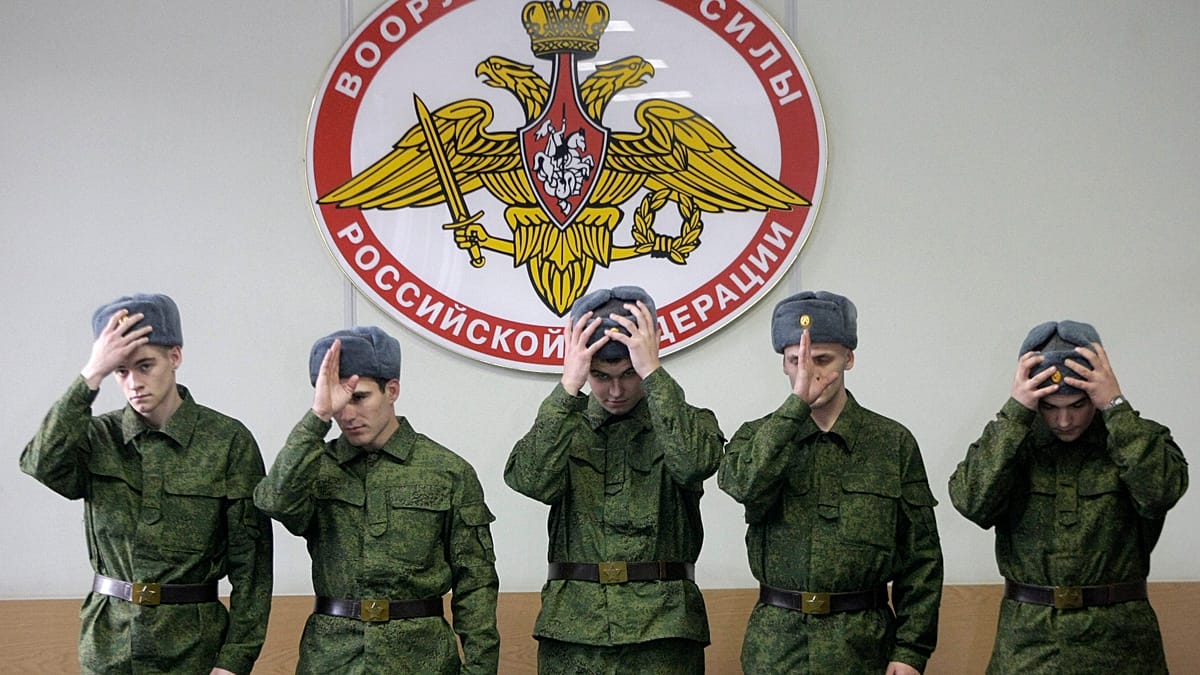
Russia is preparing to mobilise an additional 600,000 soldiers over the next two years, according to Ukraine's Main Intelligence Directorate and Foreign Intelligence Service. The move, which Kyiv says Moscow has already decided upon, would see 300,000 conscripts called up this year and a further 300,000 in 2027, as mounting losses at the front and a sharp decline in voluntary enlistment force the Kremlin's hand.
The assessment, shared with European Pulse by Ukrainian officials, points to a combination of factors: heavy battlefield casualties, a loss of military initiative, and a dramatic fall in the number of Russians signing voluntary contracts with the armed forces. Ukraine's General Staff estimates total Russian losses since the February 2022 full-scale invasion have exceeded 1.4 million killed and wounded. In the first half of 2026 alone, Ukrainian intelligence puts Russian losses at around 240,000, of whom 140,000 were killed or severely wounded.
During that same period, only 232,000 people signed contracts with the Russian military—a figure that underscores the widening gap between losses and replacements. CIA director John Ratcliffe noted in July that the average Russian recruit is killed or wounded within 20 to 30 minutes of arriving at the front line, a stark indicator of the war's brutal attrition.
Recruitment pool shrinks
The pool of potential volunteers has narrowed considerably. Ukrainian intelligence reports that in several Russian regions, the number of debtors, prisoners, migrants, and others who formed the bulk of voluntary recruits has fallen by 30 to 40% compared with 2025. In the Kurgan region, monthly recruitment targets have been met at only 57 to 69% since the start of the year. In Volgograd, the number of potential recruits has dropped 40% year on year. The lowest figures are recorded in the Oryol and Vladimir regions—in western Russia and near Moscow, respectively—and in the republic of Dagestan. Attempts to recruit students have also failed.
Internal Russian documents, cited by Ukrainian intelligence, justify the need for a new mobilisation by pointing to rising public dissatisfaction with the war—reaching as high as 69% in some regions—and the resulting decline in voluntary enlistment. To prepare the legal ground, Moscow has expanded eligibility for military service. People with unexpunged criminal convictions under 11 additional articles of the criminal code can now be called up, including those convicted of smuggling weapons, drugs, or radioactive substances, banditry, and organising illegal migration. Russian authorities are also reportedly considering recruiting certain categories of convicted women.
An electronic summons system is already operational: once a citizen is entered in the registry, they are barred from leaving the country, taking out loans, buying or selling property, using a driving licence, or registering as a self-employed entrepreneur. As of late July, more than 2,500 new vacancies related to mobilisation activities had been posted on Russian employment platforms, according to Ukrainian intelligence.
Ukraine's President Volodymyr Zelenskyy said he expects the decision to be announced after the Russian State Duma elections scheduled for 18-20 September. "Putin's strategy is clear—ballistic strikes. Then come the 'elections' in Russia. We are certain that after the 'elections' they will have a mobilisation. We believe it will not take place in the central cities. But I don't think they will be able to hide it particularly well," he said last week. Zelenskyy described the approach as a "peripheral mobilisation" targeted primarily at Russia's regions rather than Moscow and other major cities.
The prospect of a new wave of conscription has significant implications for Europe. As EU capitals debate how to support Ukraine, including reviving efforts to use frozen Russian assets, the scale of Russia's military build-up will sharpen concerns about the continent's security. The war has already prompted a rethink of defence policies across the bloc, and a larger Russian army—even one of poorly trained conscripts—could alter the balance of power on the eastern flank.
For now, Kyiv's message is clear: Moscow is preparing for a long war, and Europe must respond with resolve. As one Ukrainian official put it, "The Kremlin is betting on attrition—both on the battlefield and in the patience of Western democracies."