Ukraine has escalated its involvement in the widening Iran crisis by striking long-range supply routes that Kyiv says are used to transfer Russian military equipment to Tehran. The attack, which targeted vessels in the Caspian Sea on Saturday, marks a new front in the conflict that now ties together the war in Ukraine and tensions between Iran and the United States.
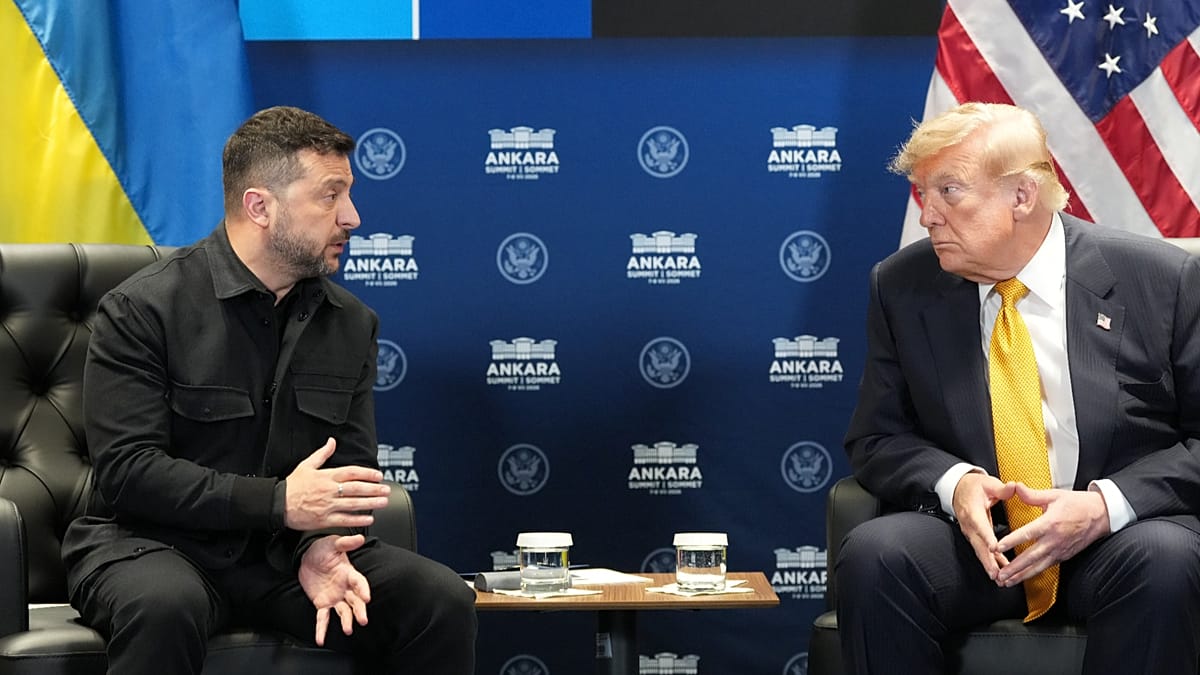
President Volodymyr Zelensky alleged on social media that Russia has been actively sharing satellite intelligence with Iran since early July, enabling Tehran to target US military sites across the Gulf region. According to Zelensky, there is a clear correlation between Russian satellite imagery of these facilities and subsequent Iranian strikes. He claimed that on 19 and 20 July alone, four air bases—two in Bahrain, one in Jordan, and one in Kuwait—fell within the observation range of Russian satellites.
“Forces of evil are always seeking to make the situation worse and to widen the scope of the crisis,” Zelensky wrote, calling for effective pressure on Russia and an end to the war. His comments come amid ongoing Russian strikes across Ukraine that continue to claim civilian lives.
Iran’s response and domestic pressure
Iran confirmed that one of the targeted vessels was an Iranian commercial ship, reporting one sailor killed and several injured. Tehran summoned Ukraine’s acting chargé d’affaires to protest the attack, with the foreign ministry stating that “the Islamic Republic will firmly defend its security and national interests and will not leave attacks on the lives and property of its citizens unanswered.”
On Iranian social media, however, the official response drew criticism. Some users called for retaliation using the country’s Kheibar Shekan ballistic missiles, accusing the foreign ministry of “weak diplomacy.” One widely shared comment read: “As long as this weak diplomacy remains in government, every fox will see itself as a lion against us.”
Former lawmaker Nezameddin Mousavi went further, suggesting that the response to what he called a “fireworks display in the Caspian Sea should be delivered in the Black Sea.” He argued that Ukraine’s action should prompt Iran to reconsider its self-imposed 2,000-kilometre limit on ballistic missile range.
Iran’s Foreign Minister Abbas Araghchi discussed the attack with EU foreign policy chief Kaja Kallas, calling for a response from the UN Security Council and the international community. The call came just two days after the European Union imposed new sanctions on Iranian judges for human rights violations, including the persecution of political opponents and religious minorities.
Kallas announced the measures on 24 July, stating that the EU was targeting those responsible for “serious human rights violations.” The timing underscores the delicate balance Brussels must strike between condemning Iranian repression and managing the broader geopolitical fallout.
Contrasting claims from Washington
Zelensky’s allegations stand in contrast to statements from former US President Donald Trump, who claimed on his social media platform that both Russia and China had assured him they would not supply arms to Iran. Trump wrote that Chinese President Xi Jinping told him during a recent meeting in Beijing that China “under no circumstances” would give or sell weapons to Iran, and that Russian President Vladimir Putin had given similar assurances despite the ongoing war in Ukraine.
Trump warned that if either country were to take such a step, “it would be very bad for them.” His remarks, however, do not address the satellite intelligence sharing that Zelensky has described, leaving open the possibility that Moscow is aiding Tehran through means other than direct arms sales.
The widening scope of the conflict—from the Black Sea to the Caspian and the Persian Gulf—highlights how interconnected these crises have become. For European capitals, the situation demands careful navigation: supporting Ukraine while avoiding a direct confrontation with Iran, and maintaining pressure on Russia without escalating a regional war that could draw in more actors.