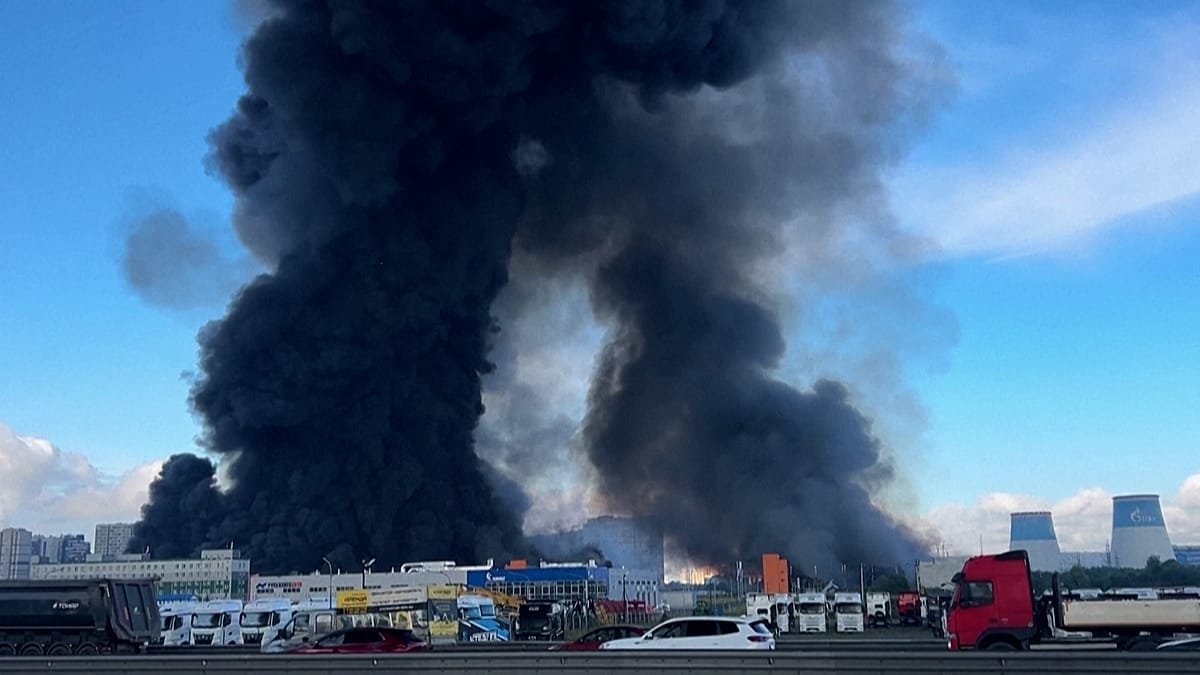
Early on Thursday 24 July, a Ukrainian drone strike ignited a massive fire at a Wildberries logistics hub on the outskirts of Saint Petersburg, according to Russian authorities. The blaze sent thick plumes of smoke across the city and forced a temporary suspension of flights at Pulkovo Airport, the region's main international gateway.
The attack marks one of the most significant Ukrainian strikes on Russian infrastructure in the northwest, far from the front lines in eastern and southern Ukraine. Wildberries, one of Russia's largest e-commerce companies, operates a vast network of warehouses; the facility near Saint Petersburg is a key node for deliveries across the country's northwest.
Disruption and response
Russian emergency services said no casualties had been reported, but the fire required a large-scale response. Footage shared on social media showed towering flames and dense black smoke visible from several districts of Saint Petersburg, a city of over five million people. Local authorities advised residents to keep windows closed as a precaution.
Pulkovo Airport, which serves both domestic and international routes, briefly halted departures and arrivals. According to Russia's federal air transport agency, Rosaviatsia, flights were diverted to alternate airports, including those in Moscow and Murmansk, before operations resumed later in the morning. The disruption echoed a similar incident in Germany, where Leipzig/Halle airport faced a drone scare that forced flight diversions.
The strike on the Wildberries warehouse is part of a broader pattern of Ukrainian long-range drone operations targeting Russian logistics, energy, and military infrastructure. In recent weeks, Ukrainian forces have stepped up attacks deep inside Russian territory, including a deadly drone attack in the Moscow region that killed five people, according to the regional governor.
Russian officials have repeatedly condemned such strikes, calling them acts of terrorism. In response, Moscow has intensified its own aerial campaign against Ukrainian cities. Just days before the Saint Petersburg fire, overnight Russian strikes killed 15 people in Kyiv, sparking large fires and damaging residential buildings.
The use of drones has become a defining feature of the conflict, with both sides deploying them for reconnaissance, strikes, and psychological warfare. Ukrainian forces have increasingly targeted Russian supply chains and logistics hubs, aiming to disrupt military operations and undermine public morale. The attack near Saint Petersburg, a city with deep historical and cultural significance, carries symbolic weight.
For European observers, the incident underscores the expanding geographic reach of the war. While the conflict remains centered in Ukraine, its ripple effects are felt across the continent, from energy prices to refugee flows. The drone strike also raises questions about the vulnerability of critical infrastructure in Russia's major cities, which had largely been spared the kind of attacks seen in border regions.
Wildberries, which has faced its own controversies, including a recent corporate dispute that led to a shooting at its Moscow headquarters, has not yet commented on the fire. The company's logistics network is vital to Russian e-commerce, and a prolonged disruption could affect deliveries across the northwest.
As the war enters its third year, both sides show no sign of de-escalation. Ukrainian officials have signaled that strikes on Russian soil will continue, while Moscow has vowed to respond. The international community, including the European Union, has repeatedly called for restraint, but diplomatic efforts remain stalled.
The fire at the Wildberries warehouse is a stark reminder that the conflict's front lines are no longer confined to Ukraine. For Europeans, it highlights the need for continued vigilance and support for Ukraine's defense, even as the war's economic and social costs mount across the continent.