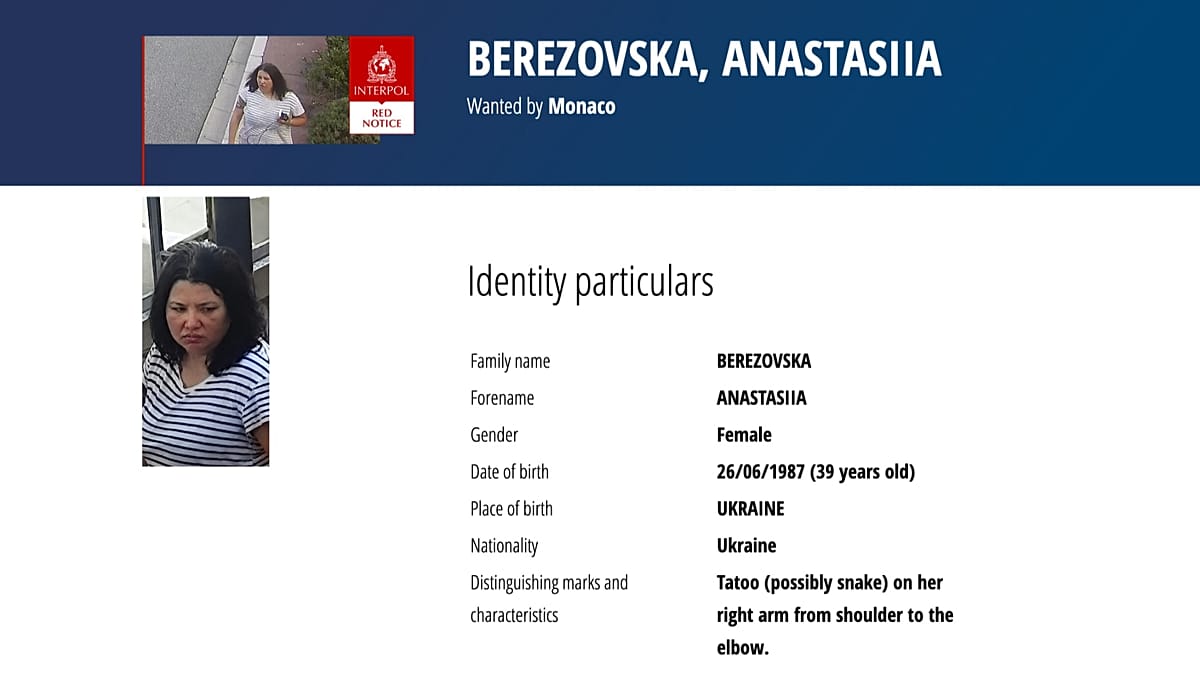
Ukrainian authorities have confirmed the death of Anastasiia Berezovska, the 39-year-old woman wanted by Interpol for a parcel bomb attack in Monaco that seriously injured three people, including a Ukrainian-born tycoon and his teenage son. The Security Service of Ukraine (SBU) and the Prosecutor's Office announced on Tuesday that a military intelligence officer confessed to killing her.
Ukraine's national police stated they detained two individuals on suspicion of murdering Berezovska, who was the subject of an Interpol Red Notice. The suspects include an active intelligence officer and an accomplice. The officer reportedly admitted to the killing, though the motive remains unclear.
The Monaco Attack and International Manhunt
The bombing occurred on the evening of 30 June in the entrance hall of a residential building near the French border in Monaco. A package left at the scene detonated remotely as a couple and a 13-year-old boy returned from dinner. The victims are believed to be Vadym Yermolaiev, a 58-year-old Ukrainian-born Cypriot national and former Forbes-listed billionaire, his partner, and his son.
Monaco's deputy public prosecutor, Morgan Raymond, described the device as relatively sophisticated and noted that the suspect's modus operandi suggested she did not act alone. Surveillance footage initially led investigators to believe the perpetrator was a man, but further review and witness testimony identified Berezovska, who had conducted reconnaissance visits in the days before the attack.
After the explosion, Berezovska walked to the nearby French town of Beausoleil, retrieved a rental car, and drove through Italy to Germany, where she had been living. German police searched her rented apartment near Frankfurt last Thursday. The manhunt spanned several European countries before the discovery of her body in Ukraine.
Monaco's police chief, Eric Arella, praised the rapid identification of the suspect within 53 hours, crediting cooperation with French and other international authorities. Prince Albert II condemned the attack as a “heinous crime.”
Broader Context and Implications
The case has drawn attention to the use of Ukrainian nationals in cross-border operations amid the ongoing war with Russia. The involvement of an SBU officer in Berezovska's death raises questions about internal security and potential links to broader intelligence activities. This incident follows other recent developments, such as a Ukrainian national charged in a German court over Nord Stream pipeline sabotage, highlighting the complex security landscape.
Ukraine has launched its own investigation into the murder, as both the victim and the child wounded in the Monaco attack are Ukrainian citizens. The case also underscores the challenges of international law enforcement cooperation, particularly when suspects flee across multiple jurisdictions.
For Monaco, a microstate known for its security and wealth, the bombing was a rare and shocking breach. The investigation continues, with authorities in France, Germany, Italy, and Ukraine coordinating efforts. The wider European implications touch on debates about temporary protections for Ukrainian men of military age and the strain of war fatigue on Ukrainian communities abroad.