The United Nations said on Friday it was following the wave of student protests across France “with concern,” as demonstrations entered their fifth consecutive day and showed no sign of abating.
“We are following with concern incidents related to the student protests and high school blockades in France, some of which have turned violent,” said Shabia Mantoo, spokesperson for the UN human rights agency, in a statement that underscored the international dimension of the unrest.
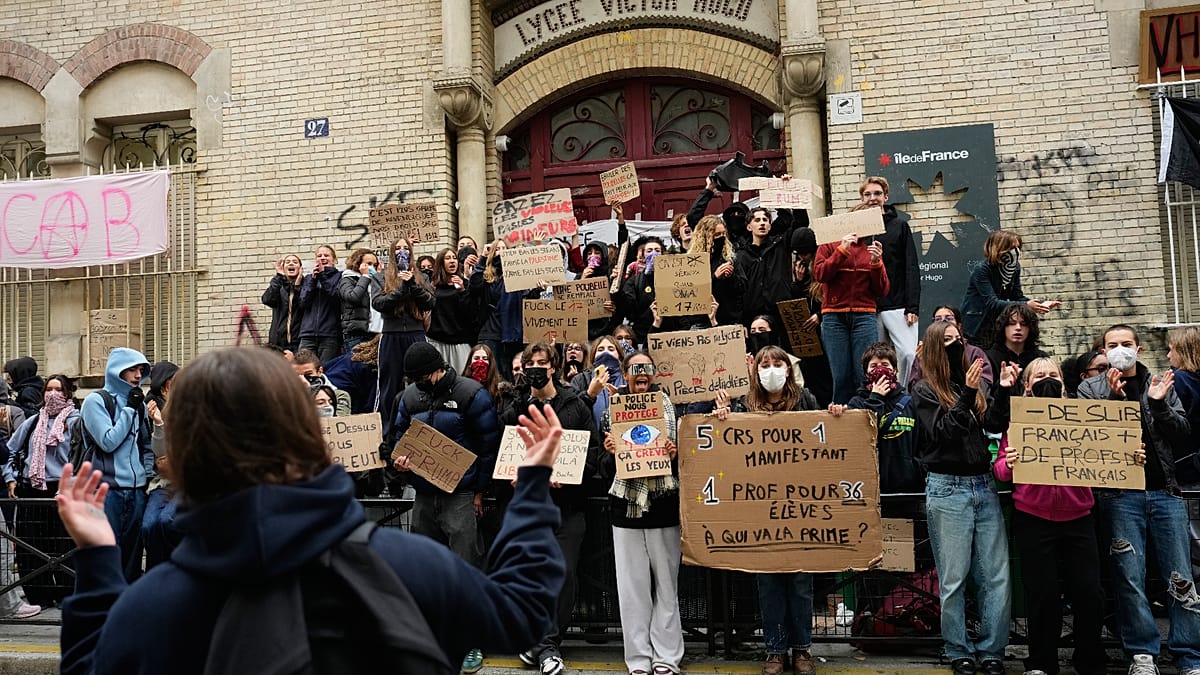
According to the French Justice Ministry, nearly 7,000 people—86 percent of them minors—have been taken into police custody since mid-September. The protests, largely led by students aged 15 to 18, are driven by chronic teacher shortages, overcrowded timetables, deteriorating school buildings, and facilities ill-equipped to cope with rising temperatures.
Clashes and investigations
While most demonstrations have been peaceful, some protesters have set fires and vandalised bus shelters. Police have responded with tear gas, batons, and blast balls, prompting accusations of excessive force from human rights groups and student organisations. The authorities have opened 18 internal investigations into alleged police misconduct.
The Education Ministry reported that 141 of France’s 3,700 high schools were closed on Friday, a slight decrease from earlier in the week but still a significant disruption. In Paris, scenes of running battles between masked youths and riot police have dominated coverage, with the role of police in escalating violence becoming a central point of contention.
Student unions have vowed to continue the pressure, with another wave of demonstrations planned for Tuesday. “We’re being offered a few crumbs,” said Marius Mesnil, a student union representative, dismissing the government’s initial response as insufficient.
Government pledges action
In an effort to ease tensions, Education Minister Edouard Geffray announced late Thursday that around 3,000 substitute teachers would be deployed in the coming days to cover staff shortages at the 114 high schools most affected by the protests. Prime Minister Sebastien Lecornu has also pledged to present a comprehensive plan to address the crisis by the end of October.
Economy Minister Roland Lescure indicated that the government could accommodate demands for additional school funding despite tight constraints on the 2027 budget. Under the current draft budget, education is set to receive the second-largest funding increase after defence, with spending rising by 1.4 percent to €90.9 billion.
The unrest comes at a delicate time for France, which is already grappling with twin crises of social discontent and debt turmoil. The protests have also drawn political reactions, with some lawmakers accusing the government of mishandling the situation and others calling for a tougher line on public disorder.
As the standoff continues, the UN’s expression of concern adds international pressure on Paris to find a resolution that addresses both the legitimate grievances of students and the need to maintain public order. The coming days will test whether the government’s promises can defuse a movement that has already reshaped the political debate in France.