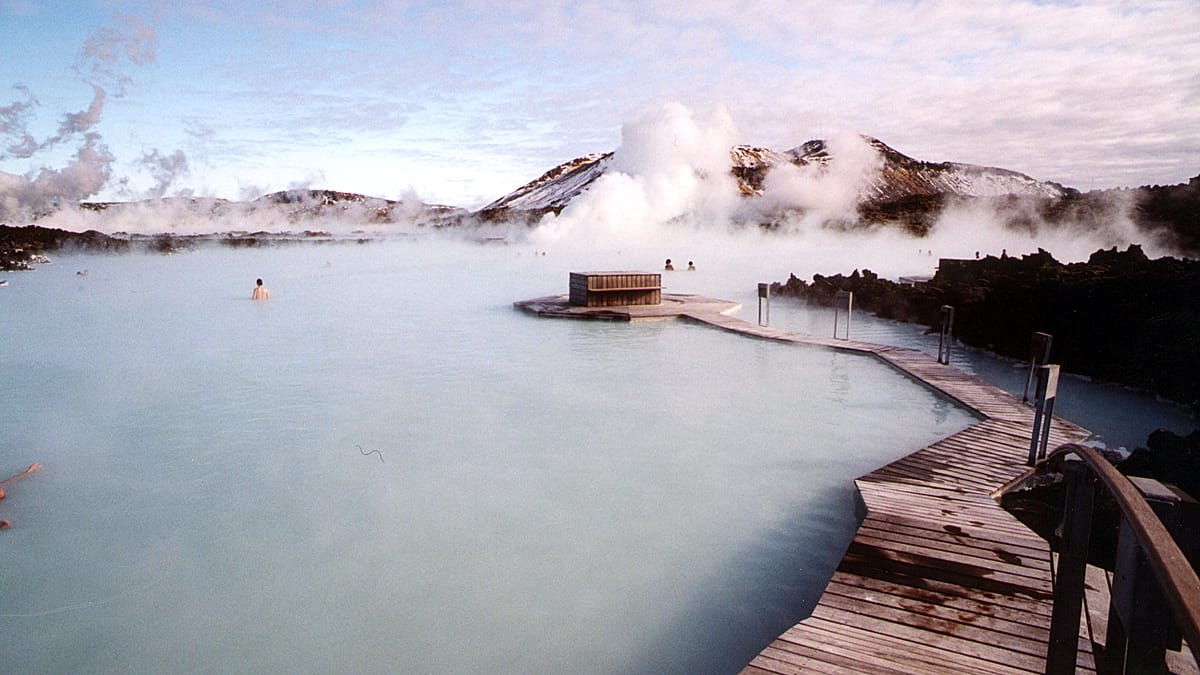
Iceland's Blue Lagoon, the geothermal spa operator that has become a symbol of the country's tourism boom, made its stock market debut on Friday with shares slipping below the offer price. The listing, the first on Nasdaq Iceland in nearly three years, raised 14.3 billion Icelandic krónur (€104mn) and drew strong interest from both retail and institutional investors.
Shares opened at 85 krónur, 10.5% below the offer price of 95 krónur, and closed the day at 87.4 krónur, down 8%. By Monday, the stock was trading slightly lower at around 86.3 krónur. The company, listed under the ticker BLUE, becomes the 28th on the main market of the Reykjavík exchange.
Magnús Harðarson, president of Nasdaq Iceland, said in a statement that the listing gives investors access to a part of the Icelandic economy that has not been represented on the market before. The offering attracted nearly 4,000 subscriptions, worth about 15.3bn krónur (€112mn), roughly 7% more than the value of the shares on offer. About 40% of the shares went to individuals and 60% to professional investors and companies.
Blue Lagoon sold 150 million new shares, equivalent to 14.6% of the company after the offering. At the offer price, the company was valued at about 97.4bn krónur (€710mn), based on the 1.02bn shares now in issue.
From research site to tourism powerhouse
The company was founded in 1992 to research the lagoon's geothermal seawater, which lies in a lava field on the Reykjanes Peninsula in south-west Iceland. Over the past three decades, it has grown into a diversified tourism business, operating The Retreat and Silica hotels by the lagoon, the Michelin-starred Moss restaurant, and two hotels in Iceland's highlands. It also sells skincare products internationally.
Revenue reached a record €156mn last year, according to its offering documents. The company is also acquiring Arctic Adventures, an Icelandic tour operator, in a deal expected to complete at the end of November. Including the tour operator, Blue Lagoon has budgeted revenue of €291mn for 2027. On its own, it expects revenue of about €173mn this year.
The IPO proceeds are earmarked for developing new destinations, strengthening the balance sheet, and funding growth. The company had begun preparing for a listing in 2022 and originally hoped to go public in 2023.
One significant risk hangs over the business: the lagoon sits near Grindavík, a town that has been hit by a series of volcanic eruptions since late 2023. The company said volcanic activity forced the lagoon to close for 49 days in 2023 and 76 days in 2024, but for only two days in 2025. Tourism accounted for 8.8% of Iceland's economic output in 2025, up from 8.2% the year before, according to preliminary figures from Statistics Iceland.
As part of the Arctic Adventures deal, Blue Lagoon will issue about 246 million new shares to the tour operator's owners, who will then hold about 19% of the enlarged company. The listing marks a milestone for Iceland's capital markets, which have seen few new entrants in recent years. The previous IPO was by fishing company Ísfélag in December 2023.
For investors, the debut offers a way to bet on Iceland's tourism sector, which has rebounded strongly after the pandemic. But the volcanic risk and the company's reliance on a single iconic site remain key considerations. The stock's early trading suggests that the market is pricing in some of those uncertainties, even as the company pushes ahead with expansion plans.