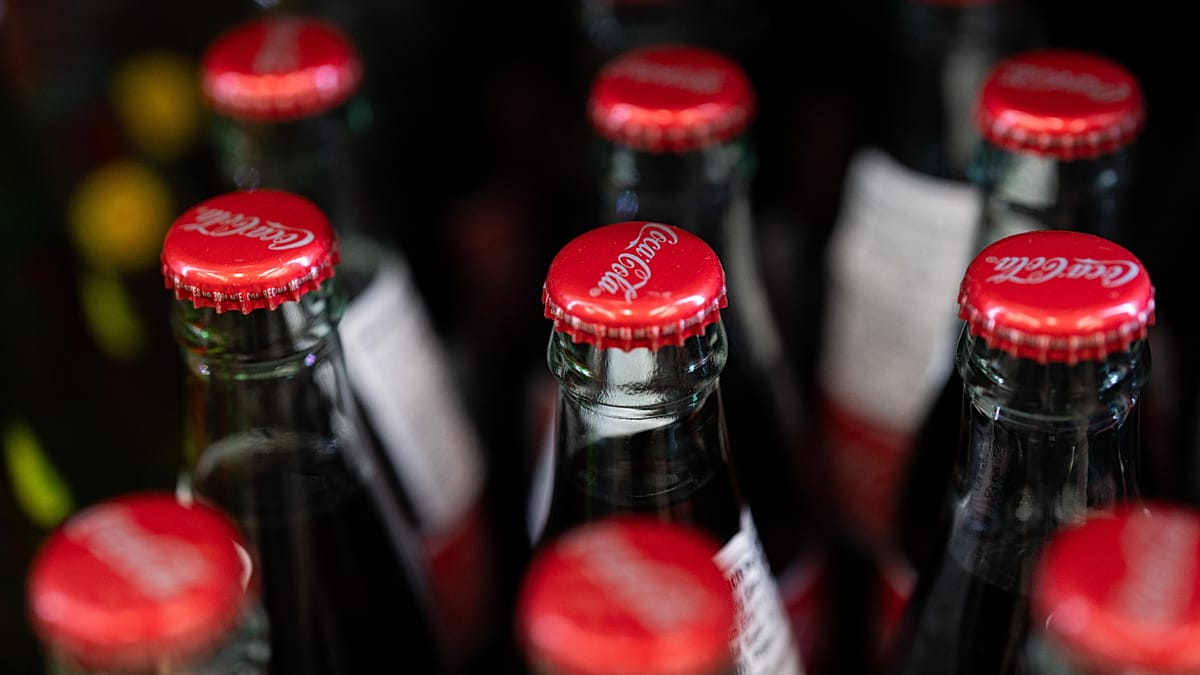
The European Commission has launched a formal antitrust investigation into Coca-Cola Europacific Partners (CCEP), the company that bottles and distributes Coca-Cola products across much of Western Europe. The probe, announced on Monday, focuses on whether CCEP abused its dominant market position to prevent supermarkets and other retailers from sourcing drinks across national borders, thereby fragmenting the EU's Single Market.
CCEP, headquartered in the United Kingdom, is one of the two largest European bottlers of Coca-Cola brands. It operates in Belgium, France, Germany, Luxembourg, the Netherlands, Portugal, Spain, and Sweden, supplying carbonated soft drinks and sports drinks to retailers. The investigation does not cover sales to restaurants, hotels, or cafés.
“People across Europe enjoy soft drinks every day. But they should not have to pay more simply because they live in one EU country rather than another,” said Teresa Ribera, the Commission's executive vice-president for clean, just and competitive transition, who oversees competition policy. “We are investigating whether Coca-Cola has been putting barriers between national markets, making it harder for retailers to buy products across borders and secure better deals.”
The Commission's concerns centre on several alleged practices. These include making wholesale price discounts conditional on drinks not being exported to other EU countries, selling different packaging volumes in different countries to hinder cross-border trade, offering incentives to retailers to limit imports into Spain, and refusing to let retailers negotiate deals covering multiple countries at once, instead insisting on separate national negotiations.
“This could undermine the Single Market, limit competition and ultimately mean higher prices and less choice for consumers,” Ribera added.
If the allegations are proven, CCEP could be found in breach of Article 102 of the Treaty on the Functioning of the European Union, which prohibits companies from abusing a dominant position. The specific abuse alleged here is the artificial division of the Single Market along national lines.
Context and timing
The investigation follows unannounced inspections at CCEP's premises in several EU countries in March 2025. The Commission has said it will treat the case as a priority, though it stressed that opening proceedings does not prejudge the outcome and that there is no legal deadline for concluding the investigation.
The timing is notable: the probe comes just three days after an EU-UK summit in Brussels, where UK Prime Minister Andy Burnham sought to demonstrate progress on the closer post-Brexit ties promised by his predecessor, Keir Starmer. The case also echoes broader EU efforts to enforce competition rules in the beverage sector, similar to regulatory scrutiny in other industries.
Because the Commission has opened formal proceedings, national competition authorities in the affected member states can no longer apply EU competition rules to the same practices. This ensures a single, EU-wide approach to the case.
The outcome could have significant implications for how multinational companies structure their pricing and distribution strategies across the bloc. For consumers, the case is about ensuring that living in one EU country rather than another does not mean paying more for the same product.
CCEP has not yet publicly responded to the Commission's announcement. The company has previously stated that it complies with all applicable laws and cooperates fully with regulators.
This is not the first time the EU has targeted large companies for allegedly partitioning the Single Market. In recent years, the Commission has taken action against several firms in the tech and consumer goods sectors for similar practices, reflecting a broader push to protect cross-border competition.
As the investigation unfolds, retailers and consumers across Europe will be watching closely. The case underscores the EU's commitment to ensuring that the Single Market functions as a truly integrated economic space, where businesses compete on merit rather than by erecting national barriers.