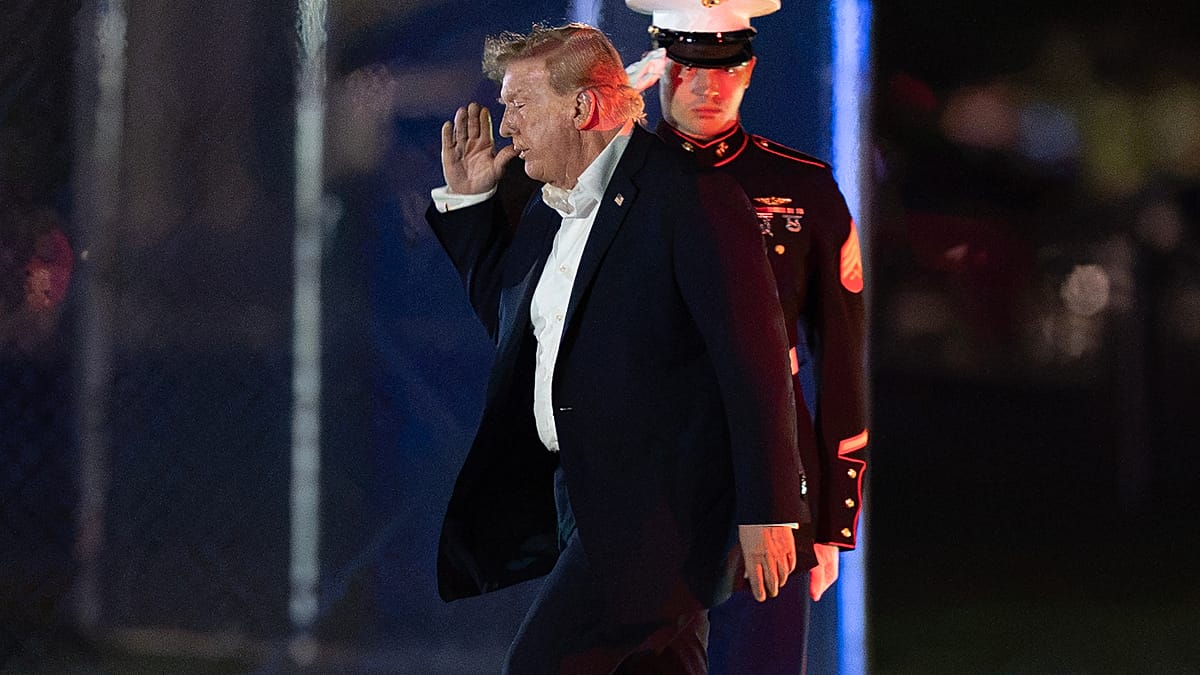
As G7 leaders converge on the French lakeside town of Évian for this year's summit, a significant diplomatic breakthrough has emerged: the United States and Iran have reached a framework agreement aimed at de-escalating tensions and reopening the Strait of Hormuz. The deal, announced just hours before President Donald Trump's departure for Europe, is expected to dominate discussions among the world's seven largest advanced economies.
Framework Deal and the Strait of Hormuz
The framework, brokered through back-channel talks in recent weeks, is designed to restore stability in the Persian Gulf and ensure the free passage of oil tankers through the Strait of Hormuz, a waterway through which roughly one-fifth of the world's petroleum passes. The agreement reportedly includes mutual commitments to refrain from hostile actions and to establish a monitoring mechanism. Euronews' Jane Witherspoon reports that while details remain sparse, both sides have expressed cautious optimism. For European capitals, which rely heavily on Gulf oil and gas, the reopening of the strait is a welcome development after months of heightened risk.
The timing is critical: Trump's arrival in Évian comes amid a backdrop of transatlantic friction over trade, climate policy, and the Iran nuclear file. The framework deal may ease some of those tensions, but it also raises questions about the future of the Joint Comprehensive Plan of Action (JCPOA), from which the US withdrew in 2018. European leaders, including French President Emmanuel Macron and German Chancellor Olaf Scholz, have long sought a diplomatic solution with Tehran.
G7 Agenda: Ukraine, AI, and Trade
The Évian summit, hosted by Macron at the luxurious Hôtel Royal, is packed with weighty issues. War in Ukraine remains a central focus, with EU accession talks advancing for Kyiv. Euronews' Maria Tadeo reports that leaders are expected to reaffirm their support for Ukraine while discussing new sanctions against Russia. The exchange of strikes between Ukraine and Russia continues, underscoring the urgency of the talks.
Artificial intelligence is another headline topic. Jakub Janas, an analyst, provides an explainer on Europe's wake-up call: the continent is racing to regulate AI while staying competitive with the US and China. The EU's AI Act, still under negotiation, is a key reference point. Leaders will also address the digital tax dispute, with Trump having recently threatened 100% tariffs on French wine over France's digital services tax—a move that could sour the summit atmosphere.
Moldova's European Path
In a parallel development, Cristina Gherasimov, Moldova's Deputy Prime Minister for European Integration, spoke live from Luxembourg about her country's EU accession process. Moldova, which gained candidate status in 2022, is pushing for swift progress amid Russian hybrid threats. Gherasimov emphasized that European integration is not just a political goal but a security imperative for Chisinau. Her interview highlights the broader European dimension of the summit: the G7's decisions on Ukraine and energy security directly affect Moldova and other Eastern Partnership countries.
Protests and Cultural Notes
Not everyone is welcoming the G7 with open arms. In Geneva, some 20,000 protesters clashed with police, denouncing the summit as a gathering of elites ignoring climate change and inequality. The demonstrations, organized by anti-capitalist and environmental groups, reflect a growing discontent with global governance. Meanwhile, in a lighter moment, Macron was seen joining Kenyan dancers to 'Hakuna Matata' ahead of the Africa-France summit, a reminder of the cultural diplomacy that often accompanies such events.
On the sports front, the World Cup continues to capture attention. Laura Fleischmann reports live from Berlin after Germany's first win in the tournament, a morale boost for fans. Vincenzo Genovese provides updates from the matches, adding a touch of levity to an otherwise geopolitically charged news cycle.
As the G7 summit unfolds, the US-Iran framework deal offers a rare glimmer of diplomatic progress. Whether it holds will depend on the details—and on the willingness of all parties to follow through. For Europe, the stakes are high: stability in the Gulf, a unified stance on Ukraine, and a coherent approach to AI and trade are all on the table in Évian.