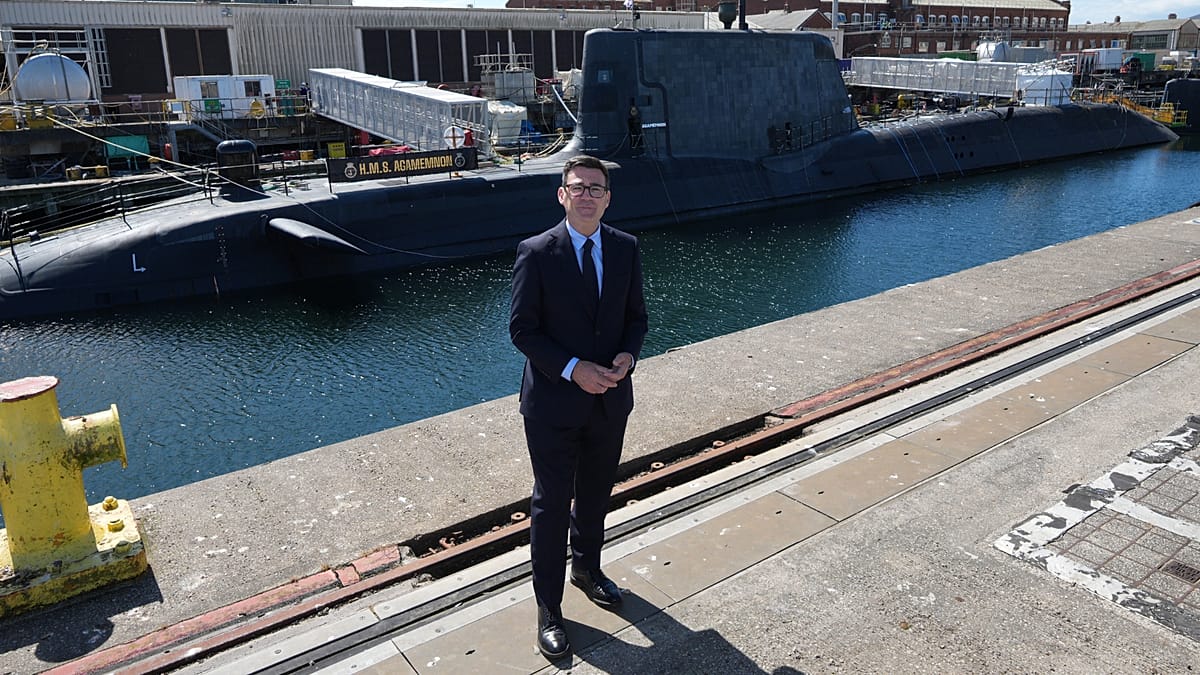
The United Kingdom has unveiled a major investment in its nuclear submarine fleet, committing £8.4 billion (€9.8 billion) to the next phase of the Dreadnought Class programme. The announcement, made by Prime Minister Andy Burnham's office, underscores London's determination to modernise its strategic deterrent amid shifting security dynamics across Europe.
Defence contractor BAE Systems, headquartered in Farnborough, will receive £5.9 billion (€6.9 billion) of the total, with the remainder flowing to the wider supply chain. The company has been tasked with delivering four Dreadnought Class nuclear-powered submarines, which will form the backbone of Britain's nuclear capability for decades to come.
According to Downing Street, the investment will enable the first vessel, HMS Dreadnought, to complete its sea trials and "be ready to enter service with the Royal Navy in the early 2030s." The programme is expected to sustain 47,000 jobs and apprenticeships across the UK over the next ten years, providing a significant boost to the country's industrial base.
Strategic context and European implications
The Dreadnought programme is not just a British affair. It carries weight for the entire continent, as the UK remains one of Europe's two nuclear powers alongside France. The investment signals a continued commitment to NATO's nuclear-sharing arrangements and to the broader European security architecture, especially at a time when defence spending across the EU is under scrutiny.
Defence Secretary Wes Streeting framed the investment as a dual commitment: "This secures our commitment to deliver Dreadnought Class submarines by backing British industry." The government has earmarked more than £63 billion over the next four years for its nuclear deterrent as part of its Defence Investment Plan, a figure that reflects the strategic priority placed on this capability.
The announcement comes as European nations grapple with questions about their own defence postures. While the UK operates outside the EU, its decisions resonate in Brussels and national capitals. The Dreadnought programme is a reminder that nuclear deterrence remains a cornerstone of European security, even as debates over conventional capabilities and strategic autonomy continue.
BAE Systems, which has a long history of naval shipbuilding, will leverage its expertise in underwater systems for the new submarines. The company has described the Dreadnought as a leap forward in technology, incorporating advanced propulsion and stealth features. The first submarine is already under construction at Barrow-in-Furness, a site that has become a hub for the UK's submarine industry.
Beyond the immediate military benefits, the investment is expected to have a ripple effect on skills and innovation. The government highlighted the creation of apprenticeships and the development of a skilled workforce, which could have spillover benefits for other high-tech sectors. This aligns with broader European efforts to strengthen industrial resilience, as seen in initiatives like the EU's defence fund.
However, the programme has not been without controversy. Critics have questioned the cost and the ethical implications of maintaining a nuclear arsenal, while others have pointed to the need for greater transparency in defence procurement. The government, for its part, insists that the investment is essential for national security and for meeting commitments to NATO allies.
As the Dreadnought submarines move closer to deployment, the UK is also watching developments elsewhere in Europe. For instance, Hungary's Paks nuclear plant faces challenges that highlight the broader energy-security nexus, while incidents near UK nuclear sites underscore the need for robust safety measures. These issues, though distinct, are part of the same strategic landscape.
The Dreadnought programme is a long-term bet on the UK's role as a global power with a European anchor. With the first submarine expected to enter service in the early 2030s, the investment will shape the country's defence posture for a generation. For Europe, it is a reminder that the continent's security is underpinned by a mix of national and collective efforts, with the UK playing a pivotal part.