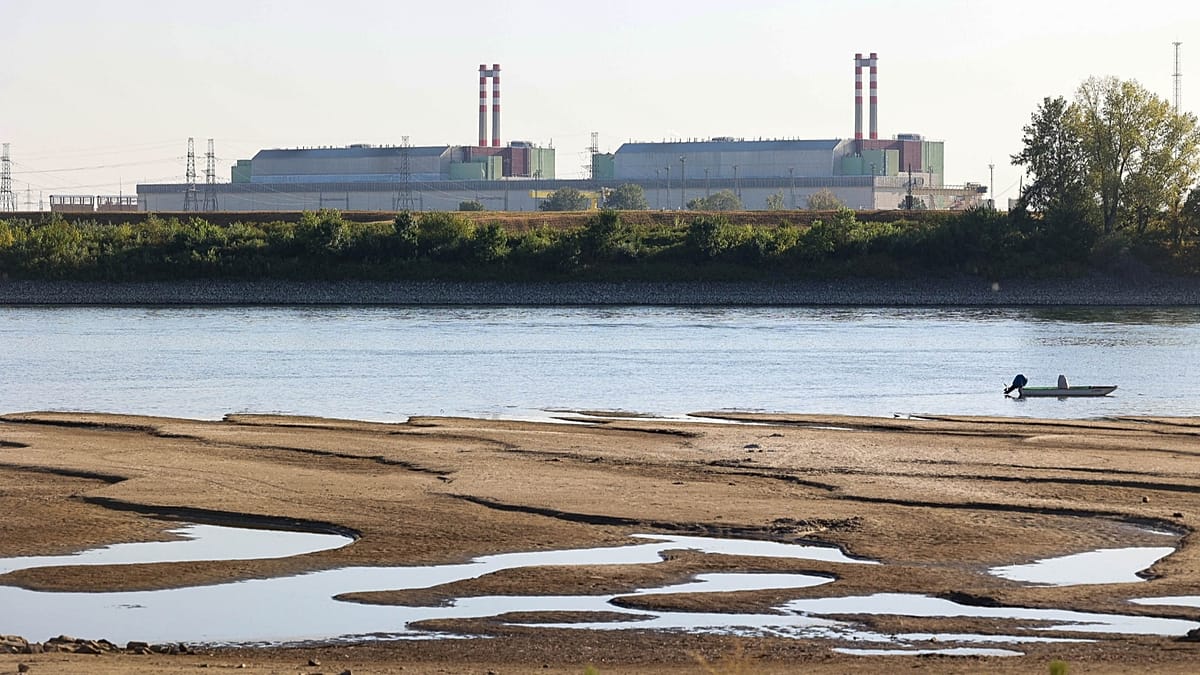
Hungary's Paks nuclear power plant, which supplies nearly half of the country's electricity, faces an unprecedented shutdown as water levels in the Danube River fall to record lows. The plant, with a capacity of 2,000 MW, relies on Danube water to cool its reactors, and the current drought has pushed the river to levels that can no longer sustain normal operations.
Speaking at a press conference in Budapest alongside his Bavarian counterpart, Prime Minister Péter Magyar warned that the plant may need to undergo a gradual, scheduled shutdown. "It seems, at this point, that the complete shutdown of the Paks power plant could take place today, or perhaps tomorrow," Magyar said. He added that the Dunamenti Power Plant, another key energy provider, had already been taken offline due to a malfunction, cutting an additional 400 MW from the grid. Repairs are underway, and the plant is expected to resume operations later on Thursday.
Magyar stressed that Hungary's energy supply remains fully secured for both businesses and households. The country's import infrastructure can handle between 3,600 MW and 3,800 MW, he noted, which should be sufficient to cover the shortfall. However, the situation underscores the vulnerability of Europe's energy systems to extreme weather events, a challenge that has become more frequent across the continent.
Recurring climate pressures on nuclear power
Paks has faced similar issues in recent years, repeatedly reducing output during summer months due to high water temperatures and low river levels. But it has never before shut down entirely. The plant uses Russian-built technology, and the previous government under Viktor Orbán agreed with Moscow to expand the facility to bolster energy security. Construction began in 2026, but Magyar, who took office after April's election, has not provided an update on the project's status.
The drought is not limited to Hungary. Low Rhine and Danube levels have disrupted European industry and energy across multiple countries, affecting shipping, power generation, and industrial production. Romania announced the shutdown of both of its nuclear reactors on 29 July, also due to low Danube water levels. The situation highlights the broader climate risks facing Europe's energy infrastructure, as rising temperatures and prolonged droughts become more common.
The Hungarian government has begun drawing up contingency plans to secure energy supplies if the drought worsens. Officials are preparing a crisis plan to identify which large public-sector and industrial consumers would need to temporarily cut consumption. Magyar emphasized that the plan would not affect community service providers, healthcare facilities, or social institutions, and would apply only to energy-intensive industrial sites.
This is not the first time extreme weather has threatened nuclear operations in Europe. In the UK, a wildfire near Suffolk nuclear plants earlier this year raised concerns about safety and continuity. Meanwhile, the Danube's low levels have also exposed historical hazards, including Nazi warships sunk during World War II, which the EU is now funding to remove.
As Europe faces warmer-than-normal temperatures this August, the pressure on water-dependent energy systems is likely to persist. The Paks shutdown, if it occurs, would be a stark reminder of the continent's need to adapt its energy infrastructure to a changing climate.