Uzbekistan is embarking on a multi-billion-dollar push to process more of its agricultural and mineral resources at home, aiming to capture a larger share of the value generated by its exports. The strategy, which combines government targets with corporate investment plans, seeks to transform the Central Asian nation from a raw material supplier into a producer of higher-value goods.
The initiative includes a $10bn (€8.8bn) target for food processing by 2030, a $4.2bn (€3.7bn) pipeline of projects for technological metals, and plans to localise 880,000 tonnes of sheet steel production annually. Copper-processing agreements, according to one of the country's largest mining groups, could multiply profits.
The drive comes as Uzbekistan receives stronger signals from international credit markets. Moody’s Ratings upgraded the country’s sovereign rating to Ba2 from Ba3 in June, citing sustained improvements in its institutional and policy framework, as well as stronger economic and fiscal conditions.
Turning crops into income
Uzbekistan produces tens of millions of tonnes of fruit and vegetables each year, according to Agriculture Minister Ibrokhim Abdurakhmonov, but he argued that output alone is no longer sufficient. “Producing 24 million tonnes is only one objective,” Abdurakhmonov told Euronews. “Those products must also reach markets and generate income.”
The minister expects processed fruit, vegetables and food products to reach $4.5bn (€4bn) this year, on the way to the 2030 target. “If production does not generate income, there can be no true food security,” he added. “Every product created and every resource used must generate returns and come back into the economy as income.”
That shift depends on more than processing capacity. Uzbekistan is linked to 92 export markets, according to the minister, and is working to expand packaging, canning, bottling and other technologies that allow agricultural goods to be sold at higher prices. The minister cited halal and organic certification, ISO standards, GLOBALG.A.P. and Better Cotton Initiative standards as areas where Uzbekistan is expanding capacity. Without certification, residue controls and reliable laboratories, higher-value food products risk being rejected by buyers abroad.
Investment needs certainty
Meeting those standards will require more than targets on paper. It will also depend on infrastructure, private capital and confidence in the rules investors are asked to follow. Kanokpan Lao-Araya, ADB Country Director for Uzbekistan, described infrastructure as a long-term investment that needs planning, maintenance and a strong legal framework. “When we talk about infrastructure, it’s a long-term investment,” she told Euronews. Roads, railways and energy systems require ongoing maintenance, skilled workers and private-sector expertise, she said. But attracting private investment also depends on political stability, a clear path to profitability, available labour and confidence in the legal framework.
The ADB is also participating in ANORA, an agrifood investment platform designed to mobilise grant funding for agribusiness and exports. Lao-Araya said it could make projects more attractive to investors while lowering costs for businesses. Italian engineering company Gamma Meccanica is among the firms investing in the country. Its president, Andrea Burini, said the company is working with Uzbek partners on stone-wool insulation and hydroponic agriculture as demand grows for new production technologies.
Metals move up the value chain
In metals and mining, the same shift is more capital-intensive and more closely tied to global supply chains. Uzbekistan Technological Metals Complex (TMK), established in 2024, is developing more than 100 projects worth an estimated $4.2bn (€3.7bn). Timur Hikmatullayev of TMK said the aim is to “geologically explore, refine, process” and then produce higher-value goods, rather than act only as a supplier of critical raw materials.
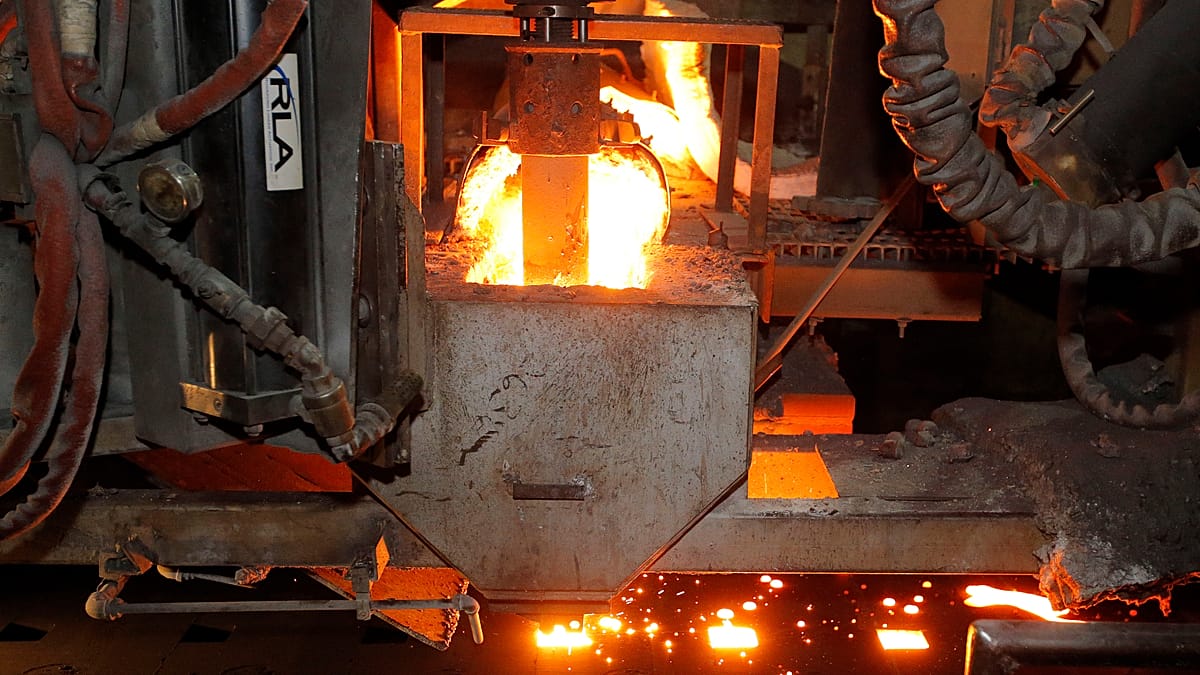
The economic logic is clearest in steel. Bahodir Abdullayev, Head of Uzmetkombinat, told Euronews that sheet steel products had traditionally been imported into Uzbekistan. New facilities are expected to localise 880,000 tonnes of sheet steel production annually, with more than 200,000 tonnes intended for export. The price gap explains why processing matters. Abdullayev said standard reinforcing bars sell for about $600-650 (€530-570) per tonne, while high-alloy steel starts at around $1,200 (€1,050) and can reach $5,000-6,000 (€4,400-5,300) per tonne. At Almalyk Mining and Metallurgical Complex, chairman Abdulla Khursanov said copper-processing and high-tech manufacturing agreements could increase company profits by two to three times.
The transparency test
For metals and mining projects, retaining more value also depends on how contracts, permits and revenues are managed. Mark Robinson, Executive Director of the Extractive Industries Transparency Initiative, which promotes better governance in oil, gas and mining, cautioned that resource-rich countries need strong institutions if mining revenues are to benefit citizens. “What they need to do is translate that resource wealth into long-term benefits by getting a fair share of resource deals,” Robinson told Euronews. He warned that pressure to accelerate critical-minerals projects should not weaken transparency in permitting and contracting. “There is a real appetite for faster permitting,” Robinson said. But faster procedures should not result in permits going to people “who may have their own self-interest and not the interests of the country in mind.”
Uzbekistan's strategy mirrors broader trends in global supply chains, where countries seek to capture more value from their resources. For European investors and policymakers, the country's progress offers a case study in how resource-rich nations can diversify their economies while attracting foreign capital. The success of these efforts will depend on whether Uzbekistan can maintain the institutional reforms that have won it credit rating upgrades and investor confidence.