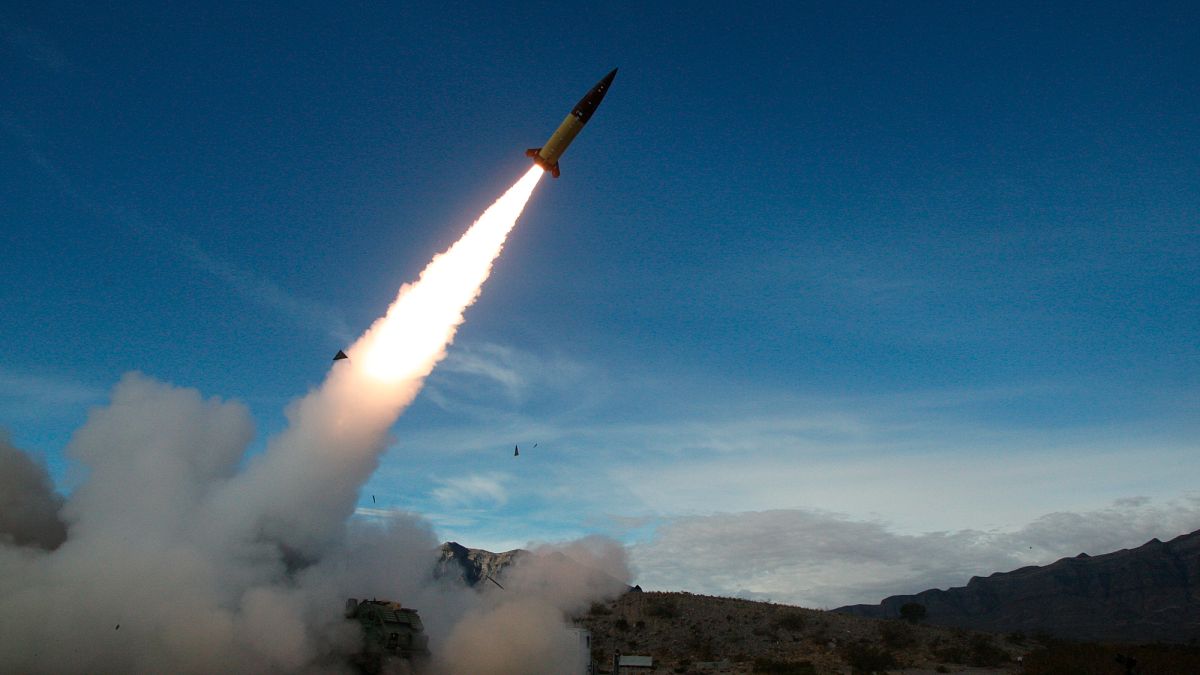
US defence contractor Lockheed Martin and Germany's Rheinmetall have signed a memorandum of understanding to establish the first European production line for the Army Tactical Missile System (ATACMS) at Rheinmetall's artillery plant in Unterlüß, northern Germany. The agreement, announced on Tuesday, marks the first time the US-developed weapon system will be manufactured outside the United States.
ATACMS, a short-range ballistic missile with a range of up to 300 kilometres, has become a critical component of Western military support to Ukraine since Russia's full-scale invasion. Ukrainian forces have used the system extensively to strike Russian command posts, logistics hubs, and troop concentrations behind the front lines.
Rheinmetall CEO Armin Papperger said the facility would assemble ATACMS missiles for NATO allies and other partner countries. "With our friends at Lockheed Martin, we are now establishing the industrial base in Germany for modern defence systems that are in high demand by Europe's armed forces," Papperger stated. He added that the company is grateful to have been selected to operate the world's first ATACMS production site outside the United States.
The announcement coincides with the NATO summit in Ankara, where European defence spending is a central topic. US President Donald Trump has pressed allies to increase their military budgets, a theme echoed by European leaders. As Von der Leyen and Rutte Urge European NATO Members to Shoulder More Defence Burden, the new production line signals a deeper shift toward localising key US weapons in Europe.
Broader Implications for European Defence Industrialisation
The decision to produce ATACMS in Germany reflects surging demand for high-end munitions across the continent. European NATO members have been racing to replenish stocks depleted by transfers to Ukraine and to meet NATO capability targets. The move also raises the question of whether Lockheed Martin and the US government would agree to establish a European production line for the company's most sought-after product: anti-ballistic missile interceptors.
On Tuesday, a senior Pentagon official told Reuters that the United States plans to establish a European maintenance hub for Lockheed Martin's PAC-3 interceptor missiles, which are used in Patriot air defence batteries. US Undersecretary of Defence Michael Duffey said Washington had not yet decided which European country would host the facility, but that Germany, the Netherlands, Poland, and Sweden are involved in the project alongside Lockheed Martin. Duffey also indicated that the US is open to eventually manufacturing the system outside the United States.
Patriot systems have been widely deployed by US allies, particularly in the Gulf, and by Ukraine. However, the US and Israel's war on Iran has depleted nearly a third of the global stockpile of Patriot interceptors. According to some estimates, Gulf states have collectively fired more than 1,100 interceptors in recent months. Ukrainian President Volodymyr Zelenskyy has noted that Lockheed Martin produces roughly 600 interceptors annually, or up to 65 per month, while Russia is manufacturing around 120 ballistic missiles monthly and has increasingly tailored its strikes to exploit gaps in Ukraine's air defence. In a recent overnight attack, Ukraine's air defences failed to intercept any Russian ballistic missiles, as reported in Ukraine's Air Defenses Fail to Intercept Any Russian Ballistic Missiles in Overnight Attack.
The establishment of ATACMS production in Germany is a concrete step toward reducing Europe's reliance on overseas supply chains for critical munitions. It also aligns with broader NATO efforts to strengthen the alliance's industrial base, a topic expected to dominate discussions at the Ankara summit. As NATO Summit in Ankara: Allies Face Trump's Demands for Higher Defence Spending, the new production line may serve as a model for future co-production agreements between US and European defence firms.