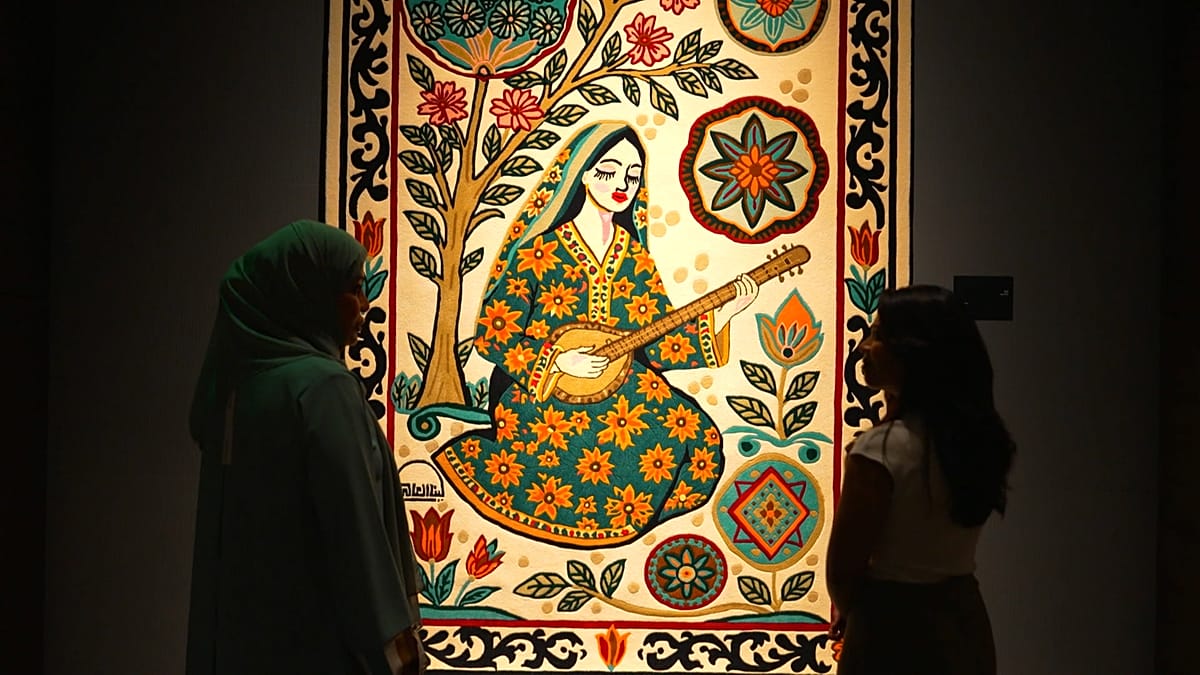
Doha's Museum of Islamic Art is currently hosting a pair of exhibitions that cast a fresh light on Uzbekistan's cultural legacy, a heritage shaped by Silk Road exchanges and centuries of Islamic scholarship. The main show, 'Uzbekistan: Heritage in Motion', traces the evolution of art, craftsmanship, and intellectual traditions from the Timurid era to the present day, while a companion display, 'Ektashif Uzbekistan', offers a Qatari lens on the same terrain.
The exhibitions arrive at a moment when Central Asia is re-emerging as a cultural and economic crossroads. For European visitors, they offer a chance to see how the region's artistic vocabulary—geometric patterns, intricate tilework, miniature painting—resonates far beyond its borders. The Museum of Islamic Art, itself a masterpiece of modern architecture, provides a fitting backdrop for this dialogue between past and present.
A curator's perspective on heritage in motion
In an interview, the exhibition's curator explained that the title 'Heritage in Motion' reflects a deliberate choice to present Uzbekistan's culture not as a static relic but as a living, evolving force. "We wanted to show how artisans and scholars have continuously reinterpreted their traditions," the curator said. "The objects on display are not just historical artifacts; they are evidence of a dynamic conversation between generations."
The exhibition draws on collections from major Uzbek institutions, including the State Museum of History of Uzbekistan in Tashkent and the Registan complex in Samarkand. Among the highlights are illuminated manuscripts, ceramics with cobalt-blue glazes, and embroidered textiles known as suzani. Each piece tells a story of cross-cultural influence, from Persian poetry to Chinese motifs, reflecting the region's position at the heart of the ancient Silk Road.
One section focuses on the role of calligraphy, a discipline that flourished in cities like Bukhara and Khiva. Visitors can see pages from the Katta Langar Qur'an, one of the largest manuscripts of its kind, alongside contemporary works by Uzbek calligraphers who continue to push the boundaries of the form.
Qatari artists respond to Uzbekistan
The second exhibition, 'Ektashif Uzbekistan', takes a different approach. It features works by Qatari artists who traveled to Tashkent, Samarkand, and Bukhara as part of a cultural exchange program. Their responses range from photography and video installations to abstract paintings inspired by the region's architecture and landscapes.
This cross-cultural dialogue is particularly timely, as Qatar and Uzbekistan have deepened ties in recent years, with increased trade and diplomatic engagement. The exhibitions also underscore a broader trend: Gulf states are increasingly looking to Central Asia as a partner in culture and education, a shift that European cultural institutions are watching closely.
For those unable to travel to Doha, the museum has launched a digital platform with virtual tours and interviews with artisans. This online component extends the reach of the exhibitions to a global audience, including Europe, where interest in Central Asian art has been growing. Museums across the continent, from Berlin to London, have recently staged shows on Silk Road cultures, and this Doha presentation offers a complementary perspective.
The exhibitions run until early next year, and the museum has scheduled a series of lectures and workshops. For European travelers planning a visit to the Gulf, the shows provide a compelling reason to include Doha on their itinerary, alongside the city's other cultural landmarks.
As the curator noted, "Heritage is not about preserving the past in amber; it's about carrying it forward. These exhibitions are an invitation to join that journey."