Across Central Asia, horses have been central to life for centuries — carrying traders along the Silk Road, accompanying armies, and helping communities adapt to harsh landscapes. Today, in Uzbekistan, horses are no longer a necessity but a living link to heritage, sport, and cultural identity. Riding schools, breeding centres, and polo clubs are introducing a new generation to equestrian traditions while preserving some of the country's most important horse breeds.
Polo's Ancient Roots and Modern Revival
One of the clearest examples of this revival is polo. Known historically as Chovgan, the sport was once played by rulers and warriors across Central Asia long before evolving into the modern game. According to Aziz Rustambayev, Chairman of the Polo Federation, the game spread across the region centuries ago. "In Uzbekistan, polo is part of our historical heritage," he says.
The Polo Federation, established in 2020, has focused on expanding access to the sport. Riding schools have opened across all regions of the country, offering young people the chance to learn equestrian skills and discover polo. Today, eight polo teams compete nationwide, including women's teams. National championships are held throughout the year, and new international partnerships are creating opportunities for local players to compete abroad.
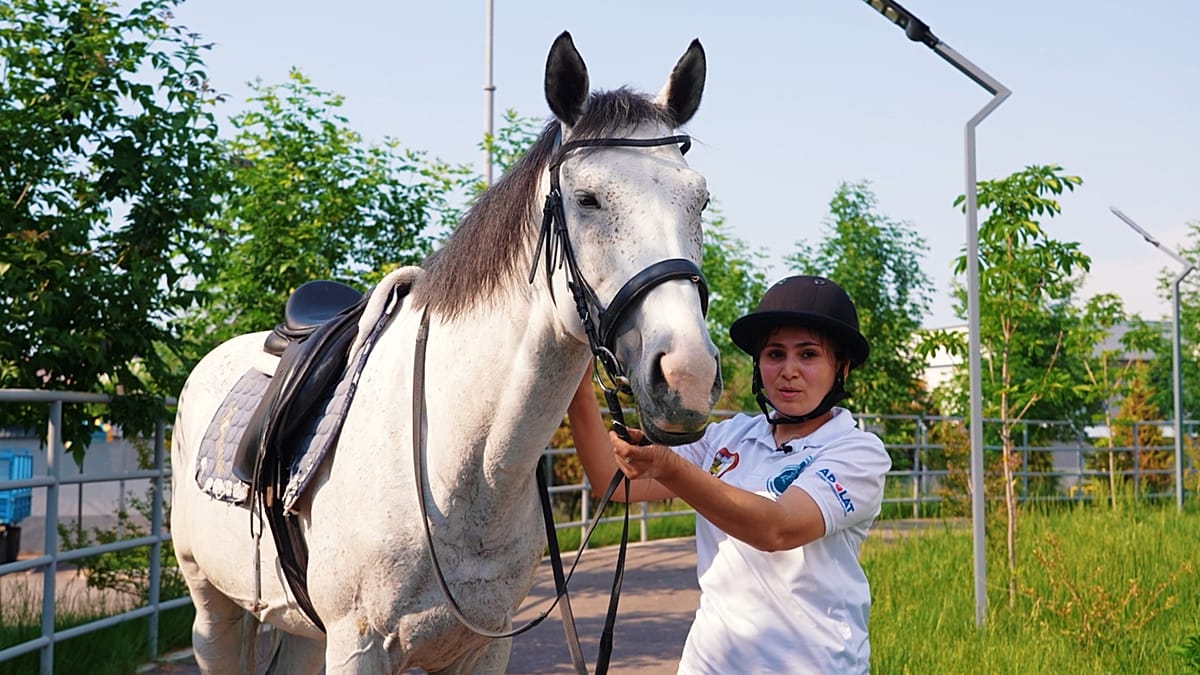
Among those shaping the sport's future is national team rider Shahnoza Sharipova. She was among the women who helped establish dedicated women's polo teams after previously training alongside male players. For Sharipova, success in polo begins with understanding the horse itself. "The best way to build a bond with a horse is to offer it a carrot or an apple and gently stroke its neck," she explains. "Horses remember people. If you treat a horse kindly, it will never treat you badly." Her experience reflects a broader philosophy across the equestrian community, where riding is seen as a partnership between rider and animal.
Breeding Heritage: The Qora Bayir Horse
While polo represents one side of Uzbekistan's modern equestrian scene, horse breeding remains equally important. In Surkhandarya, the Qora Bayir Horse Mastery School, established under the National Guard in 2021, works to preserve and promote one of the country's best-known horse breeds. The institution combines breeding programmes with rider training and equestrian education, focusing on increasing the population of Qora Bayir horses while preparing them for disciplines such as polo, ulak-kupkari, tent pegging, and show jumping.
According to Deputy Director Akmal Shermatov, the breed has deep historical roots in Central Asia and is valued for its adaptability and endurance. "The Qora Bayir horse has deep historical roots in Central Asia," he says. "It is highly adaptable, exceptionally resilient, and capable of thriving in a wide range of environments." Unlike some larger European breeds, Qora Bayir horses can travel across mountains, deserts, rivers, and open plains while adapting to different climates.
The school began with around 30 horses and has significantly expanded its breeding programme in recent years. Today, hundreds of young people train there under experienced instructors, riders, and veterinarians. Among them is Sharifakhon Ibragimova, who discovered equestrian sport only a year ago. "I feel very comfortable and confident when I take part in it," she says. "I would like to continue practising it in the future and compete at major events." Her ambitions reflect a growing interest in horse riding among younger generations, particularly as new facilities and training programmes become available.
Equestrian Traditions in Karakalpakstan
That enthusiasm is also visible in Karakalpakstan, where equestrian traditions remain closely connected to local culture and daily life. At the Equestrian School of the Republic of Karakalpakstan, around 70 children train in disciplines ranging from horse racing and polo to ulak-kupkari, tent pegging, and horseback wrestling. The school is home to several breeds, including Akhal-Teke horses, European warmbloods, and Qora Bayir horses. Both boys and girls participate, and students regularly compete in regional and national tournaments.
Director Renat Joldashev says horses have always been part of life in the region. "Our ancestors rode horses, hunted on horseback, and played ulak-kupkari," he explains. "Today, our young people continue these traditions through equestrian sports, preserving our culture and customs." For many students, learning to ride is about more than mastering a sport — it is also an introduction to responsibility and care. Young rider Zarafiddin Zaitov believes the first lesson is learning how to earn a horse's trust. "You need to show affection to the horse, feed it, pet it, and build trust," he says. "Only then should you ride it."
The idea is echoed by riders, trainers, and breeders across the country. Whether preparing horses for competition, preserving historic breeds, or teaching children to ride for the first time, the relationship between humans and horses remains central. Today, horses serve many roles: athletes, companions, working animals, and cultural symbols. They connect modern sporting ambitions with centuries of history and help preserve traditions that continue to shape communities across Uzbekistan.
For a broader perspective on how heritage and innovation intersect across Europe, see how invisible solar panels are helping preserve heritage sites like Pompeii and Évora. Meanwhile, the country's youthful demographic is also driving ambitions in technology, as Uzbekistan targets $5 billion in AI exports by 2030.