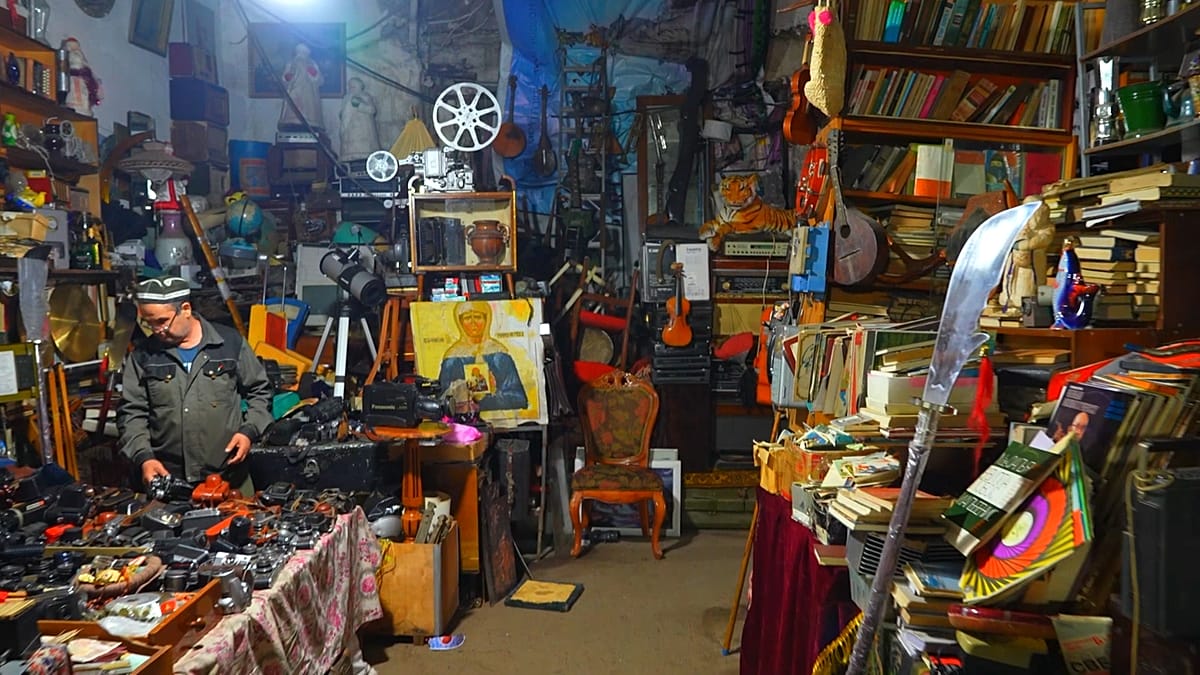
In Uzbekistan, a network of flea markets and antique spaces is quietly keeping history alive, offering a tangible connection to the past through objects that range from worn furniture to rare photographs. From the capital Tashkent to the historic cities of Fergana and Bukhara, these venues are not just commercial enterprises—they are repositories of cultural memory, shaped by personal collections and family traditions.
In Tashkent, the antique salon run by Lyubov Shapulina has operated for over three decades, evolving from a small family initiative into a professional business. Shapulina, who inherited the trade from her parents, explains that the focus shifted from contemporary art to antiques as more people brought older items for evaluation. “I did not come into the antiques business as a profession, I am continuing my parents’ work,” she says. “If earlier this work was about intuition and simply good taste, today I approach it primarily as professional work. We are engaged in attribution and pay attention to the historical context of each item.”
Her collection now includes around 2,000 objects, from antique furniture to contemporary paintings. Shapulina emphasizes the symbiotic relationship between antique dealers and modern artists: “It’s a kind of symbiosis. We cannot exist without each other.” She also notes a growing interest among younger audiences and local businesses, particularly in interior design. “We go into hotels or guesthouses and already see elements of antiques in the interior—antique cabinets, suzani textiles, embroidery, carpets. I can see real changes and a strong interest in the history of Uzbekistan.”
From Open-Air Markets to Private Museums
Beyond curated salons, open-air flea markets like Yangiabad Bazaar in Tashkent attract collectors and tourists seeking unusual objects. Abdurashid Matboboyev has specialized in vintage photographic and film equipment for nearly 20 years. “My main field is photographic equipment—photo and cinema equipment,” he says. “That interest stayed with me from my youth.” His customers include foreign tourists, especially photographers searching for vintage lenses. Working with international visitors has helped him pick up several languages: “I can speak some English, a little Japanese, some Chinese, and a bit of Italian and French.”
Matboboyev observes that younger local buyers are increasingly interested in older technology. “Young people today are becoming interested in old items. They say they want that old quality.” He believes vintage aesthetics are returning to cafés, restaurants, and public spaces across the country. “The trend is coming back,” he says.
In the Bagdad district of the Fergana region, collector Mirzaolim Tursunov has transformed his home into a private museum housing more than 3,000 objects. What began as a coin collection in the 1990s expanded into an archive of books, medals, copperware, and handcrafted artefacts. “The very first item I acquired was a coin from the Kushan period,” he recalls. “That’s how it all began.” Tursunov, who is not interested in resale value, says, “I collect these items for our people, for my children, for our nation. I want to preserve them as part of our heritage.” His museum regularly receives school groups and foreign visitors, including tourists from the United States and Ireland.
In Bukhara, smaller antique markets attract collectors interested in ceramics, suzani textiles, old books, and teapots. Seller Dilorom Jumayeva notes that visitors often feel transported by the objects. “People who come here immerse themselves in history. It feels as if they step into the past through the objects they see.” Among her collection is a book more than 400 years old, which draws strong interest.
These spaces across Uzbekistan reflect a broader trend: the preservation of cultural heritage through everyday objects. As Shapulina puts it, “When you have been in this field for more than 25 years, you begin to treat antiques as part of the historical and cultural heritage of our region.” For European readers, this story offers a glimpse into how a Central Asian nation is maintaining its history through personal initiative, much like the antique markets and local markets that sustain traditions across Europe.