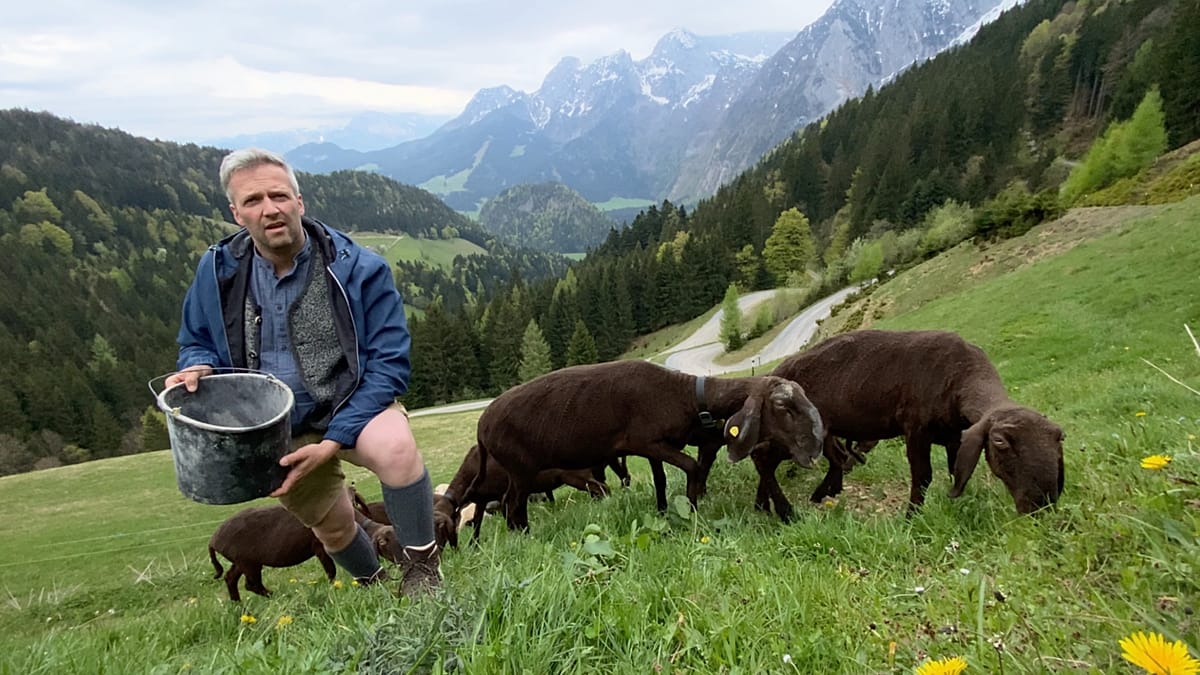
In Abtenau, a market town near Salzburg, Josef Quehenberger represents the tenth generation on his family farm. At 46, he breeds sheep, cows, and turkeys, produces gardening pellets from sheep wool, and delivers organic turkey meat directly to customers. His farm has weathered epidemics, two world wars, the Nazi era, and the coronavirus pandemic. 'I am happy and proud to be bringing it into the future,' he says.
Josef is not alone. Abtenau, with about 6,000 residents, hosts over 200 farms. Johanna Wallinger arrived 30 years ago and now runs a thriving operation with 200 goats and cheese-making facilities. 'We’re doing very authentic farming,' she explains. 'I think Austria has great potential here, because we can really produce in a natural way that is close to consumers.'
Local Networks and Public Support
Some 60 local producers in the area supply a cooperative shop with meat, cheese, yoghurts, vegetables, and herbs, bypassing middlemen. Georg Buchegger, the shop’s general manager, notes: 'The basic idea was simply that micro-enterprises market their produce themselves and the added value just remains local.'
Public support is a key driver. The Salzburg Chamber of Agriculture, with 35,000 members, offers training, legal and business advice, subsidy navigation, and product promotion for farmers, especially young ones. President Rupert Quehenberger acknowledges challenges: 'The problems are exactly the same for Salzburg farmers as for other European farmers. We have bureaucracy and markets that are just as challenging.' He adds that the region's strength lies in quality and recognisability: 'The only way we can survive on the market is through quality and where the product has a face.'
Salzburg authorities have created a coveted label certifying local origin, enhancing market potential. Günther Kronberger, Managing Director of Salzburg Agrar Marketing, reports: 'We currently have around 2,800 certified products, 170 certified restaurateurs, and 90 kitchens in public catering, which alone cook 40,000 portions a day. They meet certain criteria for regional products that we process, which we also control.'
Training the Next Generation
Austria operates about 70 farming schools. Winklhof Farming School near Salzburg trains 260 students aged 14 to 17. Applications have surged in the last five years. Director Georg Springl says: 'We are trying to shape young people in such a way that they not only get along in professional life, but also learn the basic skills for their personal lives.'
This model contrasts with struggles elsewhere in Europe. While French farmers have protested fuel costs and Cyprus farmers face EU veterinary rule standoffs, Austria's approach emphasizes local resilience. The EU's upcoming budget talks may reshape agricultural funding, but for now, Austria's combination of family farms, public support, and training offers a blueprint for rural renewal.