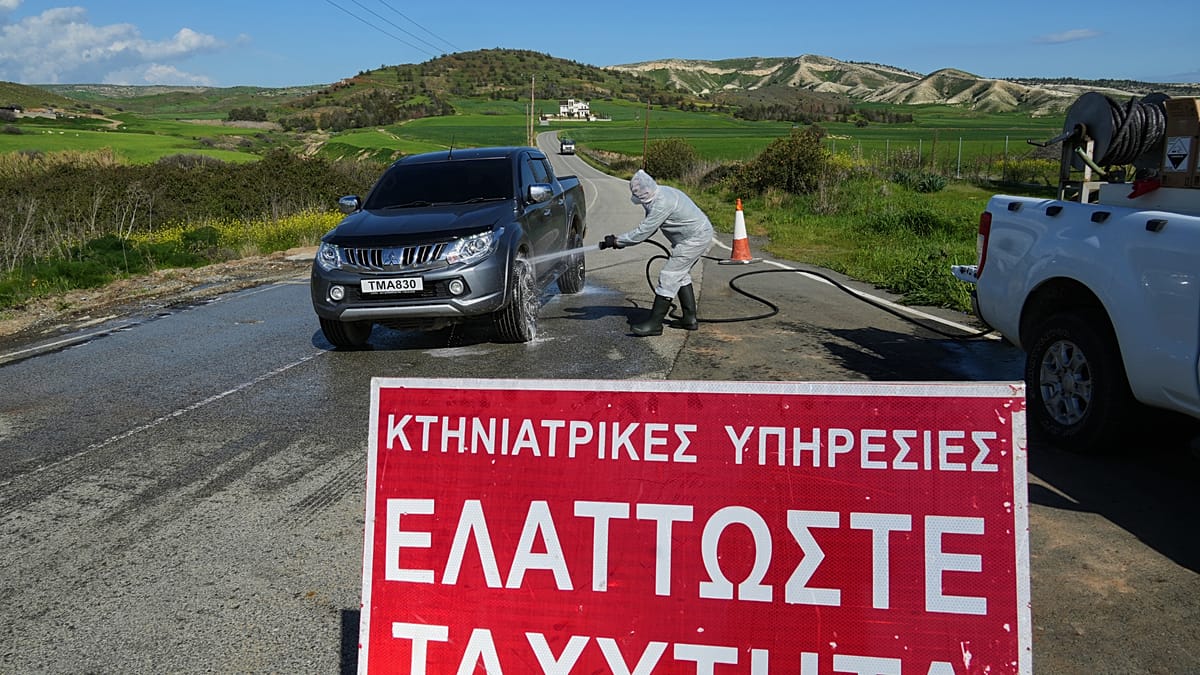
Nicosia is bracing for a confrontation between the government and livestock farmers as a mass culling of animals, mandated by European Union veterinary protocols, sparks anger across the island. The newly formed Cyprus Livestock Association, representing around 200 members, has threatened “strong action” unless authorities change their approach—even if financial compensation is approved.
Speaking to state broadcaster RIK, association spokesperson Stella Petrou argued that EU rules allow for alternative methods to manage the outbreak. She said farmers have not received clear details on compensation, including coverage for production costs, feed, and lost income. While ruling out airport blockades, Petrou said demonstrations would target the Presidential Palace and major urban roads.
Scope of the Outbreak and Economic Impact
The culling has so far affected 38,900 sheep and goats, 2,247 cattle, and 21,500 pigs. Data from 110 affected farms indicate losses equivalent to 9.5% of adult sheep and goats, 2.8% of cattle, and nearly 7.9% of pigs. The economic toll is significant, particularly for the island’s prized halloumi cheese, a key export product.
Government spokesman Konstantinos Letymbiotis said the response must strictly follow EU veterinary protocols and cannot be subject to political pressure. He confirmed that President Nikos Christodoulides is closely monitoring the situation but has no plans for a new meeting with farmers at this stage. On compensation, Letymbiotis said discussions are advancing, with announcements expected once procedures are finalised.
“We understand the frustration, but protecting public health remains the priority,” Letymbiotis said. He added that authorities have already held extensive meetings with stakeholders and EU officials, making clear that there is no room to deviate from European regulations.
Veterinary Association Rejects Alternative Claims
Dimitris Epaminondas, head of the Pancyprian Veterinary Association, rejected claims that alternative EU protocols exist. He said the bloc applies a unified eradication strategy to prevent the spread of the disease through trade, leaving no flexibility for individual member states. Epaminondas also warned that failure to comply could lead to a trade embargo, potentially affecting exports of halloumi, a key product for the Cypriot economy.
The standoff highlights the tension between EU-wide health standards and local economic realities. Similar disputes have emerged in other member states, such as when negative electricity prices threatened renewable energy investments, or when trade tensions with the US forced Brussels to defend its regulatory framework.
For Cyprus, the stakes are high. The island’s livestock sector is relatively small but economically important, and the threat of a trade embargo could have ripple effects across the broader economy. Farmers argue that the EU’s one-size-fits-all approach fails to account for local conditions, while the government insists it has no choice but to comply.
As protests loom, the question remains whether Brussels will offer any flexibility. For now, the European Commission has not signalled any willingness to deviate from its standard protocols, leaving Cypriot farmers with few options beyond the streets.