Venezuela's acting president, Delcy Rodríguez, reaffirmed on Saturday that the country will maintain full ownership and sovereignty over its oil reserves, even as a new agreement with the United States opens the door to significant American involvement in the South American nation's energy sector.
"One thing must be absolutely clear: Venezuela retains ownership and sovereignty over its resources," Rodríguez said in a state television broadcast, responding to the deal announced by US President Donald Trump on Friday.
The agreement, which has been described as historic, grants the US access to 65 billion barrels of Venezuela's proven oil reserves. According to Rodríguez, it also outlines the development of 17 strategic fields and could attract more than $100 billion in investment, with over $209 billion expected in tax revenues for the state.
Rodríguez framed the deal as a means to transform Venezuela's underground wealth into "a source of social and economic well-being for the people of Venezuela." However, critics have questioned the lack of transparency surrounding the agreement, with social media users asking whether it will genuinely benefit ordinary Venezuelans.
The deal comes after more than a decade of economic crisis that has deterred foreign investment. Some analysts now see the US as a necessary guarantor for investment in Venezuela, which holds the world's largest proven oil reserves.
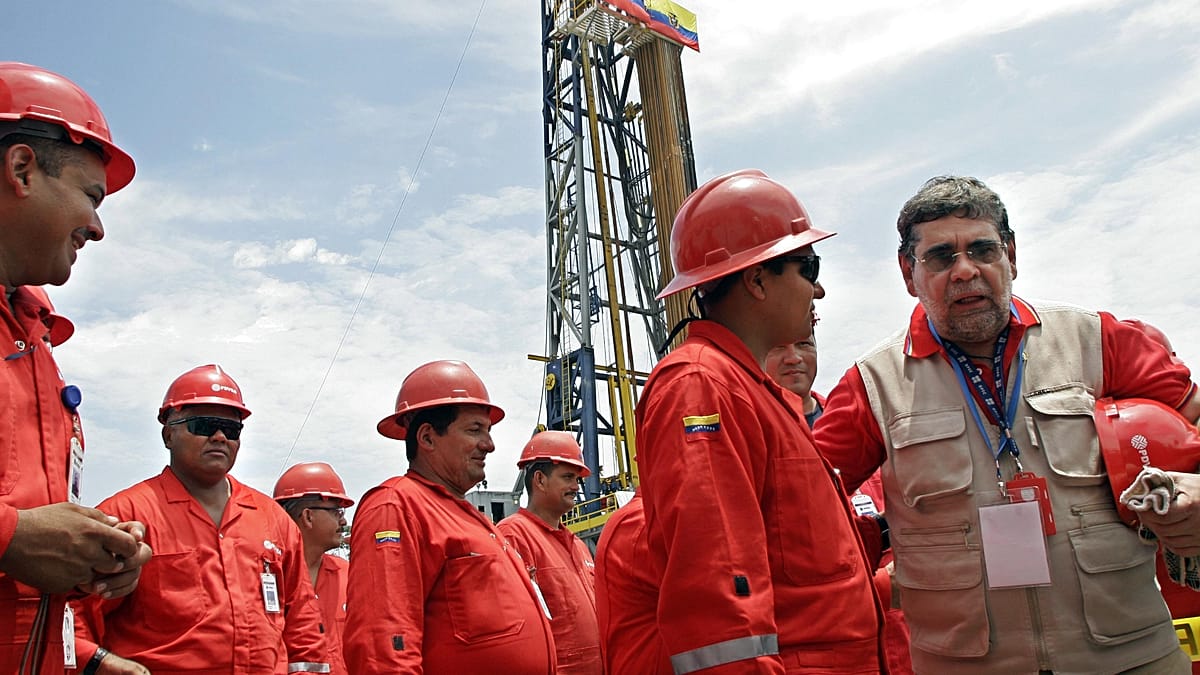
"Without this, these fields would not be developed over the next 10 or 15 years," said Oswaldo Felizzola, a professor at the Institute of Advanced Studies in Administration (IESA) in Caracas, adding that Venezuela's state-owned oil company, Petróleos de Venezuela, "does not have the financial resources to do so."
Oil production in Venezuela rose by 29.8% between January and July, reaching 1.2 million barrels per day—still far below the three million barrels per day recorded 25 years ago. Rodríguez has introduced reforms in the mining and oil sectors to facilitate private and foreign capital, while Washington has eased sanctions on Venezuela's oil industry.
US Secretary of State Marco Rubio hailed the deal on X as "a huge win for both the American and Venezuelan people."
European implications and reactions
The agreement has drawn attention beyond the Americas, as European energy companies and policymakers watch closely. The European Union has maintained sanctions on Venezuela's leadership, but the prospect of increased oil supply could influence global energy markets and Europe's diversification efforts.
European firms, particularly from Spain, Italy, and France, have historical ties to Venezuela's energy sector and may see new opportunities. However, the EU's stance on democratic governance and human rights in Venezuela remains a complicating factor.
Analysts in Brussels note that the deal could shift the balance of power in the region, with potential ripple effects for European energy security. As Europe seeks to reduce reliance on Russian gas, Venezuelan oil could become an alternative source, though logistical and political hurdles remain.
The coming months will test whether the agreement delivers on its promises, both for Venezuela's economy and for international investors. For now, Rodríguez's insistence on sovereignty underscores the delicate balance between attracting foreign capital and maintaining national control over strategic resources.