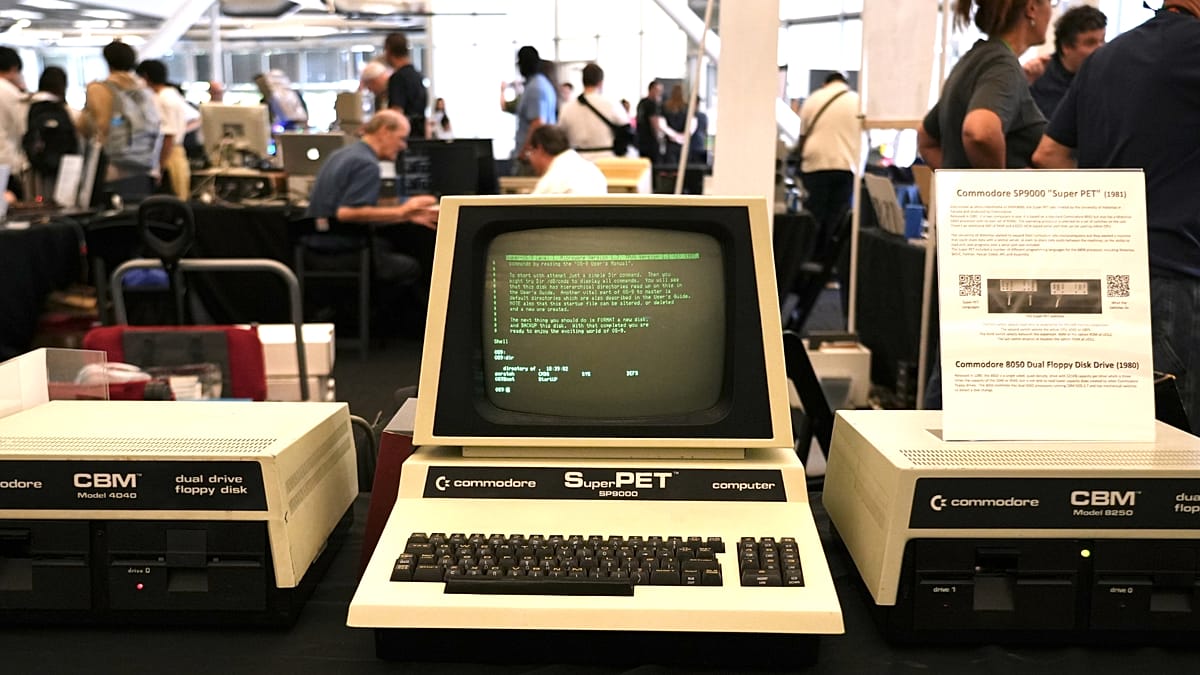
As artificial intelligence accelerates the world into an uncertain future, a quieter counter-movement is gaining momentum: the preservation of the machines that laid the groundwork for the digital age. From Seattle to Berlin, collectors are scouring flea markets, online auctions, and estate sales for the beige boxes and chunky keyboards that once defined computing.
Josh Dersch, a software engineer based in Seattle, estimates he owns more than 200 vintage computers and devices. His collection, which fills his home, reflects a deep fascination with the origins of technology. “It’s always been fascinating to me to see the origins of things,” Dersch said. “It’s a fun challenge to debug and repair. You can understand the entire system from top to bottom.”
Dersch is part of a growing community that spans the Atlantic. While Silicon Valley pours billions into generative AI and cloud computing, these hardware enthusiasts are dedicated to saving the Ataris, Commodores, and IBM machines that are the ancestors of today’s laptops and smartphones. For them, these machines are not obsolete junk but artifacts of a transformative era, worthy of careful restoration and celebration.
Festivals bring collectors together
The Vintage Computer Federation, a non-profit that organizes events across North America and Europe, has seen interest surge. Its president, Erik Klein, a Silicon Valley software engineering manager, notes that the enthusiasm for computer history is expanding. “The enthusiasm for the history of computers and all the stuff around it is growing,” he said.
This year, the Vintage Computer Festival in Mountain View, California, drew more than 3,500 attendees over two days in early August. The event marked the 50th anniversary of Apple, founded in 1976 in nearby Cupertino, with a panel featuring co-founders Steve Wozniak and Ronald Wayne. More than a dozen similar gatherings have now sprung up in cities across North America, South America, and Europe, including Germany and Switzerland.
The growing interest is reflected in online marketplaces, where demand for vintage computers has risen. Rare icons like the Apple-1, Apple’s first product, can fetch hundreds of thousands of euros. Collectors exhibit painstakingly restored systems, allowing visitors to play with machines built long before the internet, social media, or AI transformed daily life.
Restoring the 'grandfather of the modern computer'
Dersch drove down from Seattle to showcase the pride of his collection: the Xerox Alto. Developed at the Xerox Palo Alto Research Center in the 1970s, the Alto is considered “the grandfather of the modern computer.” It was among the first to use a mouse and graphical user interface—windows, icons, and cursors—that later became industry standards. The Alto famously inspired Steve Jobs and Bill Gates to incorporate these technologies into their early products.
Dersch spent years restoring his Alto, a process that involved sourcing rare parts and reverse-engineering circuits. “It’s a piece of history that changed everything,” he said. “Being able to bring it back to life is incredibly rewarding.”
Klein, who once owned as many as 150 computer systems, now keeps only a few favorites. He describes his former collection as an “albatross” that overwhelmed his home and family life. He began selling and giving away machines, channeling his passion into organizing festivals, repair workshops, and swap meets as president of the Vintage Computer Federation.
“So it’s really about evangelising that history and evangelising this hobby of maintaining, collecting and enjoying this vintage technology,” Klein said.
Sellam Ismail, who organized the first festival in 1997, is thrilled to see the community mature. That first event drew about 150 hobbyists to a venue east of San Francisco. He later co-founded the Vintage Computer Federation and has helped launch similar festivals in Argentina, Germany, and Switzerland. “The community grew up. More and more people started getting old computers, started collecting them,” Ismail said. “Next year is the 30th anniversary. And I expect this to continue and grow even bigger.”
For European collectors, the appeal is both nostalgic and educational. In Berlin, a group of enthusiasts meets monthly to swap parts and share repair tips. In London, a museum dedicated to computing history has seen visitor numbers climb. The hobby also intersects with broader concerns about digital preservation and the environmental cost of constant upgrades. As Europe's digital future depends on securing critical networks, understanding the past becomes ever more relevant.
While the AI boom reshapes the tech industry, these collectors ensure that the machines that started it all are not forgotten. Their work is a reminder that every innovation stands on the shoulders of earlier breakthroughs—and that sometimes, the most forward-looking act is to look back.