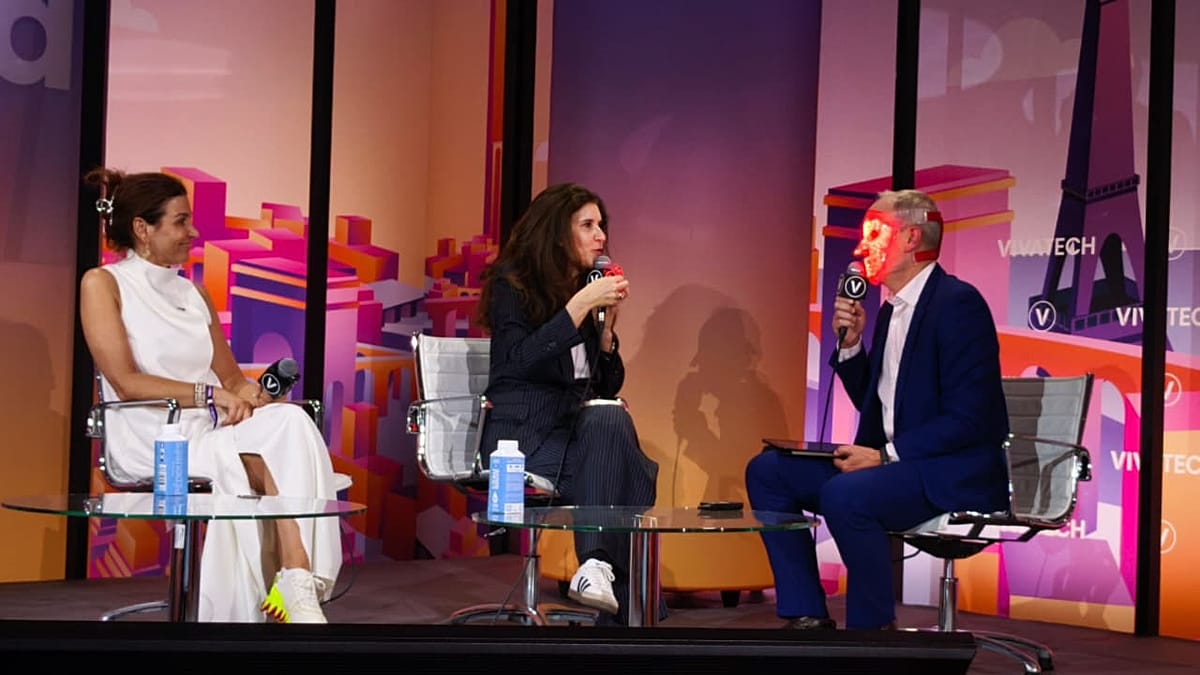
At VivaTech 2026 in Paris, a session hosted by Euronews brought together leaders from L'Oréal and PwC to discuss a theme that resonated across the sprawling exhibition halls: how to sustain vitality—both personal and corporate—in an era of rapid change. The conversation, framed around the inevitability of aging in business and in life, offered practical prescriptions for staying relevant.
Delphine Viguier, L'Oréal's Chief Innovation and Prospective Officer, opened with a wry observation: "I have much more wrinkles than my business plan." Her point was that aging—whether of skin or strategy—demands a shift in habits. For individuals, she recommended oral supplements, sunscreen, and anti-aging products. For companies, the equivalent is boosting innovation, opening up to external ideas, and rediscovering creativity. Viguier stressed that data, now sharpened by artificial intelligence, allows her team to identify patterns in what has worked and what hasn't, helping them "not to repeat the same mistakes."
Pauline Adam-Kalfon, Chief Innovation and Impact Officer at PwC France and Maghreb, offered a more surgical approach. "Reinvention starts with subtraction," she said. Her advice: eliminate any business activity that no longer creates differentiated value, rather than simply piling on new projects. This principle, she argued, is essential for maintaining agility in a crowded market.
Data as the Antidote to Fads
Both executives agreed that data is the antidote to chasing every passing trend. At L'Oréal, Viguier explained that the company's vast data sets, now enhanced by AI, enable her team to spot patterns in successful and failed initiatives. Her rule of thumb: it is acceptable to pursue short-term, trend-based wins as long as the long-term product lines—the bedrock of the company—remain the priority.
Adam-Kalfon brought numbers from PwC's own research into how companies use AI. She revealed that just 20% of surveyed firms capture 74% of the value AI generates, with top performers seeing productivity or revenue gains over seven times higher than the rest. Closing that gap, she said, requires a playbook: use AI to drive growth, not just efficiency, and scale successful experiments quickly.
The discussion also touched on the importance of diversity—both in personal life and business. Viguier likened it to biology: "When you have mixed origins, you have better vitality." For her, working with people from different backgrounds is key to a good prevention strategy. Adam-Kalfon echoed this, noting that understanding diverse perspectives helps companies avoid blind spots.
When Things Go Wrong
When a business does falter, Adam-Kalfon said the trouble is rarely cosmetic. It tends to sit in three areas: a loss of relevance in what you offer customers, erosion of margins in the operating model, and a slowdown in decision-making that leaves a company too slow to react. These are the cracks that need immediate attention.
The session was hands-on, with L'Oréal demonstrating its LED face mask, designed to rejuvenate skin at a cellular level, while PwC showcased its AI fitness application, which offers an instant health check for businesses wanting to assess their readiness for the world's biggest technology trend. Neither guest pretended longevity would be easy, but both offered a clear message: personal vitality and organisational resilience are no longer a luxury—they are a competitive necessity.
VivaTech, now in its tenth edition, has become a key venue for such cross-sector conversations. The event, which drew over 200,000 visitors to Paris, continues to debate the promise and peril of AI, as reported by European Pulse. Meanwhile, France and Germany are pushing for European AI sovereignty, a topic that dominated discussions at the conference.