Strasbourg, 13 September – European Commission President Ursula von der Leyen took the floor in the European Parliament this morning for her annual State of the Union address, a moment that arrives this year with the Union under unusual strain. Security on the eastern flank, industrial competitiveness, migration pressures, and a volatile transatlantic relationship all featured in her remarks, which sought to project confidence even as questions mount about the EU's capacity to act.
Von der Leyen's speech was, in many ways, a balancing act. She reaffirmed unwavering support for Ukraine, promising continued financial and military aid, and called for a genuine European defence union. On the economy, she outlined plans to deepen the single market, boost investment in strategic technologies, and reduce dependencies on China. Migration, a perennial flashpoint, was addressed with a call for a more coordinated return policy and stronger external border management.
The Ring: A Clash of Visions
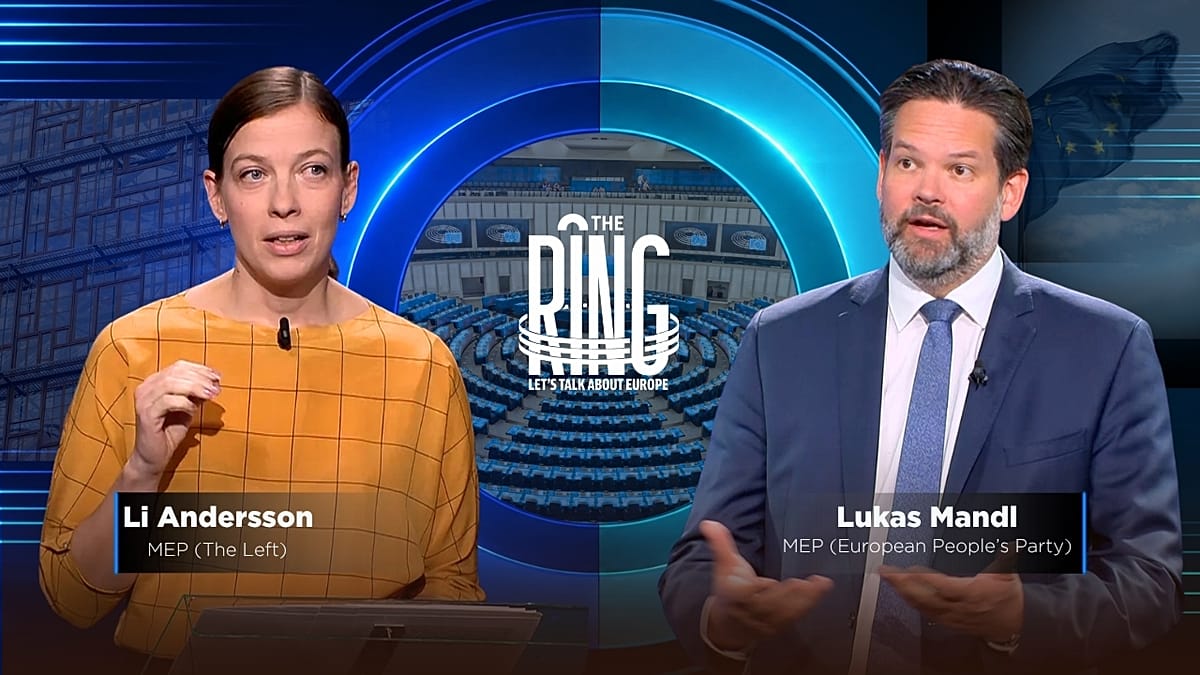
But the real test of her vision comes tonight. At 20:30 CET, our debate programme The Ring brings together two MEPs from opposite ends of the political spectrum to scrutinise the speech. Li Andersson, a Finnish MEP from The Left, and Lukas Mandl, an Austrian MEP from the European People's Party, will go head to head on what Europe truly needs.
Andersson is expected to challenge the Commission's focus on competitiveness at the expense of social cohesion and climate action. Mandl, a member of the largest centre-right group, will likely defend the market-oriented approach and stress the importance of security and border control. Their exchange promises to highlight the deep ideological rifts that run through the Parliament, much like the recent Ceuta debate exposed tensions within the centrist alliance.
The central question is whether von der Leyen's proposals are realistic. On defence, she spoke of a European pillar within NATO, but the bloc's member states remain divided over funding and procurement. On migration, her calls for solidarity have often collided with national vetoes. And on the economy, the gap between ambitious rhetoric and legislative reality is a recurring theme.
Von der Leyen also touched on climate and technology, two areas where the EU has tried to lead globally. She reiterated the goal of climate neutrality by 2050 and announced a new heatwave preparedness plan, a response to the adaptation funding gaps that have drawn criticism. On artificial intelligence, she urged a cautious approach, calling for a slowdown in frontier AI development, a stance that has sparked debate across the bloc.
Yet critics argue that the Commission's agenda is often more about institutional ambition than tangible outcomes. The Vice-President's expectation that the speech would deliver a message for all Europeans may be hard to meet when the Union is so fragmented.
Tonight's debate will not only assess the speech but also the broader question of whether Brussels is becoming more powerful or simply more ambitious. As the EU faces a defining moment on migration, defence, and Ukraine, the gap between promises and delivery is under the microscope. Tune in to The Ring at 20:30 CET for a discussion that could shape the political agenda in the coming months.