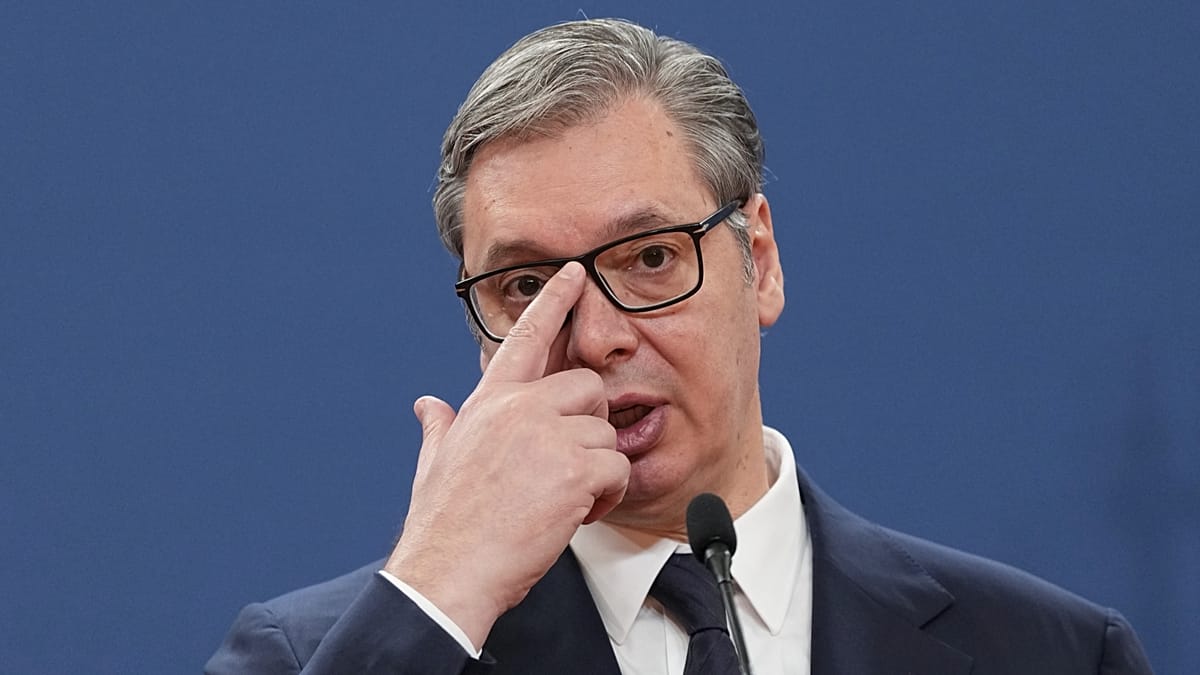
Serbian President Aleksandar Vucic has adopted a combative stance during his visit to Beijing, pushing back against what he describes as European Union efforts to dictate his country's foreign policy. Speaking to reporters upon arrival, Vucic accused Brussels of trying to prevent Serbia from maintaining its close relationship with China, its largest foreign investor.
“It would be best if they just made me a wish list of who I am allowed to talk to and who I am not,” Vucic said at a press conference. “Then what do we need a president for? What do we need a government for?” He added: “Serbia is an autonomous, sovereign, independent state and will continue to act in accordance with its interests.”
China's Growing Influence in the Balkans
Vucic's visit follows Chinese President Xi Jinping's trip to Belgrade in 2024, during which the two countries signed a free trade agreement. Under the deal, China agreed to eliminate tariffs on nearly all Serbian imports over the next decade, cementing Beijing's role as Serbia's top economic partner. This deepening relationship has become a major sticking point in Serbia's EU accession process, which began in 2009. Brussels is wary of admitting a member state whose economic and political ties with China are more extensive than those of any current EU government.
The 2024 free trade deal was struck just as the EU was intensifying its efforts to curb imports of Chinese electric vehicles to protect the bloc's domestic market. Those efforts have only escalated in the two years since, creating a direct conflict between Serbia's bilateral agreements and EU trade policy.
Xi's Diplomatic Marathon
Vucic's trip to Beijing comes amid a flurry of high-profile visits hosted by Xi. In recent weeks, the Chinese leader has welcomed US President Donald Trump and Russian President Vladimir Putin. Trump's visit focused on easing trade tensions that have flared since the start of his second term, with the two sides announcing a trade council aimed at establishing “a framework arrangement for reciprocal tariff reductions on products of equivalent scale.” The potential deal could lower or eliminate tariffs on goods worth approximately $30 billion.
Putin's visit, meanwhile, saw Xi and the Russian president sign a joint statement on increased military cooperation. This development dealt a blow to European hopes of persuading China to reduce its support for Moscow's full-scale invasion of Ukraine. For more on this, see our coverage of Putin and Xi Deepen Military Ties in Beijing, Dimming Hopes of Splitting Russia from China.
The timing of Vucic's visit underscores the delicate balancing act Serbia faces as it seeks to maintain its EU candidacy while deepening ties with Beijing. The Serbian president's defiant tone suggests that Belgrade is unwilling to sacrifice its relationship with China for the sake of European integration, a stance that could further complicate its path to EU membership.
As Xi continues to host world leaders, the Chinese leader's diplomatic offensive is reshaping global alliances, particularly in Europe's periphery. For Serbia, the choice between Brussels and Beijing is becoming increasingly stark, and Vucic's visit to Beijing signals that Belgrade is leaning toward the latter.