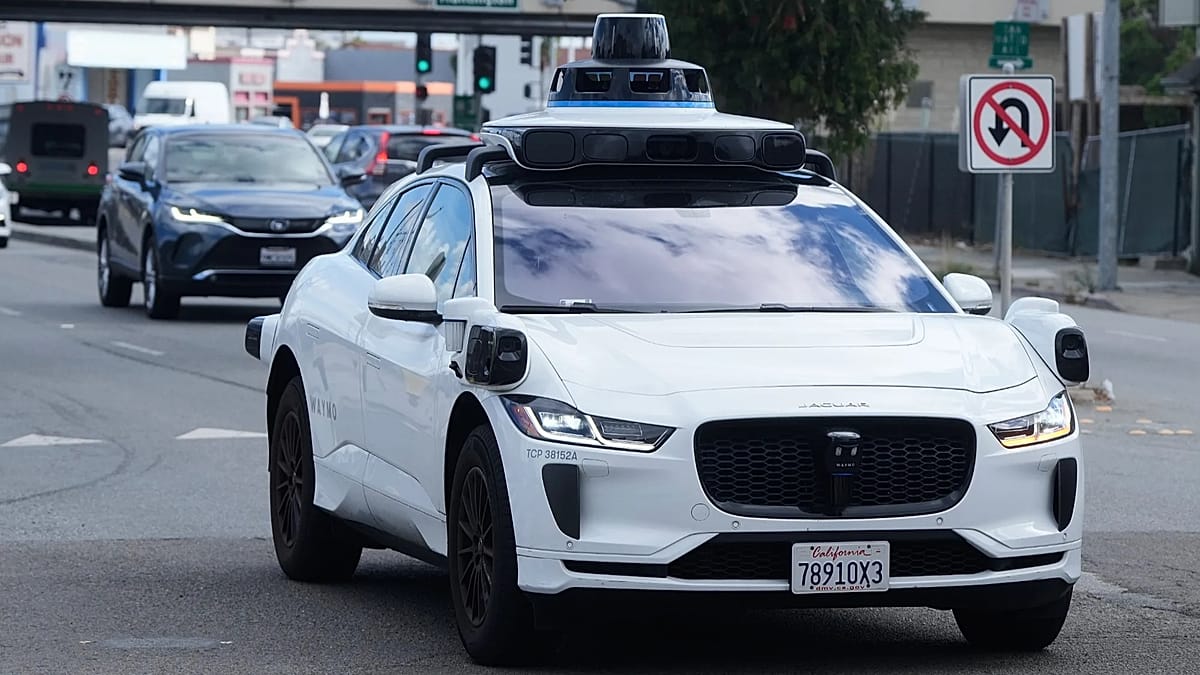
Waymo, the autonomous vehicle subsidiary of Alphabet, has suspended its driverless taxi operations on highways across the United States following a temporary ban imposed by California regulators. The decision comes just as the company is gearing up for a broader European rollout, with tests already underway in London and plans to enter Munich and Madrid by 2027.
In a statement on Tuesday, a Waymo spokesperson confirmed that the company has "temporarily restricted freeway operations" in all cities where it offers highway rides, including Phoenix, Austin, and Miami, in addition to California. The pause is intended to allow the firm to "evaluate our performance" after a series of incidents in the Golden State, the spokesperson added, stressing that safety remains the company's top priority.
What triggered the ban?
The California Department of Motor Vehicles (DMV) issued the ban on 11 November, citing two separate incidents that raised serious concerns about the safety of Waymo's driverless vehicles on high-speed roads. The first involved a viral video filmed on Interstate 280 in San Francisco, showing a Waymo car approaching at speed and attempting to overtake two California Highway Patrol vehicles. The police cars had their lights flashing to slow traffic behind a slow-moving construction truck, but the robotaxi apparently failed to recognise the situation and tried to pass.
The second incident, which occurred in the San Francisco Bay Area, involved three Waymo vehicles entering an active construction closure zone. According to a DMV spokesperson, these "recurring incursions" into areas where construction workers, vehicles, and equipment are present pose an "imminent hazard to public safety." The agency's statement said the restrictions will remain in place until Waymo demonstrates that it has taken effective corrective actions.
Waymo has emphasised that no injuries or collisions occurred in the construction zone incident. However, the company's decision to voluntarily pause highway operations across the country suggests that regulators' concerns have resonated beyond California.
European ambitions under scrutiny
The setback comes at a delicate time for Waymo's international expansion. The company has been testing its vehicles in London since last year, and it has announced plans to launch commercial services in Munich and Madrid in 2027. European cities, with their dense urban environments and complex traffic rules, present a different set of challenges compared to the wide, sun-drenched boulevards of Phoenix or Austin.
European regulators and city officials are watching the California developments closely. The European Union has been working on a regulatory framework for autonomous vehicles, but member states retain significant control over road safety. Countries like Germany and Spain have already begun adapting their traffic laws to accommodate driverless technology, but the recent incidents may prompt a more cautious approach.
In contrast, some European cities are embracing the technology. Zagreb, for instance, recently became the first European city to see fully driverless robotaxis operated by Uber, a move that has sparked both excitement and debate. Meanwhile, Tallinn Airport has allowed driverless shuttles to operate near planes without onboard safety staff, signalling a willingness to experiment with autonomy in controlled environments.
Waymo's troubles also highlight the broader challenges facing the autonomous vehicle industry. As Tesla pivots to robotaxis, the sector is under increasing pressure to prove that its technology is safe enough for public roads. The California ban serves as a reminder that even the most advanced systems can encounter unexpected situations, and that public trust is fragile.
For now, Waymo's highway operations remain suspended, and the company has not provided a timeline for their resumption. In the meantime, its European plans will likely be scrutinised with even greater attention, as regulators on this side of the Atlantic weigh the benefits of innovation against the imperative of safety.