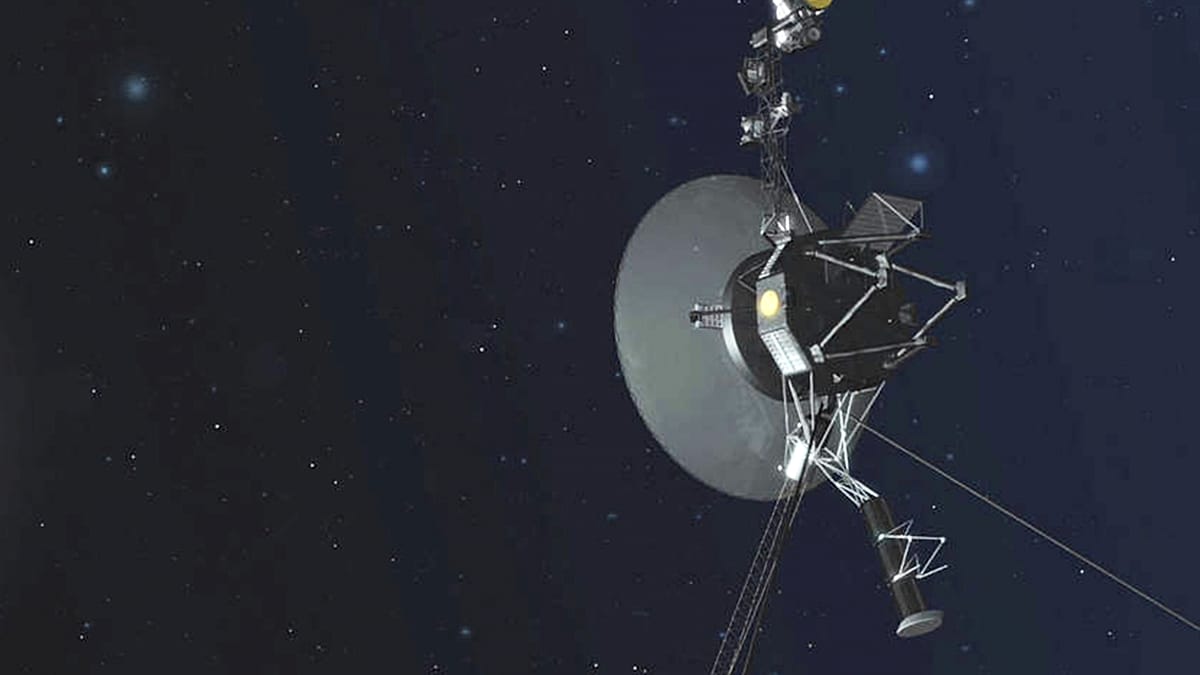
In September 1977, when mobile phones were still a distant dream and personal computers were in their infancy, NASA launched a spacecraft that would redefine humanity's reach. Nearly half a century later, Voyager 1 is still going—now 25.9 billion kilometres from Earth, the farthest any human-made object has ever travelled. At 11:16 CET today, the probe was still transmitting data, a testament to the engineering of an era that predates the digital age.
A journey that began in the Cold War
Voyager 1 lifted off from Cape Canaveral, Florida, on 5 September 1977, aboard a Titan IIIE-Centaur rocket. Its twin, Voyager 2, had launched two weeks earlier, but Voyager 1 took a faster trajectory and soon overtook it. The mission was ambitious: to explore the giant planets of the outer solar system. In March 1979, Voyager 1 flew past Jupiter, revealing the planet's rings and the volcanic fury of its moon Io. In November 1980, it swept by Saturn, sending back detailed images of its rings and the hazy moon Titan.
After that, Voyager 1 turned its cameras toward the void. In August 2012, it became the first spacecraft to cross the heliopause—the boundary where the solar wind yields to interstellar space. Voyager 2 followed in 2018. The two probes are now humanity's only emissaries beyond the Sun's influence.
A golden record for the cosmos
On board, Voyager 1 carries a 30-centimetre golden record, a time capsule conceived by astronomer Carl Sagan and his team. It contains 115 images, greetings in 55 languages, sounds of nature, heartbeats, whale songs, laughter, and a musical selection from Bach to Chuck Berry. A message from then-US President Jimmy Carter is also etched into its grooves. The record is a message in a bottle, intended for any extraterrestrial intelligence that might one day find it.
An aging spacecraft, a stubborn survivor
After 48 years in space, Voyager 1 is showing its age. In November 2023, a computer glitch halted its scientific data transmission. Engineers at NASA's Jet Propulsion Laboratory, working with technology from the 1970s, spent months troubleshooting. In 2024, the thrusters began to fail as tiny pipes clogged, forcing a switch to a backup system. More recently, the decay of its plutonium power source has led NASA to shut down some instruments to conserve energy. In April 2026, another instrument was turned off, yet the probe continues to send back data from its remaining systems.
What lies ahead
Voyager 1 has no more planets to visit. Its trajectory will take it toward the Oort Cloud, a vast shell of comets surrounding the solar system. It will take about 300 years to reach the inner edge of that cloud, and perhaps 30,000 years to pass through it entirely—if it doesn't collide with a comet first. In about 40,000 years, it will drift within 1.7 light-years of Gliese 445, a red dwarf in the constellation Camelopardalis, though it won't be captured by that star's gravity.
Long before that, Voyager 1 will likely fall silent. Its power reserves will eventually be too low to operate its instruments or radio transmitter. But the probe will continue its journey, possibly for billions of years, carrying its golden record long after every trace of our civilization has faded.
There is something of 2001: A Space Odyssey in this story, a hint of Star Trek, and a great deal of human ingenuity. Voyager 1 may never receive applause, and no little green men may ever retrieve its record. Yet it continues, silent, where no one has gone before. That alone commands admiration.
For those interested in the broader context of space exploration, the recent mystery of a near-Earth object that may be a lost Soviet probe reminds us that the cosmos is full of surprises. And as humanity looks outward, the record growth in global travel shows our enduring desire to explore, even as Voyager 1 ventures where no tourist will ever go.