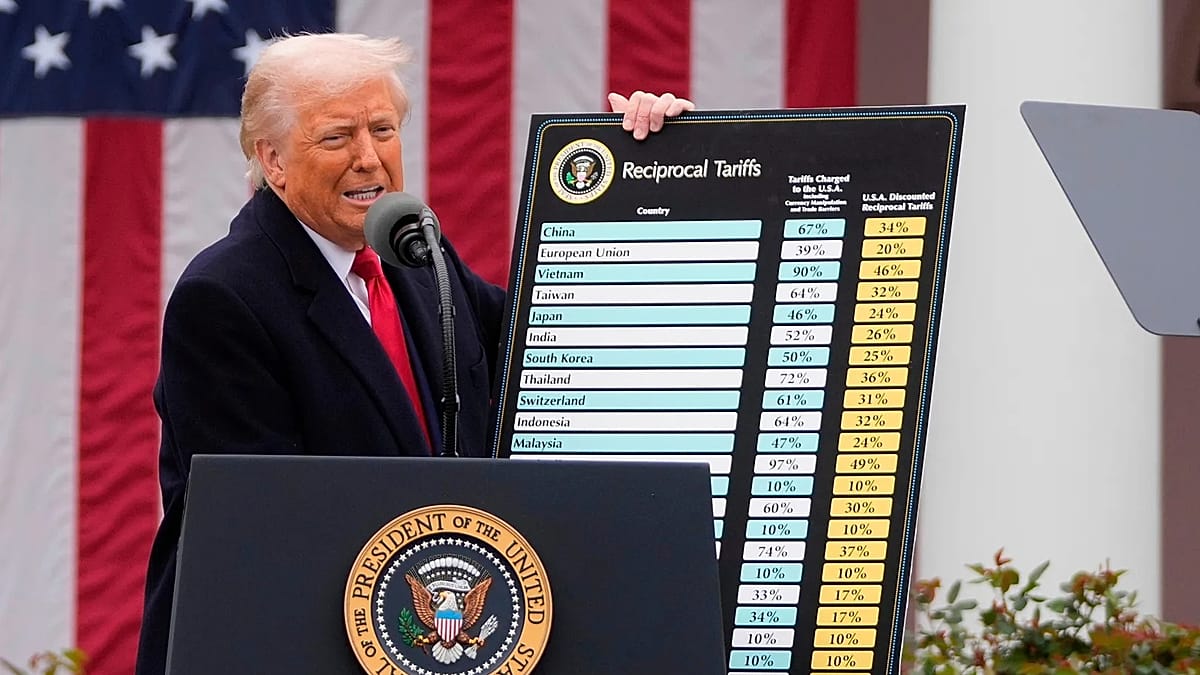
The Trump administration has released a report claiming that countries are circumventing US tariffs by routing exports through third nations, resulting in annual revenue losses of $19 billion to $26 billion. The report, published on Thursday, highlights the practice of transshipment, where goods are shipped to intermediary countries for repackaging or light assembly before reaching the US market.
Peter Navarro, the White House trade adviser, told reporters on a conference call that China is "laundering" its exports through more than 40 countries. However, he also suggested that the issue is broader, with other nations enabling tariff avoidance. "For years, the great transshipment scam has let communist China launder its exports," Navarro said.
The report arrives ahead of a planned September visit to Washington by Chinese leader Xi Jinping, whom President Donald Trump has praised during his own trip to Beijing in May. The timing underscores the delicate balance between trade tensions and diplomatic engagement.
How transshipment works
According to the research, China began using transshipment routes in response to increased US tariffs in 2018. Goods were sent to countries like Mexico and Malaysia for packaging and limited assembly, giving the impression that US imports from China had declined. This allowed Beijing to continue expanding its manufacturing sector, potentially threatening American firms and jobs.
The Chinese government has described its relationship with Washington as one of "strategic stability," yet its export-supportive policies have destabilized auto, metals, and electronics sectors not only in the US but also in Europe, Japan, and elsewhere. European manufacturers, particularly in Germany's automotive heartland and France's aerospace industry, have felt the ripple effects of these trade distortions.
Navarro stated that other countries, such as India, might also resort to transshipment to evade new duties. The Trump administration's new trade frameworks will include clauses ensuring that trading partners engaging in this practice face consequences. These frameworks are part of a broader strategy to protect US manufacturers, though they have also contributed to inflationary pressures domestically.
The report estimates that between $34.2 billion and $303 billion worth of goods are transshipped annually, with a central figure of $75 billion used to calculate lost tax revenues. To combat this, US Customs and Border Protection has launched a prototype program using artificial intelligence to detect transshipment. Navarro noted that importers found to have falsified a product's origin could face retroactive tariffs dating back roughly a year.
The president's tariffs during his second term have faced numerous legal challenges, with the Supreme Court overturning some in February. Despite these setbacks, the US trade deficit has narrowed to $371 billion so far this year, about $189 billion lower than the same period last year. However, the broader implications for global trade, including Europe's export-dependent economies, remain a concern.
For European observers, the report highlights the fragility of the global trading system and the potential for trade wars to escalate. The EU has its own mechanisms to prevent tariff evasion, but the US actions could set a precedent. As the continent navigates its own trade relationships, the outcome of these US policies will be closely watched in Brussels, Berlin, and Paris.