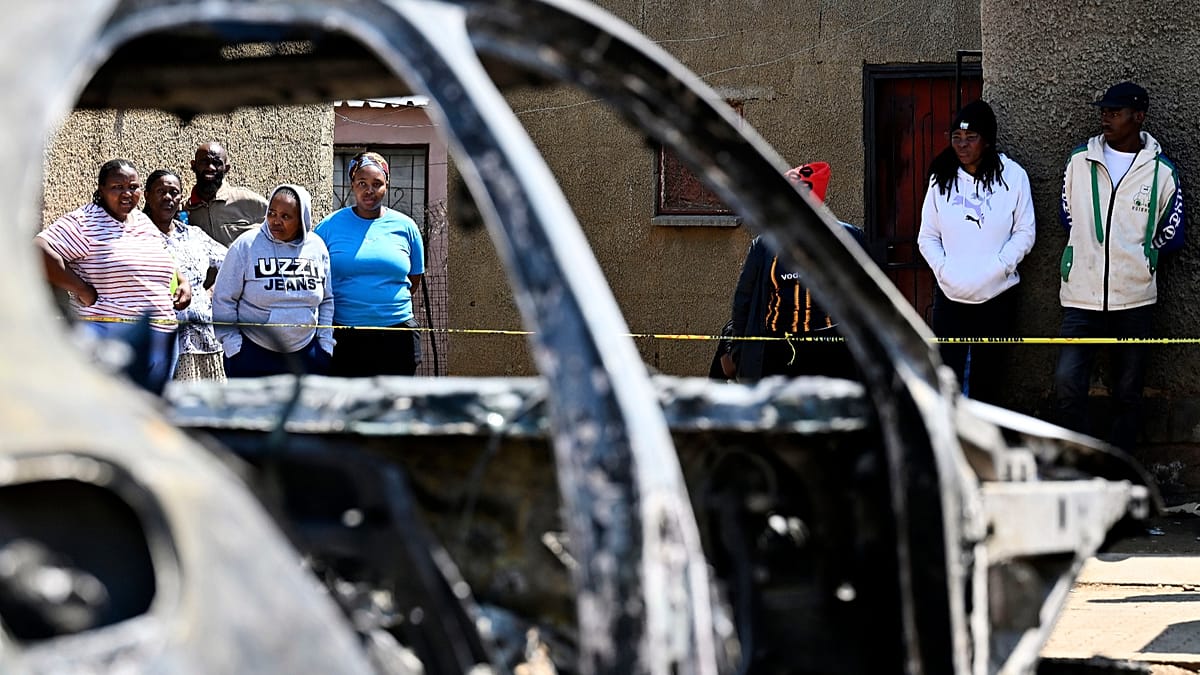
The death toll from a mass shooting at a tavern in South Africa has risen to 18 after one more victim died in hospital, police confirmed on Monday. The attack, which took place late Saturday in the semi-rural township of Wedela, about 80 kilometres west of Johannesburg, has shocked a country already grappling with high levels of violent crime.
Police said that eight gunmen armed with assault rifles stormed the bar, killing 13 men and four women at the scene. A further victim succumbed to injuries in hospital, bringing the total to 18. So far, only four of the deceased have been formally identified: two South Africans and two nationals of Lesotho, the mountain kingdom enclaved within South Africa.
Possible link to illegal mining gangs
The motive for the attack remains unclear, but local reports suggest the area is plagued by rivalry between gangs involved in illicit gold mining. Thousands of unregistered miners operate in abandoned shafts across South Africa, many of them migrants from neighbouring countries, including Lesotho. This informal sector has long been associated with organised crime, extortion, and violence.
Police have not ruled out any line of inquiry, and forensic teams were still at the scene on Monday. The army has been deployed to the township to assist with security, a sign of the seriousness with which authorities are treating the incident.
The Wedela shooting was not an isolated event. In a separate incident early Sunday, gunmen opened fire at an entertainment venue in a township outside Cape Town, killing 10 people and wounding 11 others. The two attacks have intensified public anger over the government's failure to curb gun violence.
South Africa, with a population of around 62 million, has one of the highest murder rates in the world. On average, about 60 people are killed every day. The country is awash with both legal and illegal firearms, and shootings are common, often fuelled by gang rivalry, extortion, and competition between informal businesses.
The weekend's violence has drawn comparisons to other recent mass shootings in the region, but it also highlights a broader crisis of public safety that affects many parts of the continent. For European readers, the tragedy serves as a stark reminder of the security challenges facing South Africa, a key economic partner for the EU and a major destination for European investment and tourism.
As investigations continue, families of the victims are demanding answers. Community leaders in Wedela have called for increased police presence and a crackdown on illegal firearms. The South African government has promised to bring the perpetrators to justice, but many remain sceptical given the country's strained law enforcement resources.
This latest bloodshed comes at a time when South Africa is also dealing with other pressing issues, from energy shortages to political corruption. The European Union has expressed condolences and offered support, but the solution to such violence ultimately lies in addressing the deep-rooted socio-economic inequalities that fuel crime.