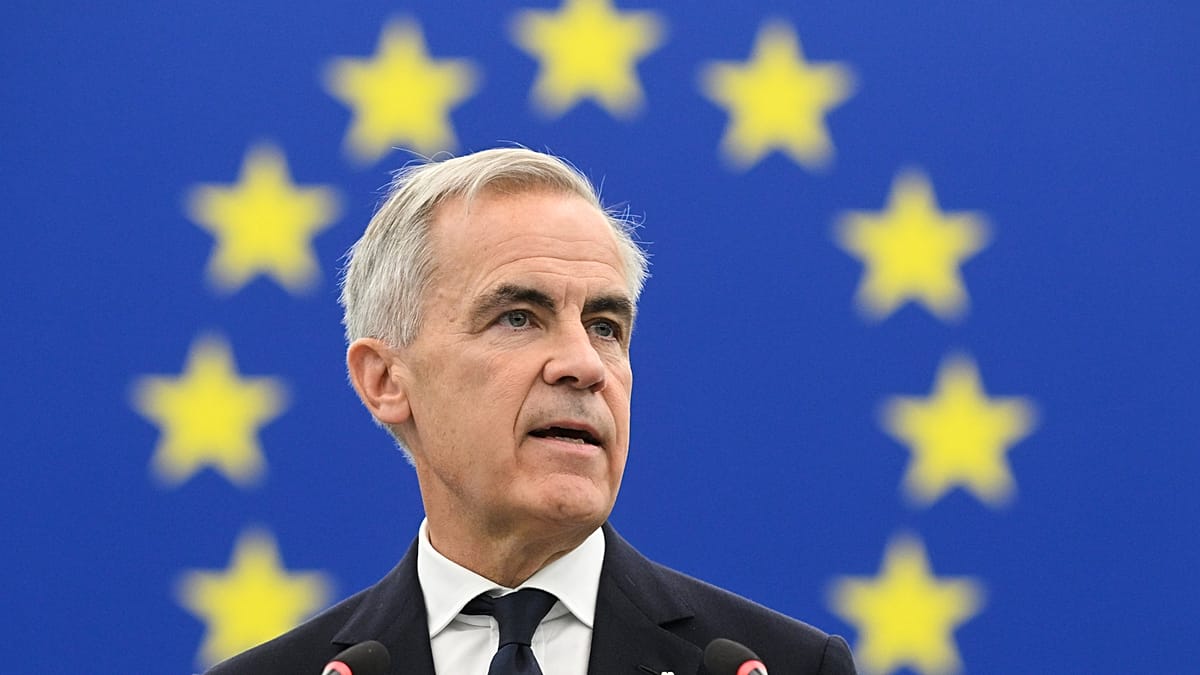
The European Union is considering a groundbreaking new partnership model that could see Canada become the first-ever "associate member" of the bloc. European Commission President Ursula von der Leyen raised the idea during a recent visit to Ottawa, suggesting that the two sides could forge an "Alliance for the Future" that goes far beyond traditional trade agreements.
The concept of associate membership does not currently exist in EU treaties, which restrict full membership to European states. However, the proposal reflects a growing recognition in Brussels that the EU needs to build deeper ties with like-minded democracies outside the continent, particularly as global alliances shift and economic pressures mount.
Beyond trade: a new framework for cooperation
The proposed alliance would cover a wide range of strategic areas, including the integration of defence industrial bases, securing supplies of critical raw materials and energy, and aligning on advanced technologies such as artificial intelligence and quantum computing. It would also introduce shared mobility programmes, allowing young Canadians and Europeans to live, study, and work across the Atlantic.
This vision goes well beyond the existing Comprehensive Economic and Trade Agreement (CETA), which has been ratified by the EU but remains stalled in several national parliaments. The unratified status of CETA has been a persistent irritant in EU-Canada relations, and the new proposal could offer a fresh path forward.
For Canada, the timing is significant. Prime Minister Mark Carney has made it a priority to reduce the country's dependence on the United States, following a series of tariff disputes and repeated suggestions from President Donald Trump that Canada should become the 51st state. Ottawa has responded with dollar-for-dollar retaliatory tariffs on US goods, and Carney has actively sought to build alliances with other global partners.
The EU is a natural ally in this effort. Both sides share a commitment to rules-based trade, multilateralism, and democratic values. An associate membership arrangement could provide a framework for closer political and economic cooperation without the full obligations of EU membership.
However, the proposal raises questions about how such a status would work in practice. Would Canada have a seat at the table in EU decision-making? How would it interact with existing EU structures? And what would it mean for other countries, such as the UK, Switzerland, or Norway, which have their own bespoke arrangements with the bloc?
Some analysts see Canada as a test case for a wider EU partnership model, one that could eventually be extended to other like-minded nations. The idea has drawn interest from several European capitals, though it is likely to face legal and political hurdles. Any change to the EU's treaties would require unanimous approval from all 27 member states, and the concept of associate membership is not currently defined in EU law.
Despite these challenges, the proposal has been welcomed by many in both Canada and Europe. It comes at a time when the transatlantic relationship is under strain, and both sides are looking for new ways to cooperate on shared challenges, from climate change to digital regulation.
For now, the idea remains at an early stage, with no formal negotiations yet announced. But the fact that it is being discussed at the highest levels signals a potential shift in how the EU views its global partnerships. As the world becomes more multipolar, the EU may need to develop more flexible and creative ways of engaging with its closest allies.
Whether Canada becomes the first associate member or not, the conversation itself is a sign of the times. The EU is no longer content to rely solely on traditional trade deals; it is seeking deeper, more strategic alliances with partners who share its values and interests. And Canada, for its part, is eager to diversify its international relationships.
The coming months will be crucial in determining whether this bold idea can be turned into reality. For now, it remains a promising but unproven concept, one that could reshape the EU's place in the world if it succeeds.