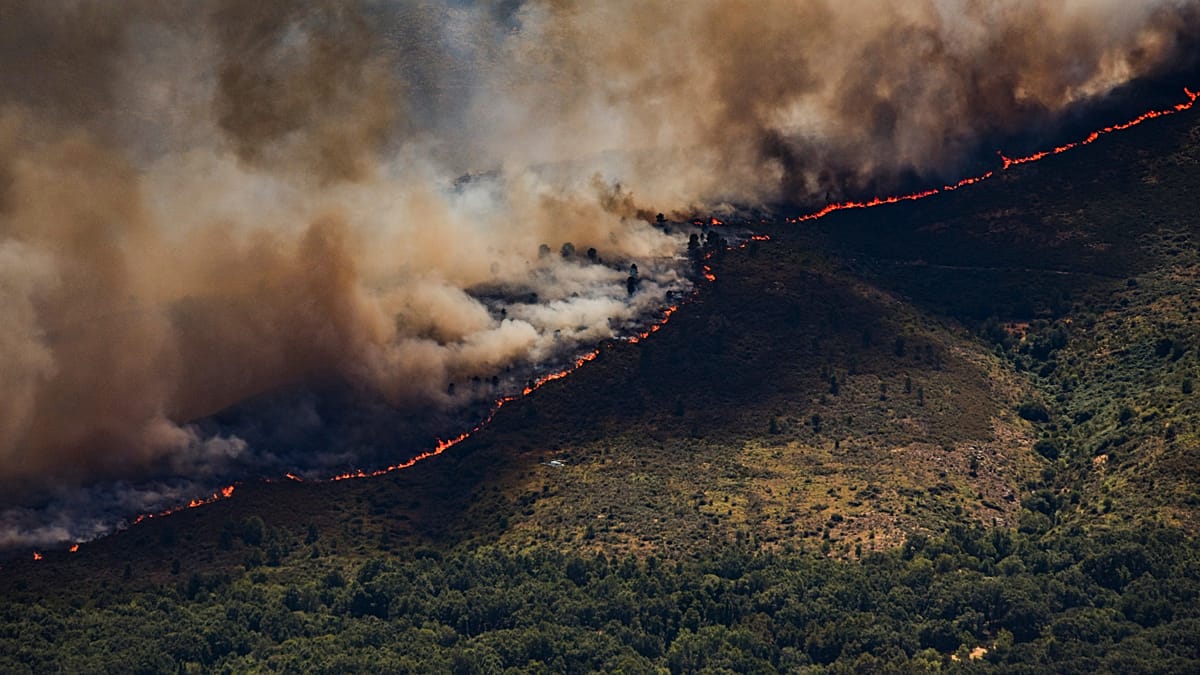
Wildfires across Europe have become markedly more frequent and intense, with the World Health Organization's European office reporting a 57% increase in the number of blazes since 2022. The warning comes as firefighters have lost their lives battling flames in France and Italy this summer, and as blazes rage in France, Germany, Greece, Spain, and Portugal.
From the start of 2026 until 22 July, European monitoring systems detected 1,254 fires, which released more than 8.31 million tonnes of CO₂. Portugal and Spain each recorded a 100% increase in wildfires compared with the same period in 2025. Last year, roughly 2.2 million hectares burned across the region; by 22 July this year, 254,388 hectares had already been destroyed, according to the European Forest Fire Information System (EFFIS).
Health toll extends far beyond the flames
“As climate change drives a warming world, we need to prepare for more frequent and intense wildfires,” said Hans Henri P. Kluge, WHO Europe's regional director. He stressed that the consequences are not limited to the immediate destruction of homes and ecosystems. Wildfire smoke can travel hundreds of kilometres, carrying a hazardous mix of pollutants including PM2.5, nitrogen dioxide, ozone, aromatic hydrocarbons, and lead. When fires consume buildings, they also release toxic chemicals from electronics, furniture, plastics, and paints.
“Smoke can travel long distances, worsening heart and respiratory conditions and affecting mental health, particularly among older people, children, pregnant women and those with chronic diseases,” Kluge added. The health impacts are especially acute in southern Europe, where wildfire smoke travels thousands of kilometres, often affecting regions far from the fire zone.
Kluge called on governments to ensure timely alerts for wildfires, weather, and air quality, along with clear health advice and accessible primary and emergency care. “People living in or travelling through affected areas should follow official advice, move away from active fires when it is safe, avoid unnecessary travel, and wear a well-fitting protective mask if they must go outdoors near wildfire smoke,” he said.
The trend is expected to worsen as climate change continues to raise temperatures and dry out landscapes across the continent. In Spain, authorities recently declared an emergency near Madrid as wildfires raged across southern Europe, claiming the lives of three firefighters in separate incidents. The WHO's data underscores a broader pattern: the number of reported wildfires in the WHO European Region has risen steadily, and the health systems of member states must adapt to a future with more frequent and severe fire seasons.
Beyond the immediate danger to life and property, the long-term health consequences of repeated exposure to wildfire smoke remain a growing concern for public health officials across the continent. The WHO's warning serves as a call for coordinated European action on climate adaptation and emergency preparedness.