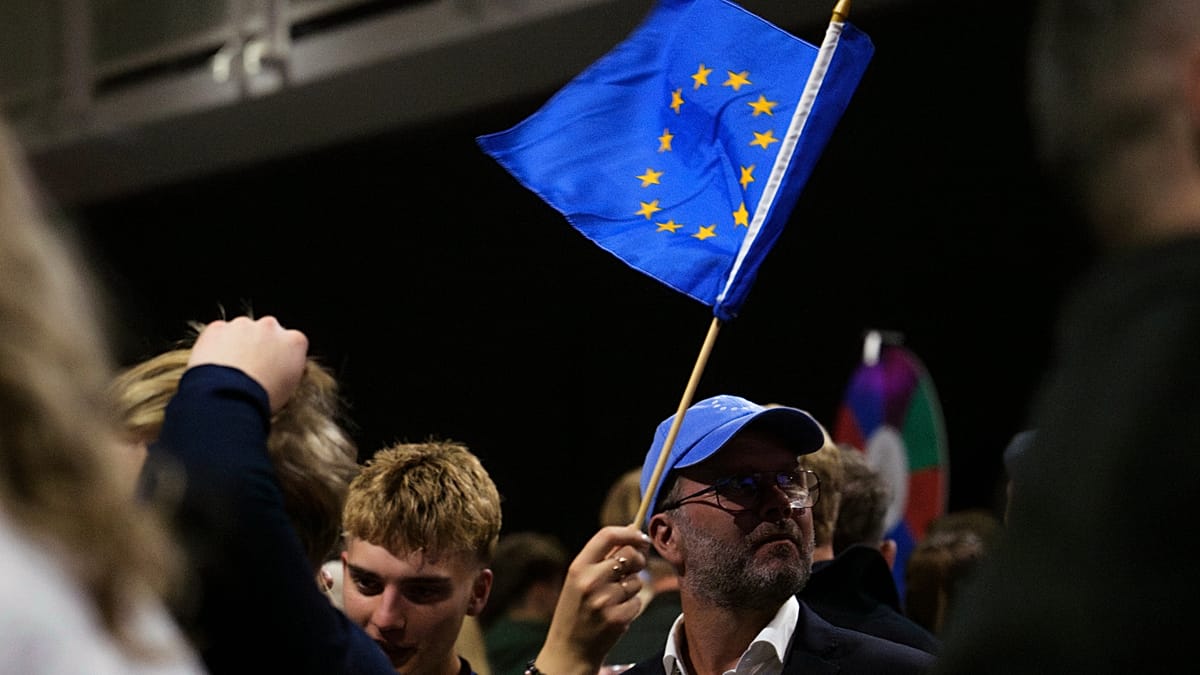
While Ukraine and Moldova race through the EU's legal screening and Montenegro closes negotiating chapters, three of Europe's wealthiest democracies remain conspicuously outside the bloc. Iceland's recent referendum, where 52.8 percent rejected reopening accession talks, underscores a growing divide: the EU's appeal is strongest among poorer, less stable states, while the continent's richest prefer the benefits of the single market without the political strings.
Iceland's no: prosperity and fish
Iceland, with its high GDP per capita and robust institutions, already enjoys most economic advantages through the European Economic Area (EEA) and Schengen. For Reykjavík, the remaining question was political: whether to trade sovereignty for a seat in Brussels. The 'yes' campaign pointed to high interest rates and Arctic security concerns, but it couldn't overcome the powerful fisheries lobby. Around 90 percent of Iceland's fishing companies opposed membership, fearing the EU's Common Fisheries Policy would threaten their waters. As Tinatin Akhvlediani of CEPS notes, fisheries are 'closely linked to national identity' in Iceland, making the issue more salient than abstract geopolitical gains.
Mika Aaltola, a Finnish MEP, extends this logic to agriculture. Icelandic sheep and dairy farming survive behind high tariff walls, which EU rules would dismantle. 'Primary production in a harsh environment is existential,' he says, 'and existential things are not pooled.'
Wealthy outsiders: a pattern
Iceland is not alone. Norway has incorporated roughly three-quarters of EU law through the EEA without ever voting to join, and recent polls show only 37 percent support. Switzerland, meanwhile, has deepened bilateral agreements rather than seek membership. These countries have what candidates like Ukraine lack: viable alternatives that deliver economic integration without political union. As Akhvlediani puts it, 'Economic integration does not automatically translate into political integration.'
For Brussels, the Icelandic no complicates the narrative that the EU is an attractive club for all European democracies. Diplomats had hoped a 'yes' would bolster the enlargement drive, especially alongside Montenegro's progress. But analysts caution against overreading the result. Christine Leuchtenmüller of the Konrad-Adenauer-Stiftung calls Iceland 'a very specific case' shaped by decades of fisheries and sovereignty debates, not a verdict on enlargement itself.
Still, the lesson for Oslo and Bern is clear: the EU cannot assume that deep economic ties will lead to membership. For wealthy states, the added value of full membership must be argued in political and security terms, not just economic ones. As Akhvlediani says, 'The main lesson is that the EU cannot assume that deep economic integration will naturally lead to political membership.'
For Ukraine, Moldova, and the Western Balkans, the calculus is different. Membership offers a geopolitical anchor, access to funds, and a reform framework that makes backsliding costly. These are tangible benefits that outweigh the loss of sovereignty. But for Europe's richest, the trade-off is less compelling, and the EU's pull weaker.