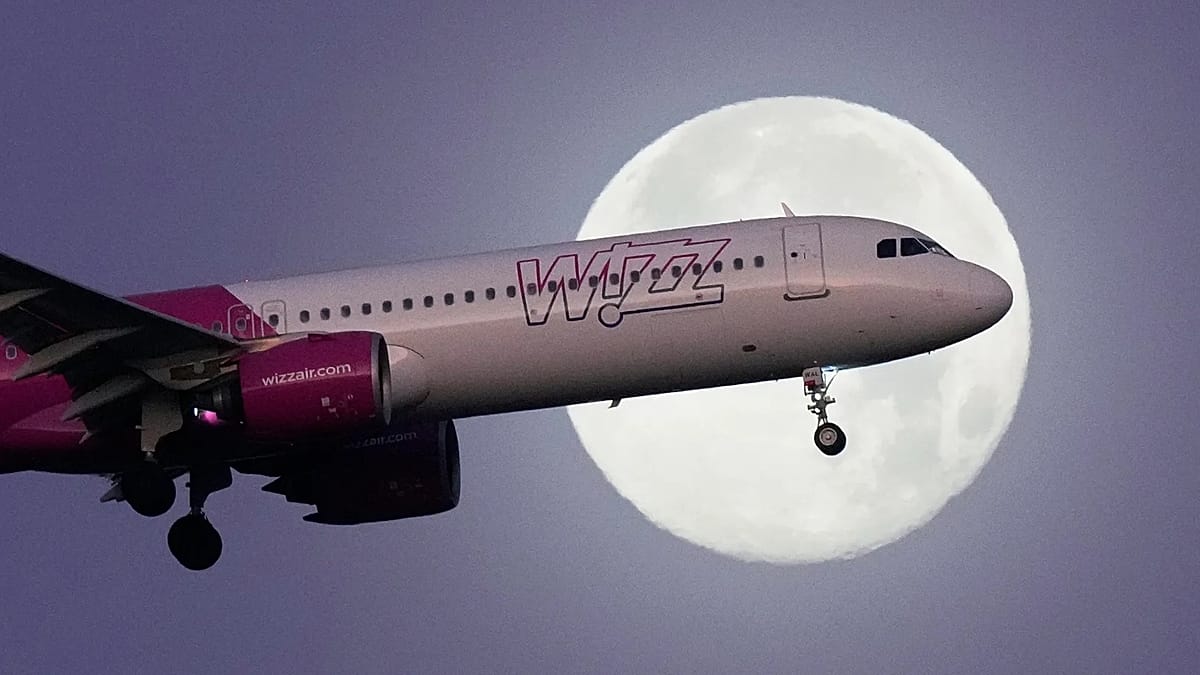
Wizz Air, the Hungarian low-cost carrier headquartered in Budapest, has struck a deal with SpaceX's Starlink to bring satellite-based internet connectivity to its entire fleet from 2027. The move places the airline among a growing number of European carriers embracing in-flight broadband, a service that has so far been rare in the budget segment.
Ian Malin, Wizz Air's chief commercial officer, framed the decision as an extension of the airline's core mission. "Ultra-low-cost travel has always been about making opportunities accessible to more people," he said. "In 2027, we're taking that philosophy into the space era."
The announcement comes as Starlink, owned by Elon Musk's SpaceX, prepares for its Nasdaq debut and rapidly expands its footprint in commercial aviation. The provider has already secured agreements with several US carriers, including American Airlines, Southwest, United, and Alaska Airlines, as well as long-haul operators Singapore Airlines and Emirates.
European Adoption Accelerates
In Europe, the Latvian carrier airBaltic was the first to launch Starlink service in February 2025, followed by Air France, SAS, and British Airways. Eurowings, a low-cost subsidiary of the Lufthansa Group, is also due to begin a Starlink rollout later this year as part of a group-wide deal. Whether Wizz Air can claim to be the first ultra-low-cost carrier to offer the service depends on how strictly one defines that category.
Wizz Air did not disclose the financial terms of its agreement with Starlink, nor has it confirmed whether the service will be free or offered as a paid add-on. That detail is likely to matter to its cost-conscious passengers, who typically prioritize low fares over amenities.
Budget rivals Ryanair and EasyJet have so far held back. Ryanair chief executive Michael O'Leary has ruled out the service for now, citing installation costs, fuel drag, and the short duration of the airline's average flights. EasyJet has held talks with Starlink but says the economics do not yet stack up.
The disparity in approach highlights a broader strategic divide among European low-cost carriers. While some see connectivity as a potential revenue stream or competitive differentiator, others remain focused on keeping operating costs as low as possible. This tension is particularly relevant as the EU considers new taxes on digital services, gambling, and crypto to fund its budget, which could affect airlines' cost structures.
Wizz Air's results for its 2026 financial year, which ended 31 March, are due on Thursday 11 June. The airline has said it expects to break even or post a slightly positive profit for the full year. The Starlink deal may help bolster its image as an innovative carrier, but the financial impact will take years to materialize.
In Asia, South Korea's Hanjin Group, which includes Korean Air, Asiana Airlines, and three budget carriers, announced a Starlink deal in December 2025, with rollout expected from the third quarter of 2026. This suggests that satellite internet is becoming a global standard for airlines, even as budget carriers in Europe remain cautious.
For now, passengers on Wizz Air flights will have to wait until 2027 to stream, browse, or work at 35,000 feet. Whether the service is free or paid will likely determine how warmly it is received by the airline's price-sensitive clientele.