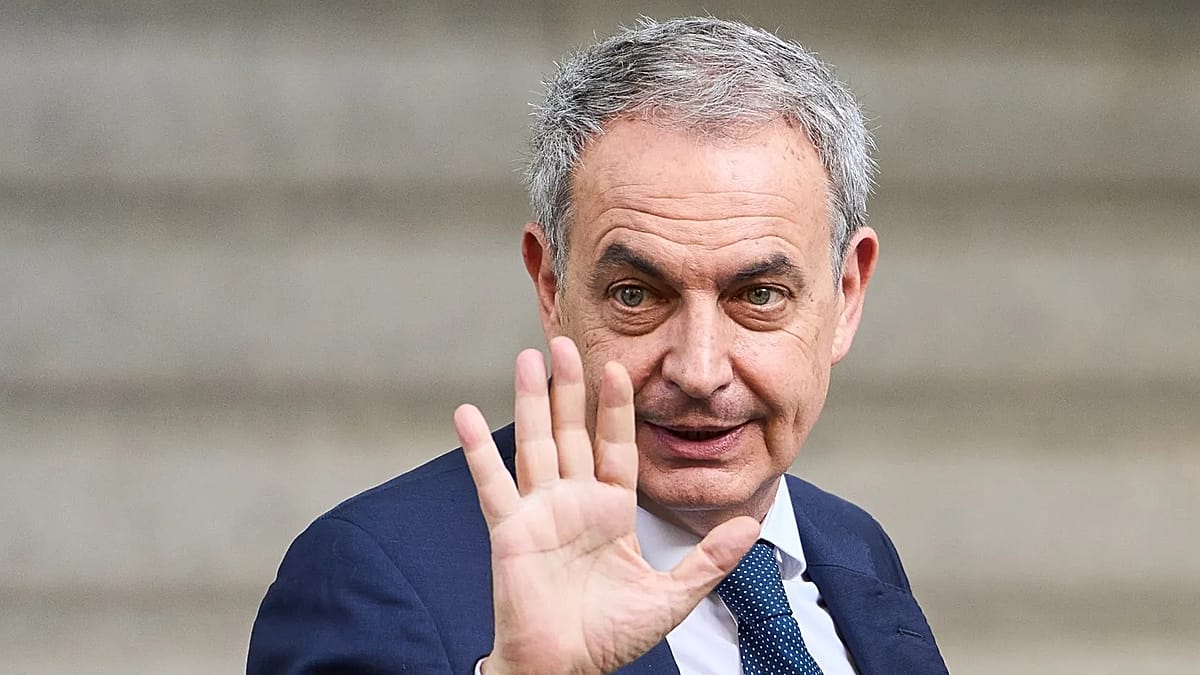
Former Spanish Prime Minister José Luis Rodríguez Zapatero made an unprecedented court appearance on Wednesday at Madrid's Audiencia Nacional, defending his integrity against allegations of influence peddling and tax fraud. The case marks the first time a former or serving Spanish prime minister has been formally charged in a corruption probe since the country's transition to democracy.
Zapatero, who led Spain from 2004 to 2011, is under investigation for his alleged role in the 2021 bailout of Plus Ultra, a small airline that received €53 million in public funds after the COVID-19 pandemic crippled global travel. Investigating judge José Luis Calama has described a purported "stable and hierarchical" structure that used "opaque financial channels" to conceal money movements and secure bribes.
"I am accused of very serious offences that I have not committed. I always conducted myself with decency and honesty," Zapatero said in a statement after spending roughly three hours in court. He denied illicit ownership of companies, money, or financial products, adding: "The truth will prevail and I will restore confidence to those who now doubt."
A 'Moral Beacon' Under Suspicion
The investigation has taken a dramatic turn following a police search of Zapatero's office, which uncovered jewellery and luxury watches valued at €1.3 million. Judge Calama is now probing additional alleged offences of tax fraud and smuggling. Zapatero's associates attribute the hoard to a family inheritance, but the court stated that his declaration "has failed to detract from the rational evidence of criminality" and that he had not justified the origin of the jewellery nor the tax and customs payments due.
Despite the gravity of the allegations, the judge rejected the prosecution's request to confiscate Zapatero's passport or impose fortnightly court appearances, ruling that he is not a flight risk nor likely to destroy evidence.
The scandal threatens to further destabilise Prime Minister Pedro Sánchez's minority coalition government. Sánchez, who came to power in 2018 vowing to clean up Spanish politics after the conservative Popular Party's own graft conviction, now faces a cascade of corruption probes. An investigation into his wife, Begoña Gómez, for alleged influence peddling has already shaken the administration, with a potential trial decision imminent. Verdicts are also pending in separate trials of Sánchez's former right-hand man José Luis Abalos and his brother David Sánchez.
Recent revelations about a police probe into a former Socialist activist suspected of leading a plot to sabotage investigations into Sánchez's entourage have added further pressure. The conservative and far-right opposition are demanding Sánchez's resignation and early elections, but the prime minister insists he will serve out his term until 2027.
The Socialists have suffered four regional election defeats since late 2025, a possible harbinger for next year's national vote. Astrid Barrio, a political science professor at the University of Valencia, told AFP that the Zapatero investigation imperils the reputation of a "moral beacon" for Sánchez and his party.
Zapatero's case is the latest in a series of corruption scandals that have eroded the domestic standing of one of Europe's few remaining Socialist leaders, even as Sánchez has gained international prominence through clashes with US President Donald Trump and criticism of Israel. The outcome of this investigation could have far-reaching implications for Spanish politics and the broader European left.