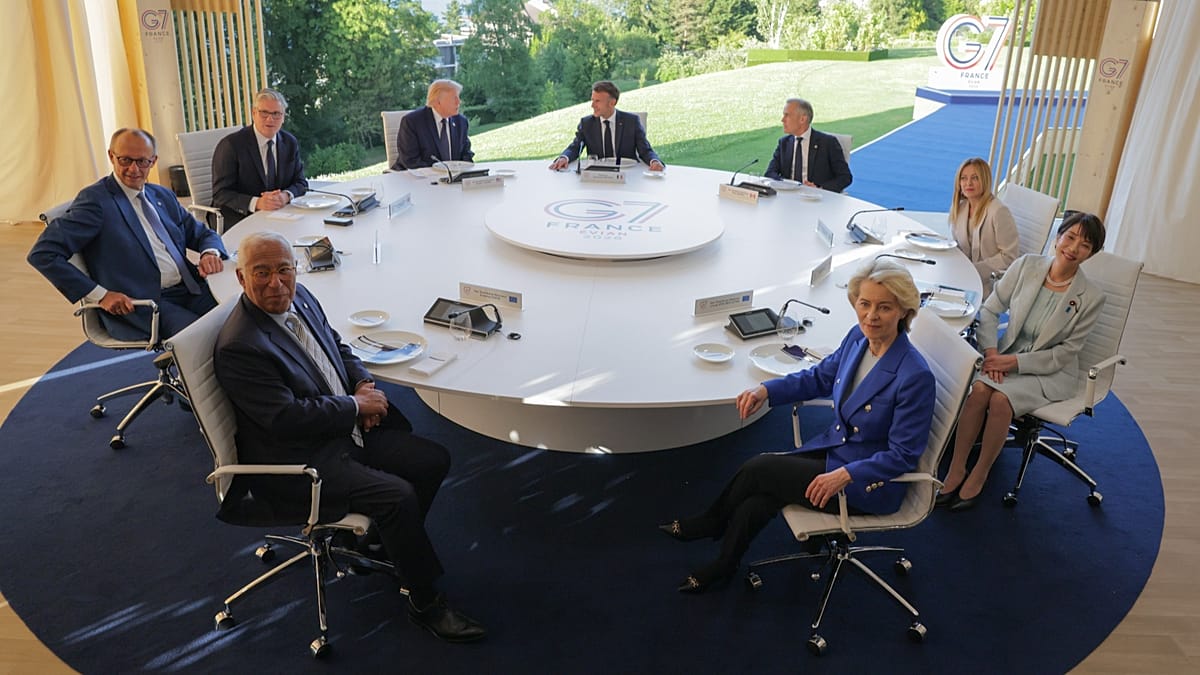
The second day of the G7 summit in Évian-les-Bains has begun with Ukraine at the top of the agenda. Ukrainian President Volodymyr Zelenskyy arrived early Tuesday morning, greeted by French President Emmanuel Macron, ahead of a dedicated session on peacebuilding and security for Ukraine and Europe.
Zelenskyy’s presence comes as Ukraine intensifies its long-range strike campaign against Russian energy infrastructure. Overnight, a drone attack set ablaze the Moscow Oil Refinery in the Kapotnya district, roughly 15 kilometres from the Kremlin. The facility supplies more than a third of the capital’s fuel, including aviation kerosene, and processes 11–12 million tonnes of crude annually. Temporary flight restrictions were imposed at Domodedovo, Sheremetyevo, Vnukovo and Zhukovsky airports. A separate drone strike hit an oil depot in Krasnodar Krai, a strategic region along Russia’s Black Sea coast.
The attacks underscore how Ukraine’s mid- and long-range drone capabilities have evolved, targeting the logistical backbone of Russia’s war machine. Zelenskyy is expected to press G7 leaders for continued military and financial support, even as Washington’s attention has shifted to the US-led campaign against Iran that began in late February.
Transatlantic Sanctions Divide
A glaring fracture in the transatlantic alliance has emerged over sanctions. Under Donald Trump, the White House has issued three consecutive waivers on Russian oil — the Kremlin’s main revenue source — to cushion global disruption from the closure of the Strait of Hormuz. In contrast, the European Union has doubled down, presenting a new sanctions proposal last week and refusing to slow its pace.
“Our sanctions keep biting hard and cutting deep,” European Commission President Ursula von der Leyen said. “They are weakening the economic foundations of Russia’s war effort.”
Yet the EU faces limits. Von der Leyen’s proposal for a full ban on maritime services for Russian tankers has stalled since early February, blocked by reservations from Greece and Malta, two coastal member states that service Russian ships. The ban was made conditional on a G7 agreement — but the G7 remains far from consensus. “There must be stronger sanctions. And Europe can lead on that,” Zelenskyy said on Monday.
The diplomatic path remains uncertain. Zelenskyy and Trump last held formal talks at Mar-a-Lago in December 2025, where both spoke of “great achievements” and the Ukrainian president said US security guarantees were “100% agreed.” Trump stressed that territorial concessions remained unresolved, saying “some of that land is maybe up for grabs.” A follow-up meeting at the World Economic Forum in Davos in January 2026 was described by Zelenskyy as “the last mile” before announcing a US post-war security framework. That effort lost momentum as the Iran campaign diverted US military supplies away from Ukraine.
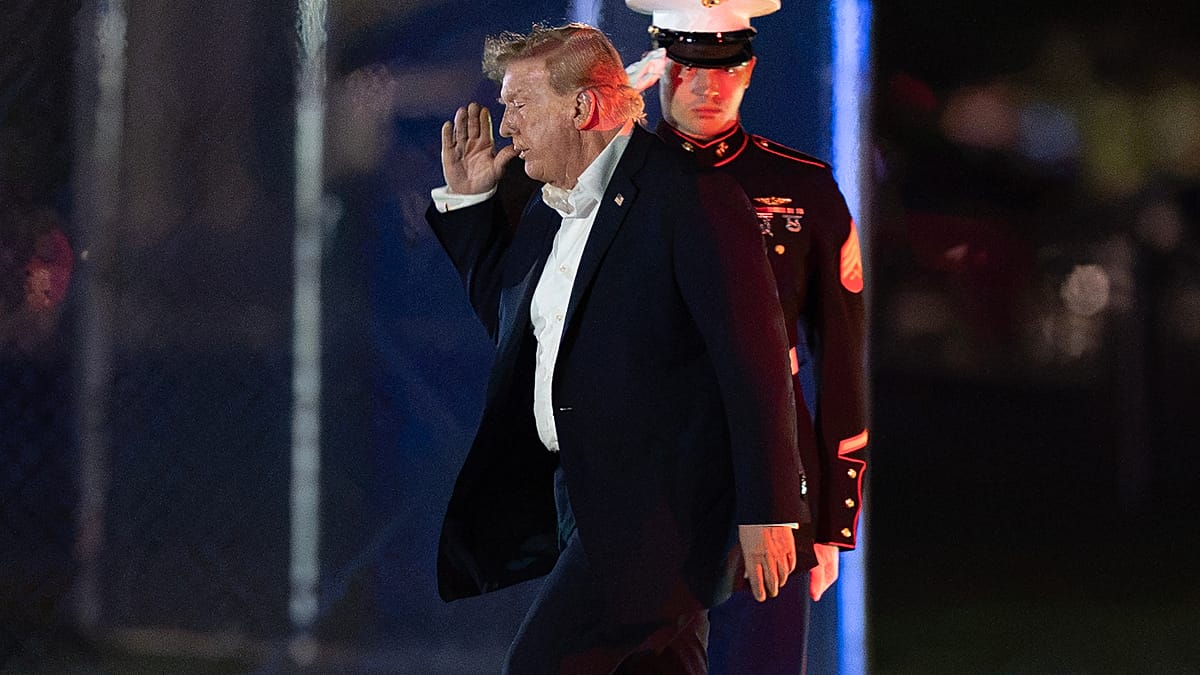
Trump, already in Évian, said Monday that after the Iran deal he would turn his attention back to Ukraine. “Now that this is finished, we are going to be focusing on that and see if we can get that one done,” he said, sitting alongside Macron.
Zelenskyy’s schedule includes bilateral talks with German Chancellor Friedrich Merz, Canadian Prime Minister Mark Carney, IMF Managing Director Kristalina Georgieva, and UK Prime Minister Keir Starmer. His office said there would be “other meetings” but did not confirm a one-on-one with Trump.
The summit’s working sessions cover peacebuilding for Ukraine, crisis response in the Middle East, and forging new partnerships. Guest leaders include India’s Narendra Modi, South Korea’s Lee Jae Myung, and Kenya’s William Ruto. The day concludes with a gala dinner hosted by Emmanuel and Brigitte Macron.
For more on the broader context, see our coverage of the G7 agenda on Iran, Ukraine, and energy security and the latest on Ukraine-Russia strikes and EU accession talks.