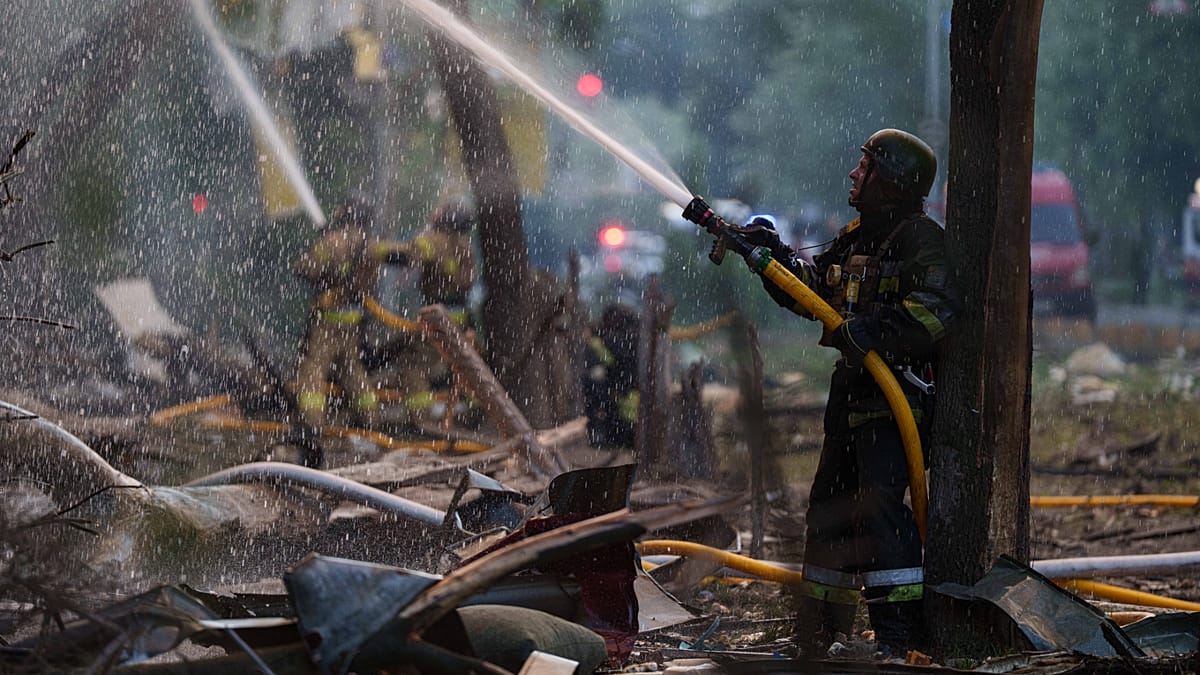
Ukrainian President Volodymyr Zelenskyy visited several damaged locations in Kyiv on Tuesday, including the Chernobyl Museum, after a large-scale Russian missile and drone assault struck the capital. The attack, which occurred overnight, killed at least two civilians and left dozens wounded, according to local authorities.
The strikes targeted residential and cultural sites, with debris from intercepted missiles falling across multiple districts. Emergency services worked through the morning to clear rubble and assist the injured. Zelenskyy’s visit to the Chernobyl Museum, a memorial to the 1986 nuclear disaster, carried symbolic weight as Russia continues to target Ukraine’s energy infrastructure and historical landmarks.
Escalation in Urban Warfare
This latest barrage is part of a broader pattern of Russian strikes on Ukrainian cities, which have intensified in recent weeks. The use of drones and missiles in combination aims to overwhelm air defenses, a tactic that has forced Kyiv and other European capitals to reassess their own protection strategies. As Ukraine's drone warfare forces Germany to rethink battlefield strategy, the conflict’s technological dimensions are reshaping military planning across the continent.
European leaders have condemned the attack, with the European Union reiterating its support for Ukraine. The assault comes amid heightened tensions in the Baltic region, where Baltic Drone Incursions: Von der Leyen Warns of Russian Hybrid Strategy highlights the broader threat to European security. EU Commission President Ursula von der Leyen has called for increased defense cooperation among member states.
In Kyiv, residents have grown accustomed to nightly alarms, but the scale of this attack has shaken many. “We never know when the next wave will come,” said one local, who asked not to be named. The psychological toll on civilians remains high, as the war enters its third year with no end in sight.
Zelenskyy, in a statement after the visit, emphasized the need for more advanced air defense systems from Western allies. “Every missile intercepted saves lives,” he said. “But we need more systems to protect our people and our cities.” His appeal echoes calls from other European leaders who fear that Russian aggression could spill over into neighboring countries.
The attack also raises questions about the vulnerability of critical infrastructure. The Chernobyl Museum, located near the site of the 1986 disaster, serves as a reminder of the long-term consequences of conflict on nuclear safety. Ukraine has repeatedly warned that Russian strikes near nuclear facilities could trigger a catastrophe.
As the war grinds on, European capitals from Warsaw to Berlin are grappling with the implications. The Oreshnik Missile: Russia's Mach 10 Threat to European Capitals underscores the evolving nature of the threat, with hypersonic weapons capable of reaching targets in minutes. For now, Kyiv remains on the front line, but the ripple effects are felt across the continent.