As overtourism reshapes travel patterns across the continent, more Europeans are seeking destinations that remain untouched by mass tourism. France, the world's most-visited country, welcomed some 102 million tourists in 2025, making the search for a truly undiscovered spot there nearly impossible. But there are still countries where annual visitor numbers barely reach five figures—or even four.
Below, we've compiled 13 of the least-visited countries on Earth, with practical guidance on how to get there from European hubs. For obvious safety reasons, we've excluded nations with active travel advisories, such as Sudan or Somalia, so this list isn't exhaustive.
Tuvalu: The world's least-visited nation
According to Tuvalu's Central Statistics Division, just 3,136 tourists made it to these Pacific shores in 2023, making it the least-visited country on the planet. The low-lying archipelago is predicted to be 95% submerged by 2100 due to rising sea levels, so the window to visit is narrowing.
Activities here are refreshingly simple: beach relaxation, snorkelling and diving in the Funafuti Conservation Area, and watching a game of te ano—a traditional sport often played on the airstrip when no flights are scheduled. The only airport, Funafuti International, is served solely by Fiji Airways from Suva and Nadi in Fiji. From Europe, you can reach Fiji via Asian hubs like Tokyo, Hong Kong, or Singapore, which have connections from London Heathrow, Frankfurt, Amsterdam, Brussels, and Rome. Alternatively, add Tuvalu as a side trip to an Australia or New Zealand itinerary, both of which have frequent flights to Fiji.
Equatorial Guinea: Africa's only Spanish-speaking nation
On the west coast of Africa, between Cameroon and Gabon, Equatorial Guinea gained independence from Spain in 1968 and remains the continent's only Spanish-speaking country. Despite being one of sub-Saharan Africa's largest oil producers, tourism has been neglected—international arrivals hover around 6,000 annually, according to the World Bank.
Those who venture here are rewarded with volcanic peaks and waterfalls on Bioko Island, plus rich wildlife in Monte Alén National Park, including 16 primate species and the world's largest frog, the goliath frog. The country is also a nesting site for leatherback turtles. A new e-visa, introduced in 2023, costs $75 (€68) and requires proof of yellow fever vaccination. Many tourist sites require permits, so hiring a guide is advisable. The capital moved from Malabo on Bioko Island to the purpose-built Ciudad de la Paz on the mainland in January 2026, but flights still arrive at Malabo International Airport, served by Air France from Paris Charles de Gaulle and Lufthansa from Frankfurt (with a stop in Lagos, Nigeria).
Marshall Islands: Diving into nuclear history
Back in the Pacific, the Marshall Islands are more associated with their nuclear testing legacy than tourism. The US used the atolls for weapons tests in the 1940s and 1950s, and the Bikini Atoll nuclear site is now a UNESCO World Heritage Site. Experienced divers can explore wrecks like the USS Saratoga, an aircraft carrier sunk during testing.
Beyond diving, visitors can learn traditional canoe building at Waan Aelõñ in Majel, explore WWII ruins on land in Majuro or Wotje Atoll, and sample a local 'whiskey' made from pandanus fruit. In 2024, 7,312 international air visitors arrived, but efforts to boost tourism are underway—the tourism office launched a new pocket guide in August. The Island Hopper route connects Honolulu to Guam, stopping at Majuro and Bucholz Army Airfield in Kwajalein Atoll, then onward to Kosrae, Pohnpei, and Chuuk in Micronesia. Honolulu has direct flights from several US cities that are connected to Europe, including New York, Atlanta, Dallas, San Francisco, and Las Vegas.
Turkmenistan: The 'gates of hell' and visa hurdles
Central Asia's 'stans have gained popularity, with Uzbekistan named among the fastest-growing tourism destinations for the first quarter of 2026. Turkmenistan, however, remains off the radar, largely due to its notoriously difficult visa process. The country no longer publishes tourism statistics, but international arrivals were just 8,200 in 2019, according to the UN World Tourism Organization.
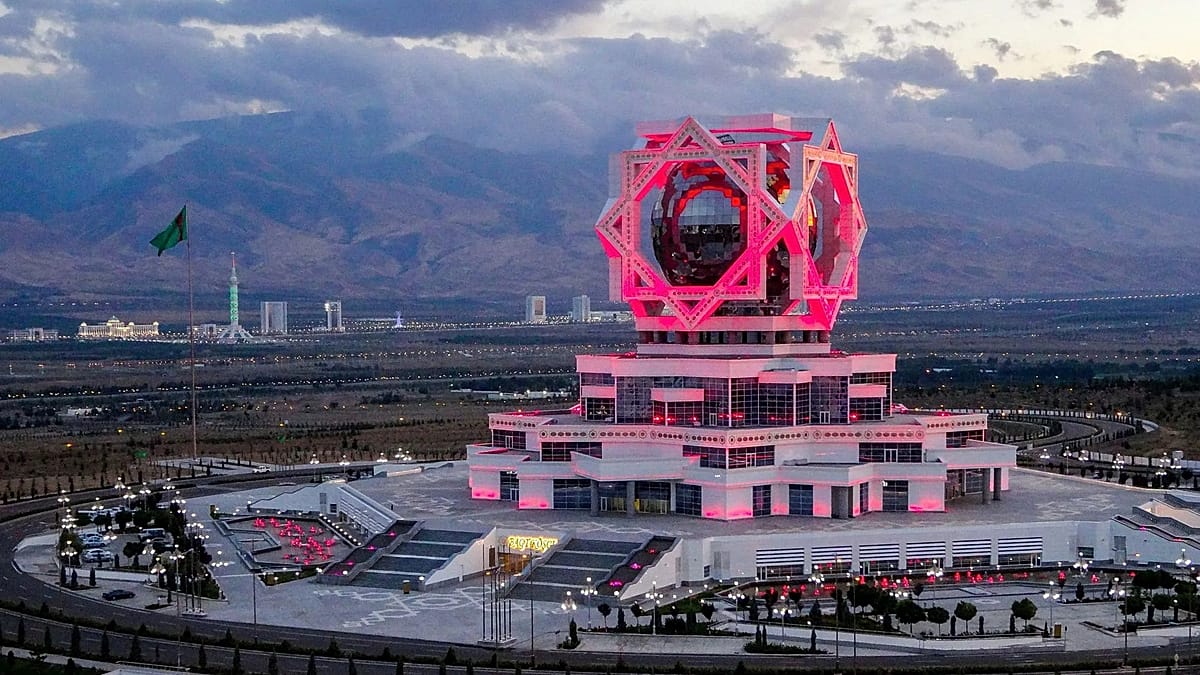
The most famous sight is the Darvaza gas crater, nicknamed the 'gates of hell', a burning natural gas field that has been alight since 1971. Visitors also explore the ancient city of Merv, a UNESCO site, and the marble-clad capital Ashgabat. To enter, you typically need a guided tour and a visa obtained through a travel agency. From Europe, fly to Ashgabat via Istanbul (Turkish Airlines) or Frankfurt (Lufthansa), though schedules can be irregular.
Other least-visited countries include the Pacific nations of Nauru and Kiribati, the Caribbean's Montserrat, and the African states of São Tomé and Príncipe and Comoros. For Europeans seeking the ultimate off-grid escape, these destinations offer a stark contrast to the crowded beaches of the Mediterranean. As Europe's emerging rail destinations gain traction, the allure of places where you might be the only tourist remains strong. But be prepared for long journeys and limited infrastructure—that's part of the charm.