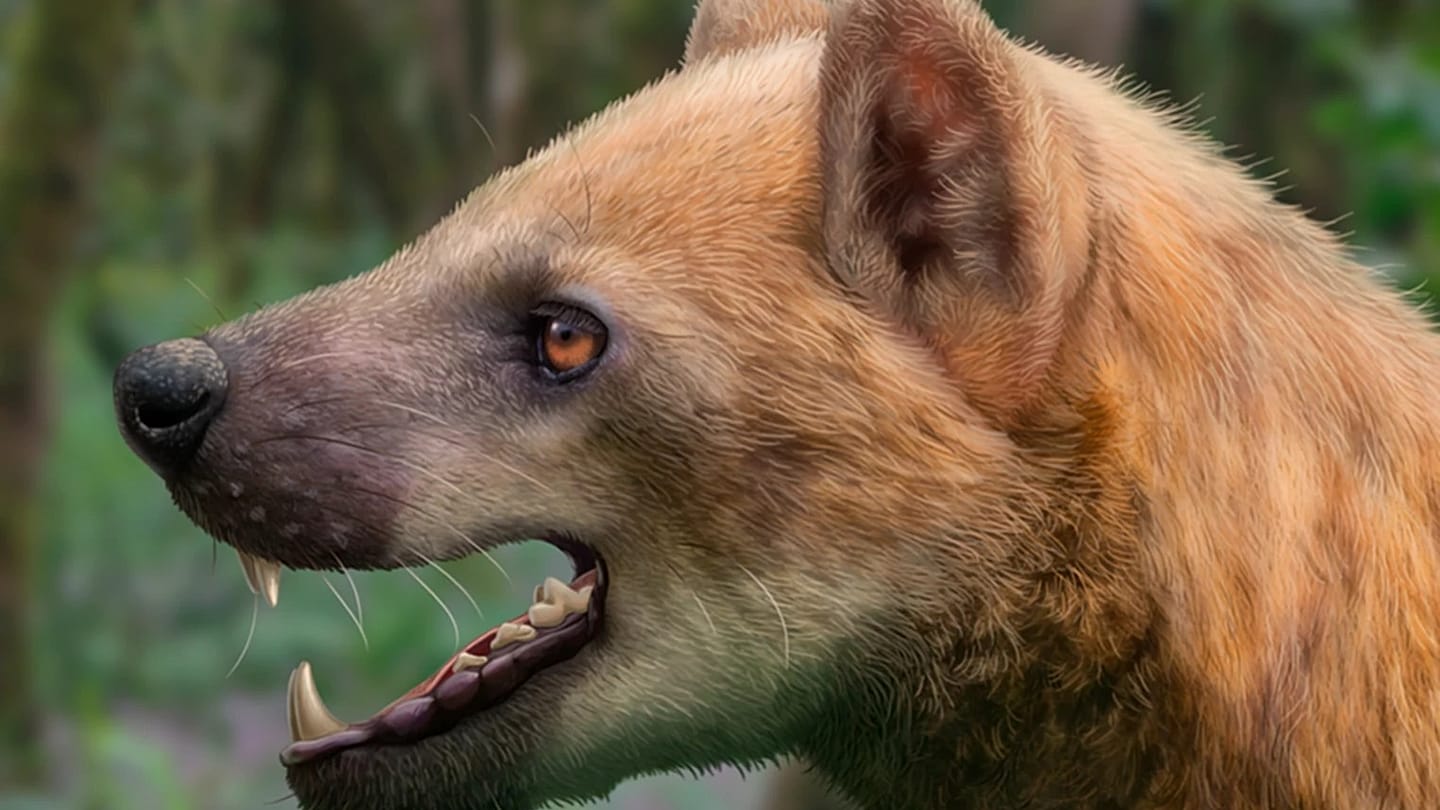
An international team of paleontologists has identified a new species of amphicyonid, commonly known as a bear-dog, from a fossil skull found three decades ago in Catalonia. The discovery, reported in the Journal of Mammalian Evolution, adds a crucial piece to the puzzle of Miocene carnivore evolution in Europe.
A 159-Million-Year-Old Puzzle from Els Casots
The fossil, unearthed at the Els Casots site near Barcelona in the early 1990s, had languished in museum collections until a fresh analysis revealed its unique characteristics. Researchers named the new species Paludocyon moyasolai, honoring both its swampy habitat (from the Latin palus, meaning marsh) and the paleontologist Moya Solà.
Amphicyonids, which roamed Europe, Asia, and North America during the Miocene epoch (roughly 23 to 5 million years ago), were neither true bears nor dogs but occupied a distinct evolutionary branch. They ranged from fox-sized to bear-sized, and Paludocyon moyasolai appears to have been a medium-sized predator adapted to wetland environments.
“This skull provides rare insights into the diversity of amphicyonids in the Iberian Peninsula,” said lead author Dr. Laura Domingo of the Universidad Complutense de Madrid. “The well-preserved cranial features allow us to reconstruct its feeding habits and ecological role.”
The site at Els Casots is part of a rich fossil deposit from the early Miocene, a period when Europe’s climate was warmer and wetter, and the region was covered by lush forests and lakes. The bear-dog likely preyed on small mammals and reptiles, competing with other carnivores such as early felids and mustelids.
This discovery is part of a broader effort to understand how European ecosystems responded to climatic shifts millions of years ago. Similar research across the continent, including studies on modern threats to astronomy, highlights the importance of preserving paleontological heritage.
The identification of Paludocyon moyasolai also underscores the value of reexamining museum specimens with modern techniques. CT scanning and 3D modeling allowed the team to compare the skull with other amphicyonid fossils from across Europe, including finds from France, Germany, and the Czech Republic.
“Many fossils collected decades ago still hold secrets,” added Dr. Domingo. “Revisiting them with new tools can dramatically change our understanding of prehistoric life.”
The study contributes to a growing body of knowledge about Miocene carnivores, a group that included the ancestors of modern bears, dogs, and cats. It also raises questions about how these animals dispersed across the continent, possibly via land bridges that connected Europe to Africa and Asia.
For now, the skull of Paludocyon moyasolai will remain at the Institut Català de Paleontologia Miquel Crusafont in Sabadell, where it will continue to be studied. The researchers hope that further excavations at Els Casots will yield more fossils, shedding light on the ecosystem that once thrived in what is now Catalonia.