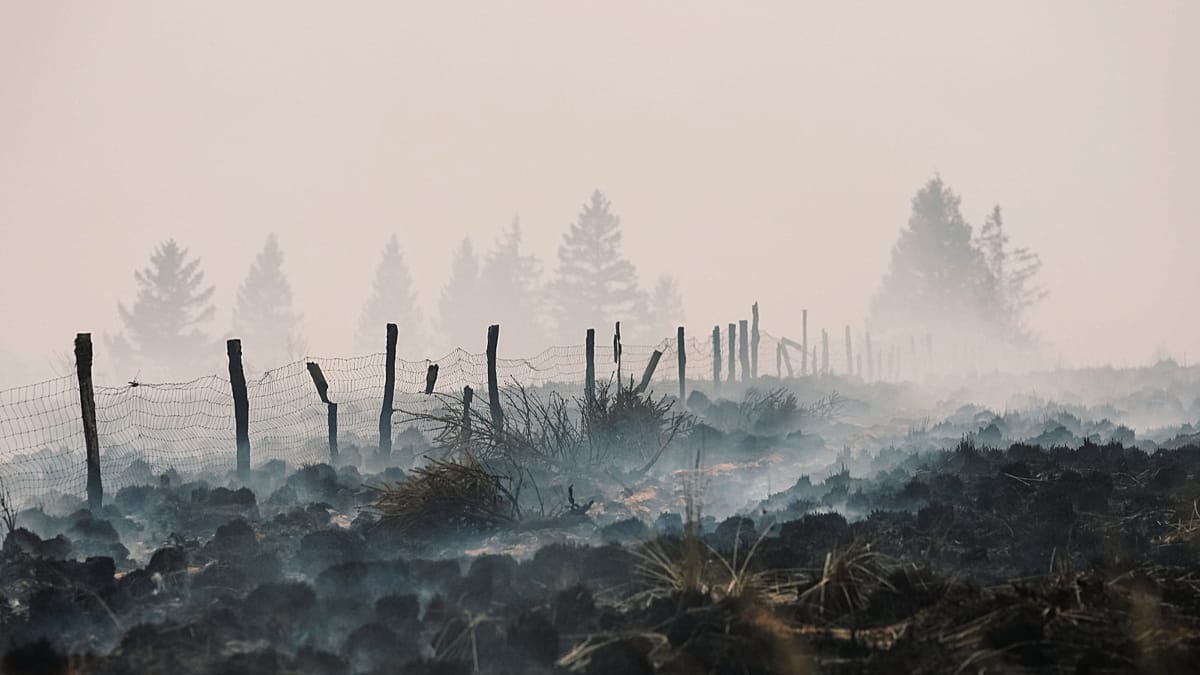
Firefighters in Belgium have managed to fully surround the country's largest wildfire in over a century, but officials caution that the situation on the ground remains precarious. Tony Hosmans, spokesperson for the national crisis cell, confirmed on Wednesday that the blaze in the High Fens nature reserve has been encircled and is no longer advancing toward Germany. The immediate goal, he said, is to bring it under control, ideally with aerial support.
"The situation remains complicated due to a number of flare-ups that have occurred in various parts of the site," Hosmans told reporters. The fire, which has scorched vast expanses of boggy peatlands, pine forests, and hiking trails, grew over the weekend to cover an area roughly half the size of Manhattan. Hundreds of firefighters have been working around the clock to contain it.
The decisive push to encircle the fire began on Tuesday, despite gusty winds and rain that repeatedly grounded water-bombing aircraft. Regional government spokesperson Nicolas Yernaux told AFP that in areas where crews could operate, the fire was "under control and contained." However, a hard-to-reach front near the German border remains a concern, with some residents in the border town of Monschau already evacuated due to smoke hazards.
Firefighters worked through the night to link the eastern and northern fronts, a crucial step in sealing the perimeter. "We're talking about one or two kilometres and we're on the verge of achieving it," Yernaux said, despite "sustained winds" blowing toward Germany. The terrain, a patchwork of heath, peat bogs, and raised wooden boardwalks, makes it difficult for heavy vehicles to operate, and crews often struggle to approach the flames at close range.
International support and persistent flare-ups
Water-bombing aircraft from several countries have been deployed, including two Norwegian helicopters that arrived on Monday night, joining planes from Germany, Sweden, and the Netherlands. But low cloud and rain have repeatedly forced them to stay grounded, slowing progress. The smoke plume, thick and yellowish, has been detected as far away as eastern France, where authorities issued an air-pollution alert.
The blaze has forced evacuations in one Belgian village and two hamlets of a second. Residents of Sourbrodt were allowed to return home on Monday night, but other areas remain off-limits. During a visit to the site with King Philippe on Monday, Interior Minister Bernard Quintin warned that it could take "several weeks" of soaking and dousing to prevent the fire from reigniting, even after it is brought under control.
The High Fens fire is part of a broader pattern of extreme wildfire activity across Europe this summer. Wildfires have forced evacuations in Germany and France, while Portugal has deployed over 2,000 personnel to battle blazes. Spain and France have also seen major fires, with 17,000 hectares burning in Aragon alone. The continent has been gripped by a historically hot summer, with temperatures in Belgium reaching 37°C last week, creating ideal conditions for fires to ignite and spread.
The High Fens blaze broke out in an area that suffered massive fires in 1911, during a similar period of heatwaves. It is now the largest wildfire in Belgium's recorded history. As crews continue to battle flare-ups, the focus remains on preventing the fire from reigniting and ensuring the safety of nearby communities.