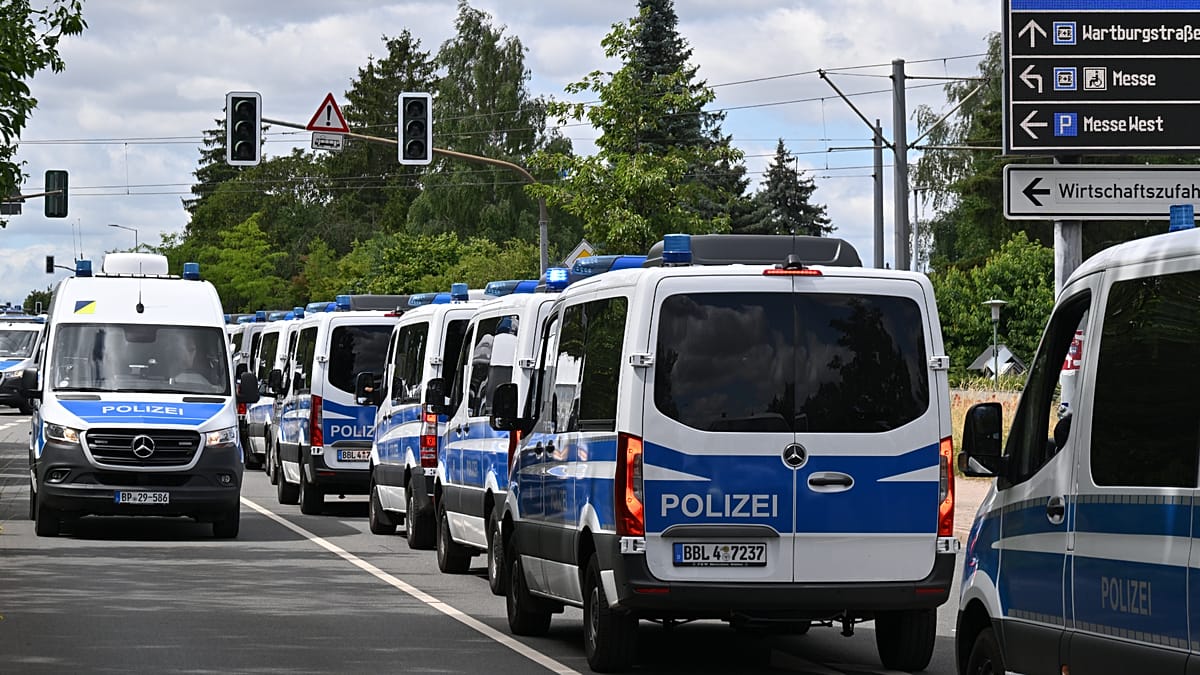
On Saturday, approximately 20,000 demonstrators converged on Erfurt, the capital of Thüringen, to voice opposition to the annual conference of the far-right Alternative for Germany (AfD) party. The protest, organized by antifascist groups, saw participants blocking roads and tram lines around the city as riot police monitored the situation.
Noa Sander, a spokesperson for the anti-AfD coalition Widersetzen, articulated the protesters' demands: “We want a society based on solidarity: equal rights, equal security, the right to residence and social security for all. That is what we stand for together here in Erfurt today.”
Thüringen police acknowledged the protest as “legitimate” but reported that an AfD constituency office and several police officers were targeted with paint bombs and fireworks. Despite these incidents, the conference proceeded as scheduled, according to a police statement on social media.
AfD Leadership and Electoral Ambitions
The party's co-leaders, Tino Chrupalla and Alice Weidel, are expected to be re-elected during the conference. This gathering comes ahead of local elections in Saxony-Anhalt and Mecklenburg-Vorpommern, which the AfD hopes will build momentum for broader national success. The party, known for its Eurosceptic stance and strict immigration controls, has also been critical of Berlin's support for Ukraine in its war with Russia.
The AfD's rise has sparked significant concern across Europe, particularly given its growing influence in eastern German states. The European Parliament has previously moved to strip the AfD-led alliance of its EU party status, reflecting broader unease about the party's far-right positions.
In recent months, Germany has seen a series of political developments, including Chancellor Merz's unveiling of major tax, pension, and sick leave reforms, which have reshaped the political landscape. The AfD's conference in Erfurt is part of a broader pattern of political polarization in the country.
The protests in Erfurt underscore the deep divisions within German society over the AfD's policies and rhetoric. As the party seeks to expand its electoral base, the opposition remains vocal and determined.