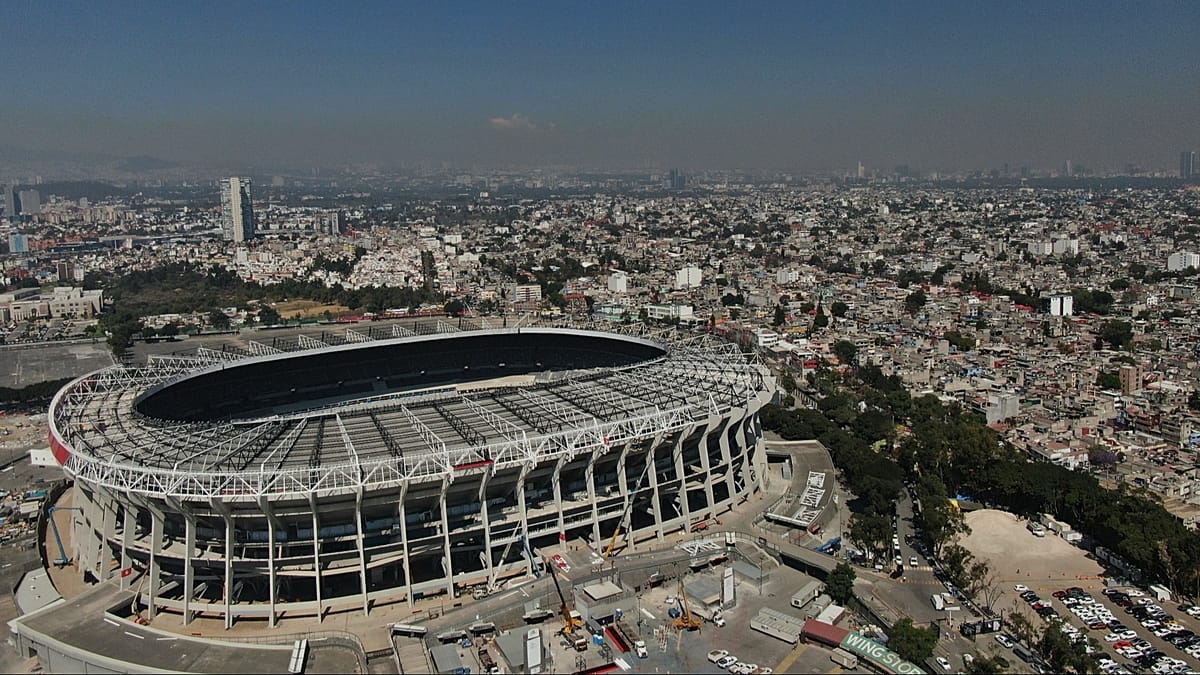
The 2026 FIFA World Cup, set to be hosted across the United States, Canada, and Mexico, risks becoming the most carbon-intensive sporting event in history, according to a report published by the New Weather Institute. The study, titled FIFA's Climate Blind Spot, estimates that the tournament could generate at least nine million tonnes of CO₂ equivalent—nearly double the average of 4.7 million tonnes recorded for World Cups between 2010 and 2022. Under worst-case scenarios, emissions could reach 15 million tonnes, placing the event among the most polluting in global sport.
Expanded Format, Greater Footprint
The core driver of this increase is the tournament's new structure. For the first time, 48 teams will compete in 104 matches—a 63% rise compared to previous editions. This expansion means more travel for players, officials, and fans, as well as greater strain on infrastructure. The report identifies air travel as the primary source of emissions, responsible for an estimated 7.7 million tonnes of CO₂, or the vast majority of the total.
Unlike past tournaments concentrated in a single country—such as Germany in 2006 or France in 1998—the 2026 edition will be spread across 16 cities separated by thousands of kilometres. Teams, journalists, and supporters will depend almost entirely on aircraft to move between venues. The report calculates that flight-related emissions could rise by between 160% and 325% compared to earlier World Cups, cementing transport as the event's most pressing climate problem.
This logistical challenge is compounded by the lack of sustainable alternatives. North America, unlike Europe or parts of Asia, does not possess extensive high-speed rail networks that could reduce the carbon footprint of intercity travel. As a result, the tournament's design locks in a high-emissions model from the outset.
FIFA's Climate Strategy Under Fire
The report, produced in collaboration with Scientists for Global Responsibility, the Environmental Defense Fund, and the Sport for Climate Action Network, accuses FIFA of having a blind spot regarding the climate crisis. It highlights a gap between the organisation's sustainability pledges and the reality of its decisions, such as expanding the tournament and selecting widely scattered host cities. The authors warn that the 2026 World Cup could exacerbate the climate crisis rather than help mitigate it, at a time when global emissions reductions are urgently needed.
FIFA, for its part, has stated that the 2026 tournament will be accompanied by a sustainability strategy focused on reducing environmental impacts and leaving a positive legacy in host cities. On its website, the organisation says it will promote sustainable construction standards in stadiums and temporary infrastructure, encourage public transport use, and aim to cut waste, energy consumption, and emissions. It also notes that host cities will be key to implementing long-term climate measures beyond the competition itself.
However, the report argues that these measures are unlikely to offset the structural impact of the tournament. While the event will not require mass construction of new stadiums—which partly reduces its upfront carbon cost—the fundamental problem remains a competition model that is ever larger, more global, and more dependent on long-distance travel.
The findings come amid broader concerns about the environmental cost of major sporting events. For context, the 2022 World Cup in Qatar, which was heavily criticised for its carbon footprint, still generated significantly fewer emissions than the projected figures for 2026. The report's authors call on FIFA to reconsider its expansion strategy and to invest in genuine climate action, rather than relying on offsetting schemes that may not deliver real reductions.
As European readers will note, the contrast with recent tournaments on the continent is stark. The 2024 European Championship, hosted by Germany, benefited from a compact geography and robust rail links, though it too faced scrutiny over its environmental impact. The 2026 World Cup, by contrast, highlights the tension between global sporting ambition and climate responsibility—a tension that FIFA has yet to resolve.