On the evening of 7 June 1926, Antoni Gaudí i Cornet was walking to mass in Plaça de Sant Felip Neri, a quiet square in Barcelona’s Gòtic quarter. As he crossed Gran Via between Carrer de Bailèn and Carrer de Girona, two trams passed each other. Gaudí stepped back to avoid one but was hit by the other. The accident left him with a concussion and broken ribs. He died two days later at the old Hospital de la Santa Creu, aged 74, and was buried in the crypt of his most famous work, the Sagrada Família.
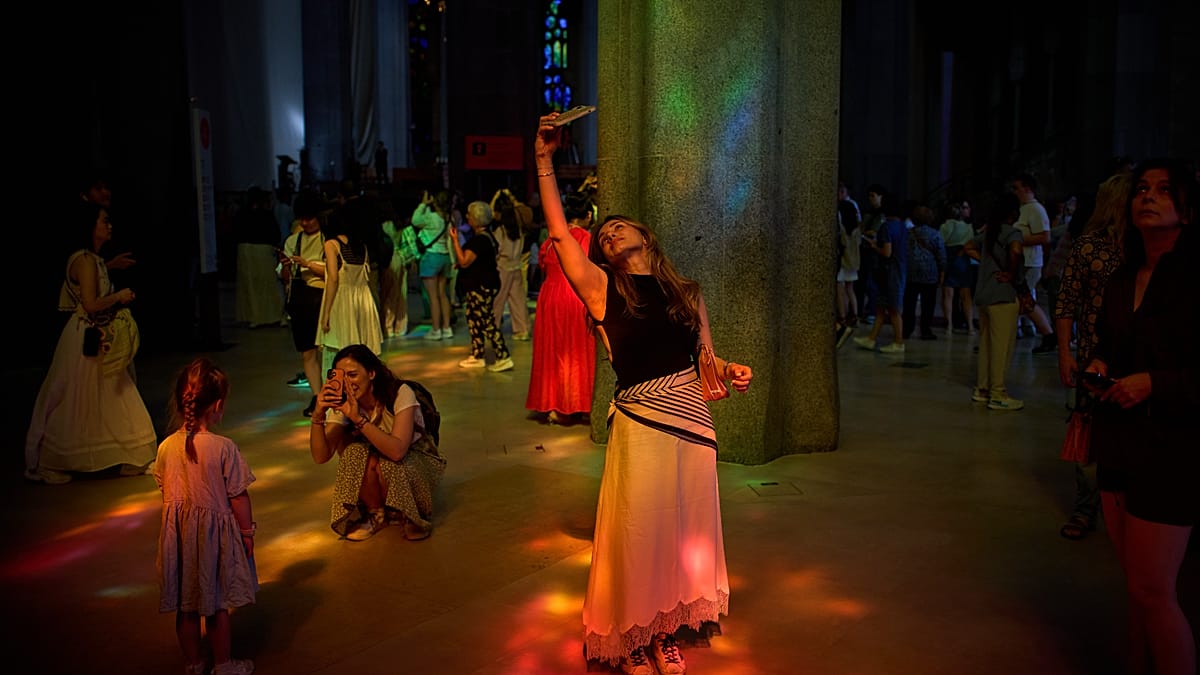
Today, a century later, that unfinished basilica draws millions of visitors each year. Barcelona receives 26.1 million tourists annually, many of them drawn by Gaudí’s legacy. The city’s relationship with its most famous architect is complex: he is celebrated as a genius of Catalan modernism, but his works have also become symbols of overtourism and political identity.
From Coppersmith’s Son to Modernist Master
Gaudí was born in 1852 in Reus, Tarragona, the youngest child of a coppersmith. Frequent bouts of rheumatic fever kept him from school, so he learned his father’s trade. In 1868, the family moved to Barcelona, selling property and mortgaging their farmhouse to fund university education for their sons. Gaudí entered the School of Architecture in 1874, working as a draughtsman to support himself.
His early projects included the hydraulic system for the monumental waterfall in the Ciutadella, created for Barcelona’s 1888 Universal Exposition. This work exemplified Catalan Modernisme, an architectural style characterized by sinuous forms and natural motifs. Gaudí’s degree from the Barcelona School of Architecture was handed to him in 1879 by director Elies Rogent, who remarked: “I do not know whether we have given the title to a madman or to a genius; time will tell.”
Gaudí’s most prolific period coincided with the Renaixença, a cultural movement that revived Catalan literature and art in the late 19th century. This Romantic current, similar to the Galician Rexurdimento, sowed seeds of nationalist movements across Europe. Gaudí became a symbol of Catalan identity, claimed by pro-independence figures like former president Jordi Pujol, who said in 2002 that Gaudí was “not just a builder of buildings, but a shaper of the collective soul of Catalonia.”
The Sagrada Família and a Legacy Unfinished
In 1883, Gaudí took over the Sagrada Família project, altering the original design to create a gargantuan basilica that would occupy him for the rest of his life. The church remains unfinished, with completion originally planned for 2026 but now delayed. The project’s slow progress reflects both the complexity of Gaudí’s vision and the challenges of funding and construction.
Gaudí’s other masterpieces include Casa Milà (La Pedrera) and Casa Batlló, both in Barcelona. His patron Eusebi Güell commissioned several works, including Park Güell. These sites are now UNESCO World Heritage landmarks, but they also contribute to the city’s struggle with overtourism. A recent report showed that Spaniards now spend over 70% of their salary on rent in Madrid and Barcelona, a crisis exacerbated by tourism-driven housing demand.
As Barcelona marks a century without Gaudí, the city reflects on his dual legacy: an artistic genius who turned the city into a work of art, and a symbol of Catalan identity that now faces the pressures of mass tourism. The Sagrada Família, still under construction, remains a testament to his vision—and a reminder that some masterpieces are never truly finished.