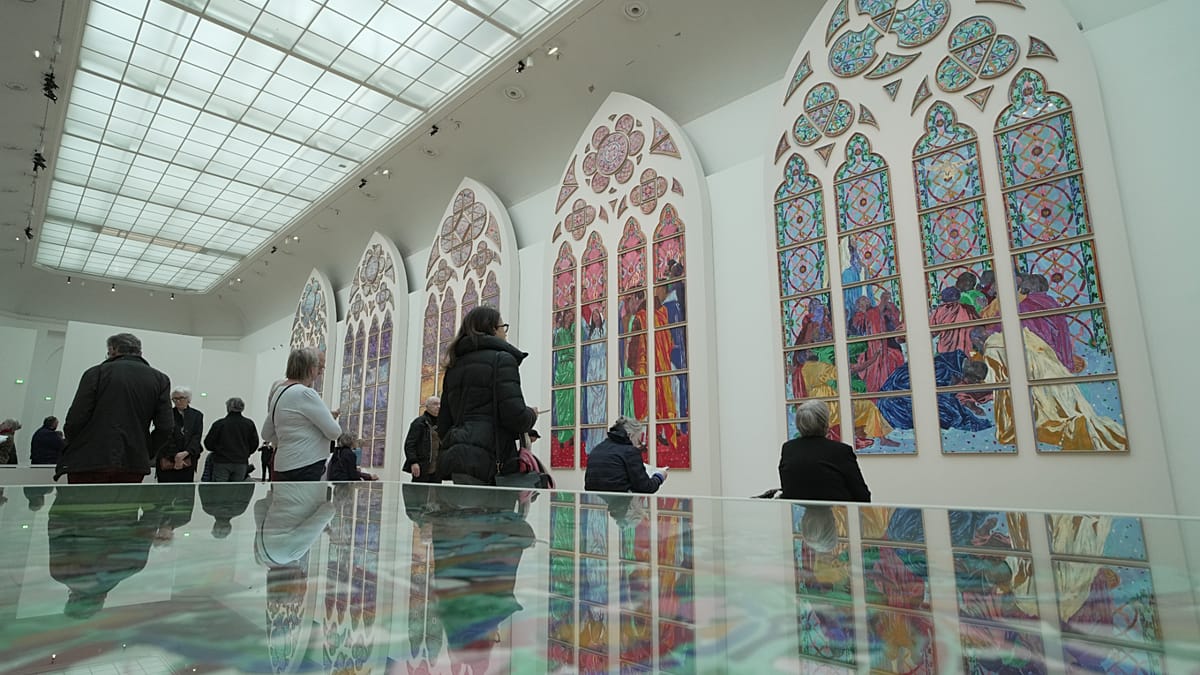
In a workshop in Reims, northern France, artisans are putting the finishing touches on six new stained-glass windows destined for Notre-Dame Cathedral in Paris. Designed by French contemporary artist Claire Tabouret, the windows represent a bold departure from the cathedral's medieval aesthetic and are expected to be installed before the end of the year.
The project, commissioned after the devastating 2019 fire that destroyed the cathedral's spire and roof, has stirred debate among preservationists and art critics. While some welcome the injection of modern artistry into the Gothic structure, others argue that the windows should have been restored to their original 13th-century style. Tabouret's designs, which feature abstract and figurative elements in vibrant hues, are intended to complement the cathedral's restored interior while signaling a new chapter for the iconic building.
A Delicate Craft in Reims
The windows are being produced in the historic glassmaking ateliers of Reims, a city known for its own cathedral and centuries of stained-glass tradition. Each panel requires weeks of meticulous work: cutting, painting, and firing glass to achieve the desired luminosity and color. The workshop's master glaziers collaborate closely with Tabouret to translate her sketches into physical windows that will filter Parisian light into the nave.
Tabouret, whose work often explores themes of identity and memory, has described the commission as both an honor and a challenge. “Creating something for Notre-Dame means engaging with centuries of history, but also with the future of the cathedral,” she said in a statement. The windows are part of a broader renovation effort that includes a new spire and roof, funded by €846 million in donations from around the world.
The installation will take place in December, ahead of the cathedral's planned reopening in 2025. Notre-Dame has been closed to the public since the fire, and its restoration has been a symbol of French resilience and craftsmanship.
Meanwhile, a floating bookshop beneath Notre-Dame has already opened on the Seine, offering a quirky counterpoint to the solemn restoration work above. The shop, which features DJ sets and a no-return policy, has become a popular attraction for locals and tourists alike.
The debate over the windows reflects broader tensions in European heritage management: how to balance preservation with innovation. Similar discussions have occurred in other European capitals, from the reconstruction of the Berlin Palace to the renovation of the Rijksmuseum in Amsterdam. For Notre-Dame, the decision to commission contemporary art signals a willingness to let the cathedral evolve, even as its stone walls are restored to their former glory.
As the December unveiling approaches, the windows are likely to draw both praise and criticism. But for the artisans in Reims, the work is about more than aesthetics. “We are not just making windows,” said one glazier. “We are making light for a building that has stood for 800 years.”