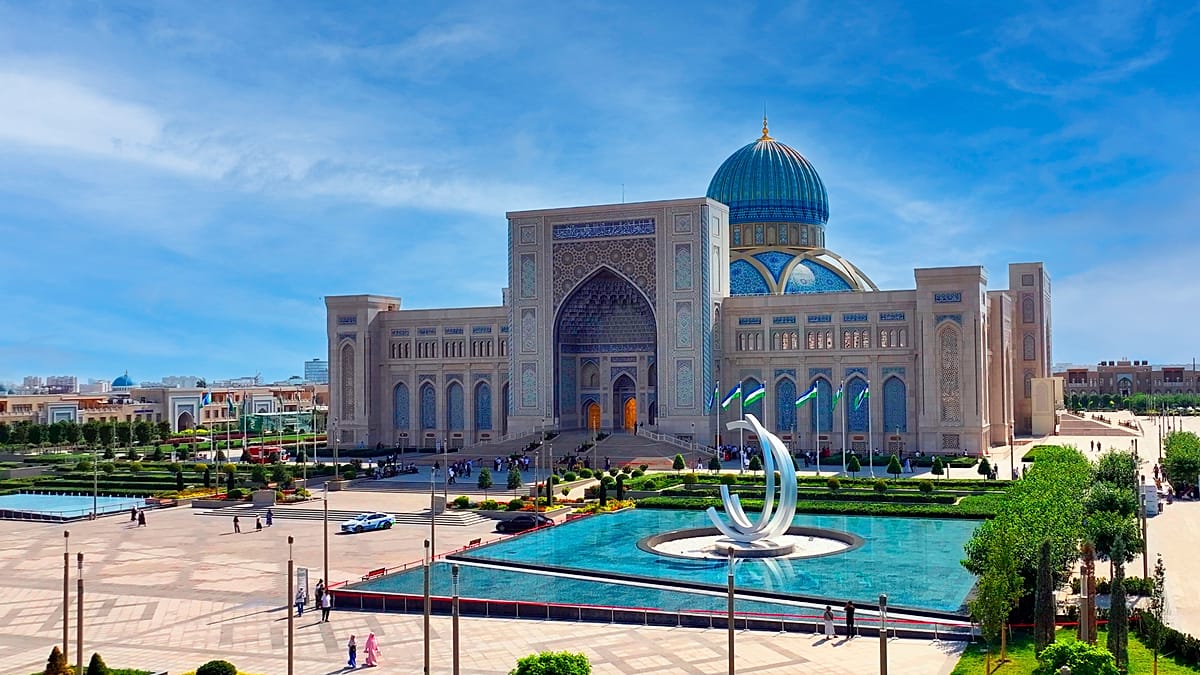
In the heart of Tashkent, a sprawling complex opened in 2017 under President Shavkat Mirziyoyev has become a focal point for cultural diplomacy. The Centre of Islamic Civilisation, billed as the world's largest museum dedicated to Muslim heritage, draws thousands of visitors each day alongside international delegations. Its mission extends beyond preservation: it aims to spotlight the region's historic contributions to European mathematics, astronomy, and medicine—fields where scholars from Samarkand and Bukhara once shaped knowledge that reached Paris, Oxford, and Bologna.
The centre houses a seventh-century Qur’an written on deerskin, a rare artefact that draws pilgrims and historians alike. Academic offices run in partnership with UNESCO and the University of Oxford operate on-site, fostering research into Islamic civilisation's global impact. This collaboration reflects a broader effort to position Uzbekistan as a bridge between Central Asia and Europe, a role that resonates with the continent's own interest in multicultural dialogue.
Diplomacy and Repatriation
Beyond its museum function, the centre serves as an active diplomatic venue. It recently hosted a major international forum that gathered over 400 scholars from across Europe, the Middle East, and Asia. Discussions ranged from medieval Islamic philosophy to contemporary challenges in cultural heritage protection. The event underscored how Uzbekistan is leveraging its history to build soft power, a strategy that European policymakers have noted with interest.
A notable achievement came with the return of nine looted Kushan and Sogdian artefacts from London. These items, dating back to the early centuries of the Common Era, had been held in private collections and institutions in the United Kingdom. Their repatriation, facilitated through the centre's networks, marks a step in redressing colonial-era losses—a topic that resonates in European museums facing similar demands from former colonies. The centre's role in this process highlights its growing influence as a hub for cultural restitution.
Uzbekistan's broader economic growth, which saw GDP expand by 8.5% in 2024 driven by services and investment, provides context for these cultural investments. The centre is part of a wider push to modernise the country while preserving its heritage, a balance that European observers often cite as a model for post-Soviet states. For more on the economic backdrop, see Uzbekistan's Economy Grows 8.5% as Services and Investment Surge.
European Connections
The centre's work has direct relevance for Europe. Central Asia's Islamic Golden Age produced scholars like Al-Khwarizmi, whose work on algebra reached European universities via translations in Toledo and Sicily. The centre's exhibitions highlight these links, reminding visitors that European science owes debts to thinkers from the region. This narrative challenges simplistic views of a divided world and offers a counterpoint to polarised debates about Islam in Europe.
European institutions have taken note. The partnership with Oxford is one example; the centre also collaborates with museums in Berlin, Paris, and Rome on joint exhibitions and research projects. These ties are part of a broader trend: as Europe grapples with its own multicultural identity, engagement with Central Asia offers a chance to explore shared histories. The centre's forum included scholars from Spain, Germany, and France, reflecting a network that spans the continent.
For European readers, the centre's approach to heritage offers lessons. In an era of rising nationalism, Uzbekistan's emphasis on dialogue and repatriation provides a pragmatic model. The return of artefacts from London, for instance, mirrors ongoing debates in Greece over the Parthenon Marbles and in Nigeria over Benin Bronzes. The centre's success in securing these returns without legal battles suggests that diplomacy can work where litigation fails.
The centre also addresses contemporary challenges. Its academic programmes explore how Islamic civilisation adapted to environmental shifts, a topic that resonates with Europe's own climate concerns. As Uzbekistan faces extreme heatwaves—such as the rare 48°C event in 2024—the centre's research into historical resilience offers insights. For more on climate adaptation, see Uzbekistan Adapts to Rare 48°C Heatwave with Emergency Measures.
In a world where cultural heritage is often weaponised, the Centre of Islamic Civilisation stands as a venue for genuine exchange. Its daily visitors—from schoolchildren to diplomats—encounter a narrative that emphasises connection over division. For Europe, this is a reminder that the continent's intellectual roots extend far beyond its borders, into the libraries and observatories of Central Asia.
The centre's impact is not limited to culture. It contributes to Uzbekistan's tourism sector, which has grown steadily as the country opens up after decades of isolation. European travellers, increasingly drawn to the Silk Road cities of Samarkand, Bukhara, and Khiva, often include Tashkent in their itineraries. The centre offers a curated introduction to the region's history, making it a key stop for those seeking depth beyond the usual tourist trail. For more on travel trends, see Uzbekistan's New Center for Islamic Civilization Bridges Centuries of Heritage.
As the centre continues to host forums and facilitate returns, it reinforces a message that resonates from Brussels to Bishkek: heritage is not a zero-sum game. By fostering dialogue, Uzbekistan is building bridges that benefit both Central Asia and Europe, proving that the past can be a foundation for future cooperation.