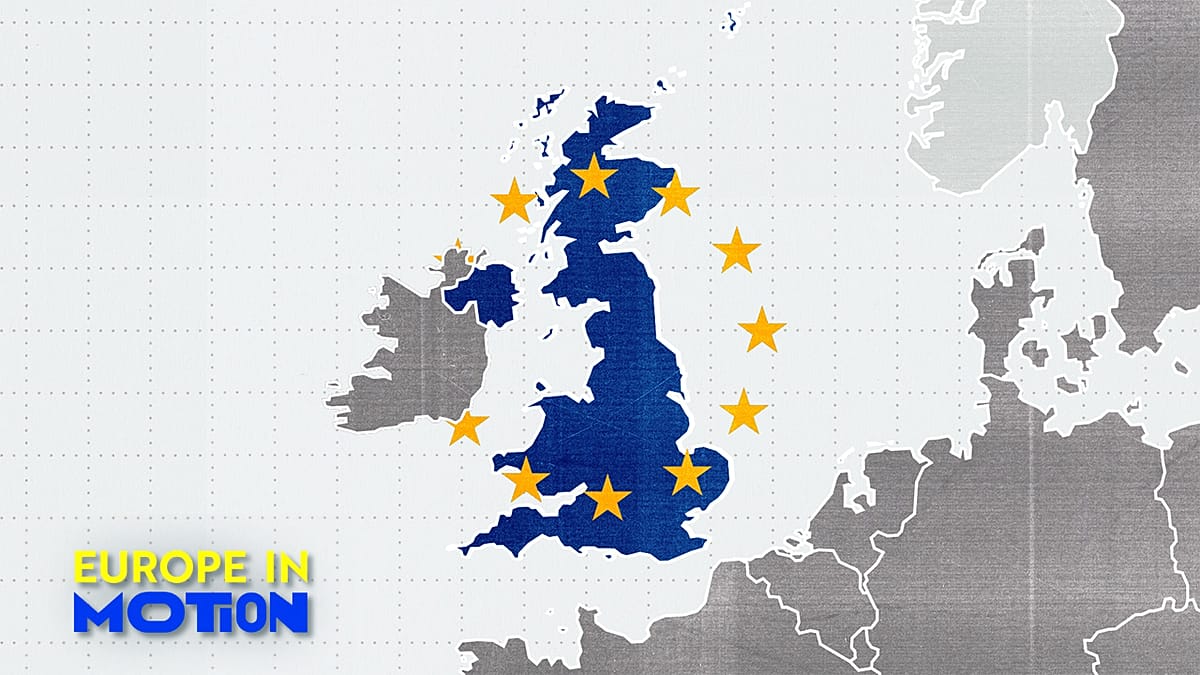
Ten years after the United Kingdom voted to leave the European Union, the political landscape in London remains as fractured as ever. The departure of Sir Keir Starmer — the sixth British prime minister to leave office since the 23 June 2016 referendum — underscores the enduring instability that the Brexit decision unleashed. The vote reshaped British politics and sent shockwaves across the continent, leaving both the centre-left Labour Party and the right-wing Conservatives deeply scarred.
Labour, which won the 2024 general election, has struggled to find its footing. The Conservatives, after 14 years in government marked by turmoil, scandals, and austerity, now face an existential threat from Nigel Farage's far-right Reform Party. Yet beneath the surface of political chaos, a quieter shift is underway: the UK and the EU are slowly drawing closer together.
Public Opinion Turns Pro-European
According to a new poll by Best for Britain, a Brexit-focused research platform, 53% of Britons now want the UK back in the bloc, with 37% saying they would strongly support rejoining. This marks a reversal from the 52% who voted to leave a decade ago. Notably, 23% of those who originally voted Leave have changed their minds. The "Remain" or "Rejoin" movement appears to be gaining ground, partly driven by economic realities and the perceived failures of Brexit.
Concrete policy steps reflect this rapprochement. The UK is set to rejoin the EU's Erasmus+ student exchange programme in 2027. British scientists are also back in the Copernicus Earth observation programme and will be eligible for grants under Horizon Europe, the EU's main research and innovation framework. These moves signal a pragmatic re-engagement, even as full membership remains politically distant.
The Paradox of Reform UK's Rise
Yet the path back to the EU is far from straightforward. While public opinion has shifted, the electoral arithmetic tells a different story. Nigel Farage's Reform Party is consistently leading in the polls at 24%, with Labour and the Conservatives neck-and-neck at around 19%, according to the latest YouGov survey. Most Reform voters have not changed their minds about Brexit; indeed, 55% of them not only want the UK to stay out of the EU but also support further loosening ties with Brussels, the Best for Britain poll found.
This creates a paradox: a pro-European majority in the country coexists with a powerful anti-European political force that could shape the next general election. As Anand Menon, director of the research institute UK in a Changing Europe, noted, the uncertainty following Starmer's departure and the lack of a clear successor make it very difficult to predict the next chapter in the Brexit drama.
The broader European context is also shifting. Across the continent, support for the EU has risen in the decade since the Brexit vote, as a Pew Research study found. Yet the UK's relationship with the bloc remains a work in progress, with deep divisions at home and unresolved questions about the future of trade, security, and migration.
For now, the UK and the EU are engaged in a cautious dance — one step forward, two steps back. The next general election could either accelerate the rejoin momentum or crush it entirely, depending on whether Reform UK's rise translates into seats. As the tenth anniversary of the referendum passes, the divorce that still defines Britain's politics and economy shows no signs of a final settlement.