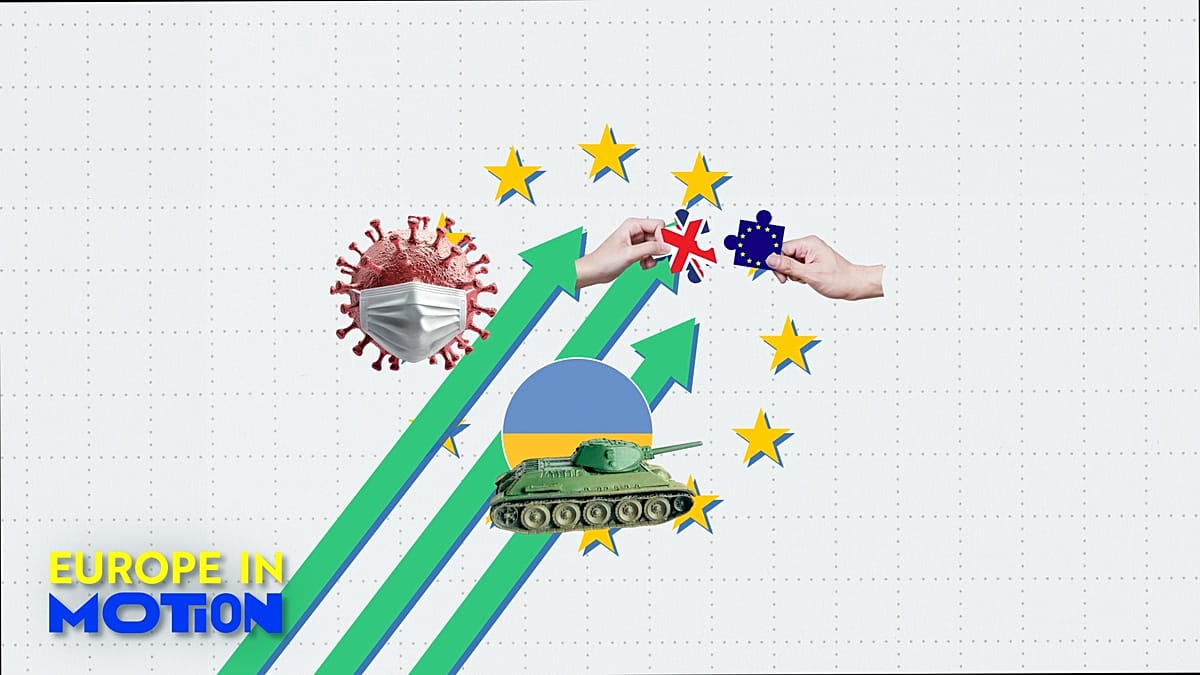
A decade after the United Kingdom's vote to leave the European Union sent shockwaves across the continent, Europeans appear more supportive of the bloc than they were during the 2016 referendum campaign. New polling from Pew Research shows favourable views of the EU have increased across much of Europe, even as parties critical of Brussels gain ground in several member states.
The data, tracking eight countries since 2016, indicates a median favourability rise from 49% to 62%. In Germany, favourable views climbed from 50% to 68%; in France, from 38% to 52%; and in the Netherlands, from 51% to 63%. Even in the United Kingdom, which left the bloc in 2020, favourability jumped from 45% at the time of the referendum to 67% today.
Shift in Political Rhetoric
During the Brexit campaign, calls for referendums on EU membership were not limited to the UK. France's Marine Le Pen advocated for a vote on French membership, while Dutch politician Geert Wilders pushed for a Dutch 'Nexit'. In Greece, public confidence in EU institutions was low after the eurozone debt crisis, and Italy's Five Star Movement demanded a referendum on eurozone membership.
Today, that landscape has shifted. Analysts at the London School of Economics and Political Science note that many eurosceptic parties have moved from advocating full withdrawal to reforming the EU from within. France's National Rally now focuses on restoring border controls and prioritising French law over European law, while Wilders emphasises immigration and asylum rather than a Dutch exit. One exception is Germany's Alternative for Germany (AfD), which still keeps withdrawal scenarios on its agenda.
According to researchers, 'when Brexit began to look less and less like what the Brexiteers had promised, nationalist parties and politicians appeared to be discouraged from pursuing anti-EU and exit policies and instead focused on policies for EU reforms from within.'
Eurosceptic Parties Still Gain
Rising favourability toward the EU does not mean eurosceptic parties have disappeared. In Germany, the AfD increased its federal election vote share from 12.6% in 2017 to 20.8% in 2025. In France, the National Rally and its allies won around 33% in the first round of the 2024 legislative election. Wilders' Party for Freedom (PVV) emerged as the largest party in the Netherlands in the 2023 general election.
The data also shows a sharp jump in EU support immediately after the 2016 referendum, with median favourability rising from 49% to 60% in 2017. This contradicts theories that Brexit would trigger the EU's unravelling. Favourability climbed further following Russia's full-scale invasion of Ukraine in 2022, reaching record highs in many countries surveyed.
Generational Divide
Support for the EU remains strongest among younger Europeans. In Italy, 80% of adults under 35 view the EU favourably, compared with 56% of those over 50. Similar patterns appear across other countries surveyed, where younger respondents are generally more positive about the bloc.
This trend is part of a broader shift in European public opinion, as detailed in Pew's full report. The findings suggest that while eurosceptic parties continue to attract voters on issues like immigration and national sovereignty, the EU itself enjoys broader support than at any point in the past decade.