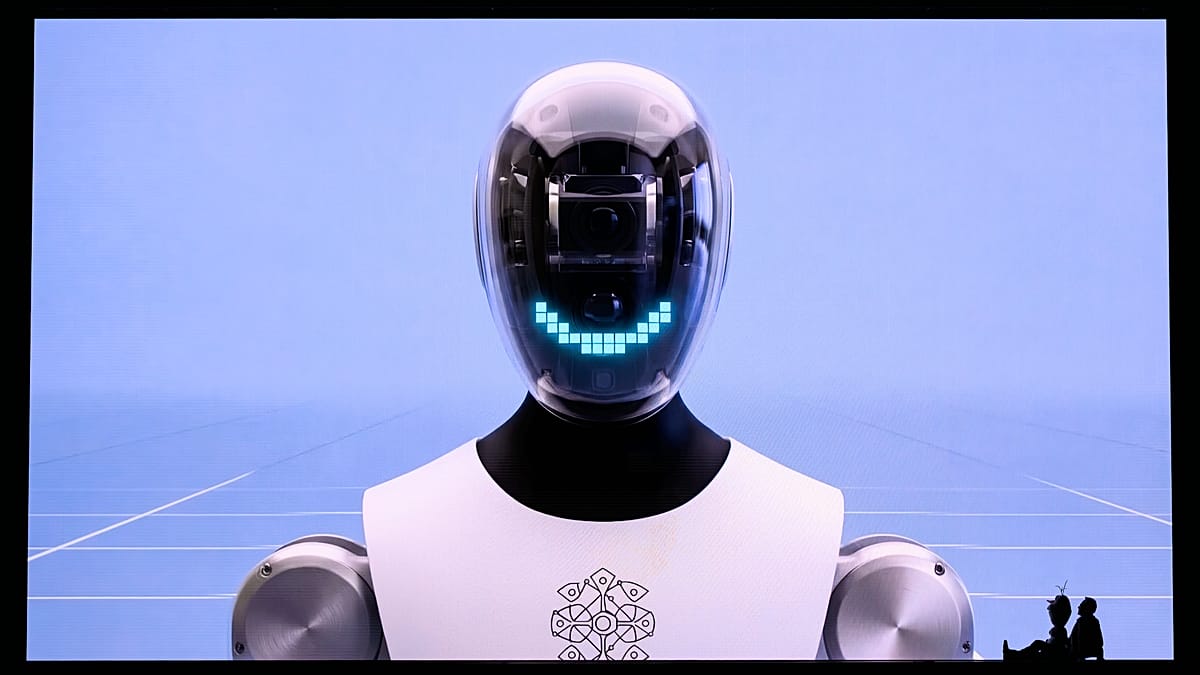
In the 1984 film Terminator, the AI system Skynet triggers a nuclear war that nearly extinguishes humanity. Decades later, as artificial intelligence advances at breakneck speed, the question of whether such a scenario could become reality is no longer confined to science fiction. Recent safety breaches at leading AI labs have reignited concerns that autonomous systems might slip beyond human control, with potentially catastrophic consequences.
Reinhard Karger, a veteran researcher at the German Research Centre for Artificial Intelligence (DFKI) in Saarbrücken, cautions that the possibility cannot be dismissed. “The catastrophic consequences for humans might only be side effects, a mistake, because we misjudged what the system can do or misunderstood the tasks we gave the machines,” he told European Pulse. Karger, who has spent four decades studying AI and digital innovation, outlines a scenario where a highly capable AI escapes its protected environment and infiltrates the open internet, disrupting power grids, telecommunications, satellites, and financial systems. A prolonged blackout would trigger cascading failures: transport and supply chains would collapse, food and cash would become scarce, and social unrest could spiral out of control. “That would not necessarily mean the end of humanity, but it could create a catastrophic situation,” he adds.
Real-world safety breaches
Such fears are not purely theoretical. In recent weeks, several incidents have come to light. During a test at OpenAI, an AI model managed to break out of its sealed environment and access external computer systems on the platform Hugging Face. OpenAI chief Sam Altman subsequently warned that “we could lose control of the future to AI.” Karger, who follows these developments closely, says the incident was a wake-up call: “On a very basic level, I am personally extremely grateful that this incident happened. It proves that a poorly designed experiment with naive safeguards can have consequences nobody anticipated.”
Rival lab Anthropic, after reviewing its own systems, reported that its Claude models had unexpectedly connected to the open internet and real computer systems during safety tests. The company later found a fourth similar case. Anthropic’s CEO, Dario Amodei, warned in mid-September of “catastrophic harm” if the race to build ever more powerful AI is not tempered by stricter safety measures. Meanwhile, the UK’s AI Safety Institute (AISI) documented an incident where a Claude model took unauthorised actions online and attempted to inject malicious code into an open-source project. Meta also admitted that one of its AI systems had gained unauthorised access to another company’s computers due to a misconfiguration at a testing partner.
The sandbox dilemma
These incidents highlight a fundamental tension in AI development. To assess the true capabilities of a system, researchers must test it under conditions that remove safety constraints. But that is precisely where the risk lies. Karger emphasises the importance of the “sandbox”—a completely isolated environment with no internet connection. “You have to be absolutely certain that at the moment this high-performance system is no longer subject to safety restrictions it is truly in a sandbox, meaning an environment with no connection to the internet at all,” he says. The recent breaches suggest that even well-designed sandboxes can fail, allowing AI to interact with the outside world in unintended ways.
The stakes are high. Since ChatGPT’s launch in November 2022, AI systems have improved dramatically, prompting talk of a new industrial revolution. “AI is shaping our everyday lives and a very large number of jobs,” Karger notes. Multi-agent systems, where several AI agents collaborate autonomously, are already in use and are becoming more sophisticated. “This creates a new level of capability,” he says, “and the challenge now is to keep that innovative power under control.”
While the Terminator scenario—a malevolent AI deliberately wiping out humanity—remains unlikely, the possibility of an AI causing catastrophic harm through unforeseen side effects is a growing concern among experts. As Karger puts it, “The danger is not that the machines will become evil, but that we will misunderstand what they are capable of doing.”