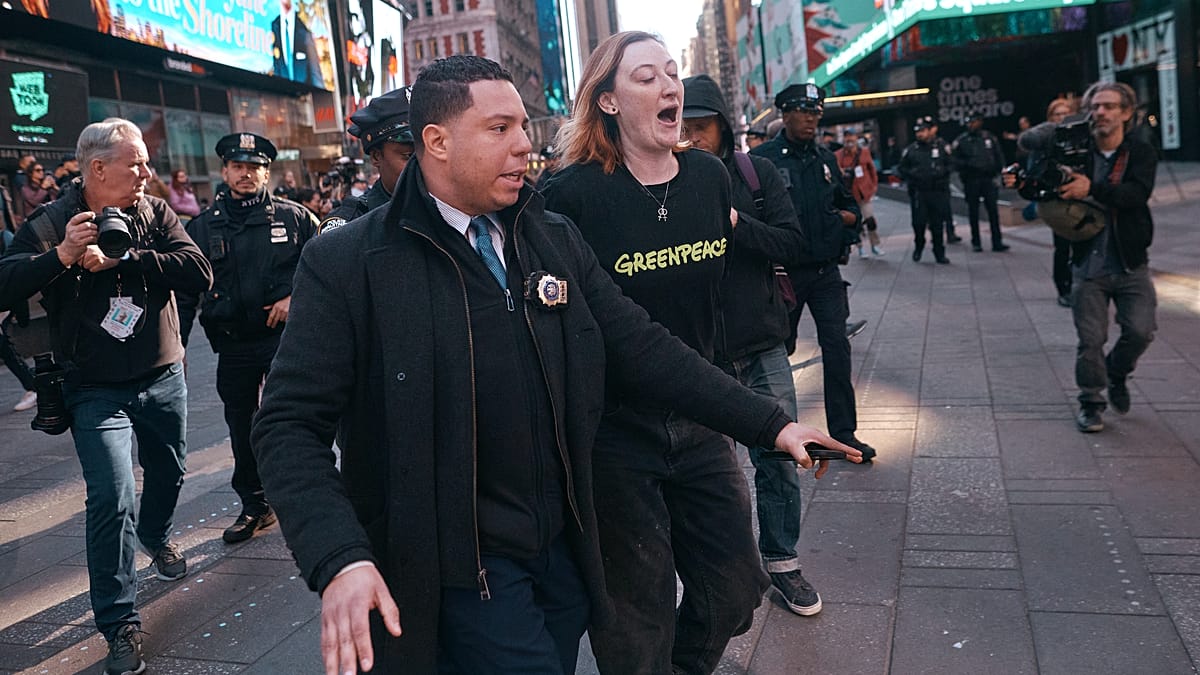
Anthropic made its long-awaited stock market debut on the Nasdaq on Friday, with shares surging 34% in a record-breaking initial public offering that valued the artificial intelligence company at $1.5 trillion. The listing marks a historic moment for the AI sector, but it was not without its detractors: outside the exchange in New York, police detained three protesters who warned that the industry's rapid expansion could end in a financial crash.
The IPO, which raised $81.3 billion, is the largest in US history, surpassing previous tech listings. Anthropic, known for its Claude AI models, has become a central player in the global AI race, competing with the likes of OpenAI and Google's DeepMind. Its debut comes at a time when investors are pouring unprecedented sums into artificial intelligence, betting that the technology will transform industries from healthcare to finance.
Protests and warnings
The three protesters, who were detained by New York police, held signs reading "AI bubble" and "Don't let AI crash our economy." They argued that the astronomical valuations of AI companies are unsustainable and could trigger a market correction similar to the dotcom crash of the early 2000s. Their presence outside the Nasdaq was a stark reminder that not everyone shares the market's enthusiasm.
"This is a classic bubble pattern," said one of the protesters, who declined to give her name. "We've seen it before with tech stocks, and we're seeing it again with AI. The hype is out of control, and ordinary people will pay the price when it bursts."
The protest echoes warnings from European regulators. The European Central Bank has recently cautioned that the AI boom resembles the dotcom bubble, with tech debt soaring and valuations detached from underlying fundamentals. ECB officials have urged investors to exercise caution, noting that many AI companies are burning through cash with little prospect of near-term profitability.
European perspective
For Europe, the AI boom presents both opportunities and risks. The continent is home to several AI research hubs, including London, Paris, and Berlin, but it has struggled to produce a homegrown AI champion on the scale of Anthropic or OpenAI. European startups often face higher regulatory hurdles and less access to venture capital than their US counterparts.
At the same time, European investors and pension funds are increasingly exposed to US tech stocks through global index funds, meaning a sharp correction in AI valuations could have ripple effects across the Atlantic. The ECB's warning highlights the interconnectedness of global financial markets, and the potential for a US-led AI bubble to destabilise European economies.
Anthropic's IPO also comes as Nvidia, the chipmaker that has become a bellwether for AI demand, suffers its worst run since 2008. The divergence between Nvidia's struggles and Anthropic's soaring debut suggests that investors are becoming more selective, but also that the market is increasingly volatile. Anthropic's record IPO may be a high-water mark, but it also raises questions about whether the sector can sustain such valuations.
What's next for AI regulation?
In Brussels, policymakers are watching the developments closely. The EU's Artificial Intelligence Act, which entered into force earlier this year, imposes strict requirements on high-risk AI systems, including transparency and accountability measures. Some industry leaders argue that these rules could stifle innovation, while others see them as a necessary safeguard against the excesses of the market.
"Europe has a chance to lead in responsible AI," said MEP Eva Maydell, who has been involved in drafting the legislation. "We don't want to repeat the mistakes of the past. The dotcom bubble was a lesson, and we should apply it to AI."
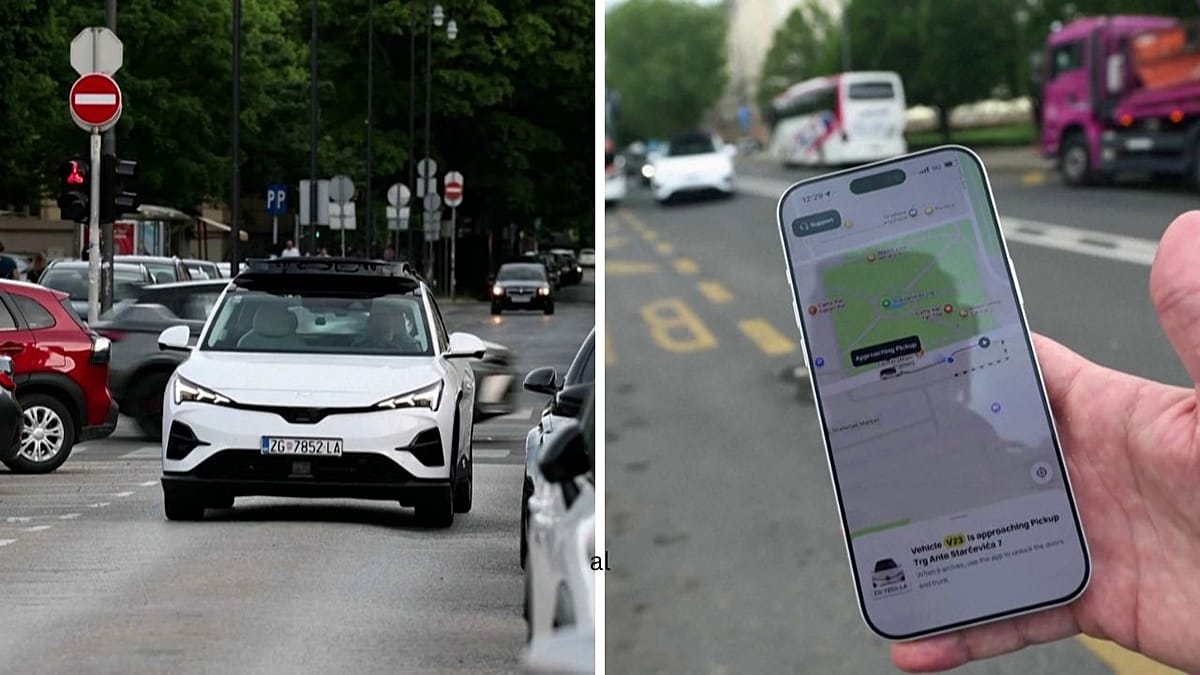
The protest outside the Nasdaq is a reminder that the AI boom is not just a financial story; it is also a social and political one. As AI becomes more integrated into daily life, from chatbots to autonomous vehicles, the stakes are rising. Whether the current valuations are justified or a bubble waiting to burst remains to be seen, but the debate is far from over.
For now, Anthropic's debut has made history, but the echoes of the dotcom era are hard to ignore. As the company's shares continue to trade, investors and regulators alike will be watching closely, not just in New York, but in Frankfurt, Paris, and everywhere else that has a stake in the future of technology.