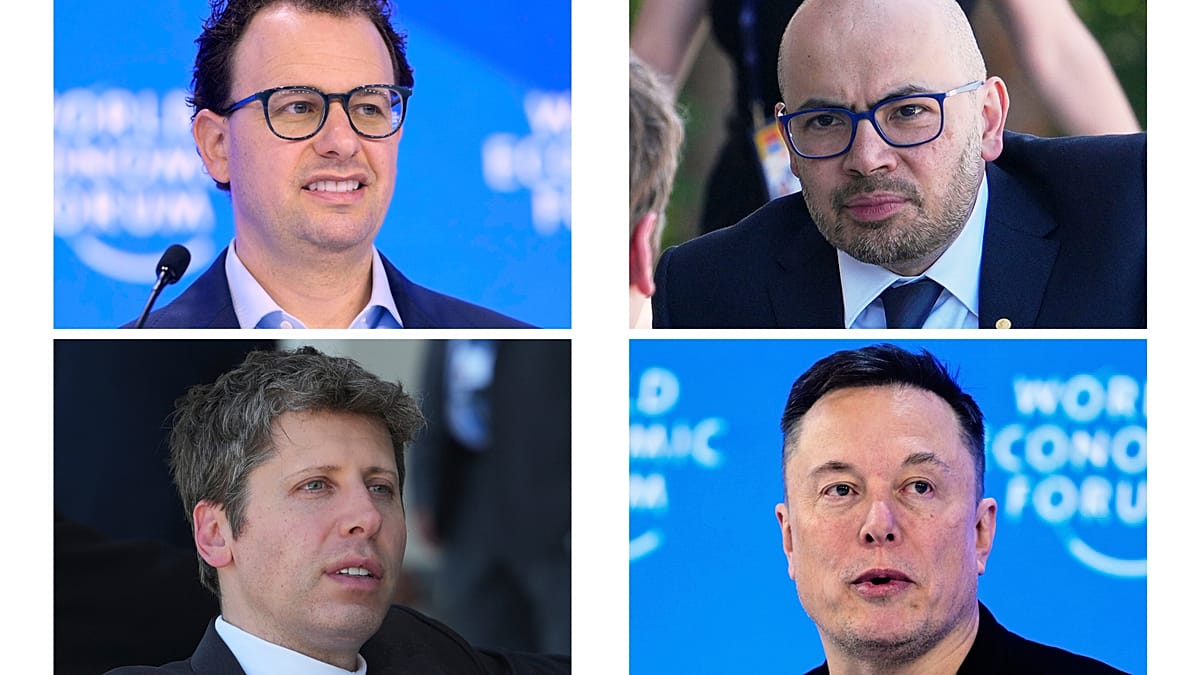
Four of the world's most prominent artificial intelligence companies — OpenAI, Anthropic, xAI and Google DeepMind — are facing a new antitrust lawsuit that alleges they secretly agreed to throttle the pace of their own technology, a move that plaintiffs say deprived paying subscribers of real value.
The complaint, filed in the US District Court for the Northern District of California, claims the chief executives of these firms coordinated a "slowdown" in AI development under the banner of safety, which the plaintiffs argue was effectively price-fixing by another name. The lawsuit is brought on behalf of a proposed nationwide class of paid subscribers to ChatGPT, Claude, Grok and Gemini.
"AI will quickly spin out of human control and could kill us all if we allow AI safety and protocol... to be controlled by private self-serving agreements between the world's most powerful 'for profit' technology companies," said Nick Rowley, the lead attorney representing the plaintiffs.
An agreement to slow down?
The alleged coordination came to a head on 12 September, when Anthropic CEO Dario Amodei published an essay calling for industry-wide cooperation to decelerate advancements in favour of enhanced safety measures. That same day, OpenAI's Sam Altman, xAI's Elon Musk and Google DeepMind's Demis Hassabis each publicly voiced agreement with Amodei's proposals.
But the lawsuit also points to earlier signs of collusion, including a July statement signed by high-ranking employees from several leading AI labs that acknowledged the "intense competitive pressure not to unilaterally slow" development. That statement urged governments to support a global effort to slow automated AI development.
The plaintiffs argue that an agreement among rival AI chiefs that progress "should be slower than competition would otherwise produce" has an anticompetitive effect on consumers. They do not object to individual companies deciding to slow their own progress for safety reasons; rather, they contend that antitrust laws forbid them from taking the "shortcut" of substituting collective restraint for individual accountability.
"A competitive market allows for responsibility and genuine progress," the lawsuit argues.
Safety vs. competition
In his essay, Amodei acknowledged potential antitrust hurdles, suggesting it would be helpful for the US government to mediate or "at least enable" cross-lab discussions. He proposed that Washington could "issue a narrow waiver for certain kinds of safety conversations."
Altman responded on social media that OpenAI welcomes a "federal framework that sets consistent safety requirements," but added, "we do not believe we need to wait for an antitrust exemption or legislation to begin the work of providing this confidence."
The case echoes broader debates across Europe about how to regulate AI without stifling innovation. Brussels has been crafting its own AI Act, and European regulators are watching these developments closely. The outcome of this US lawsuit could set a precedent for how antitrust law applies to collaborative safety efforts in the tech sector, a question that also resonates in EU competition policy.
The plaintiffs are not against AI companies asking Congress, the White House or any other agency for regulation or an antitrust exemption. But achieving such collaboration with the federal government may be an uphill battle.
President Donald Trump has rejected calls for AI regulation, calling them part of a "conspiracy" and questioning why industry leaders would push for rules that, he says, "if strongly implemented, will drive them into oblivion and bankruptcy." He has announced plans to form an AI task force and appoint an "AI czar," though details remain scarce. The administration has been vocal about wanting American AI labs to outpace Chinese competition.
While several Democratic leaders have called for sweeping AI regulation, Republicans have largely mirrored Trump's position. This political divide adds another layer of uncertainty to the case, which could take years to resolve.
For European readers, the lawsuit raises important questions about the balance between safety and competition in AI. As the EU pushes forward with its own regulatory framework, the outcome of this case may influence how European courts and regulators view similar agreements among tech giants. The stakes are high, not just for the companies involved, but for the future of AI governance on both sides of the Atlantic.