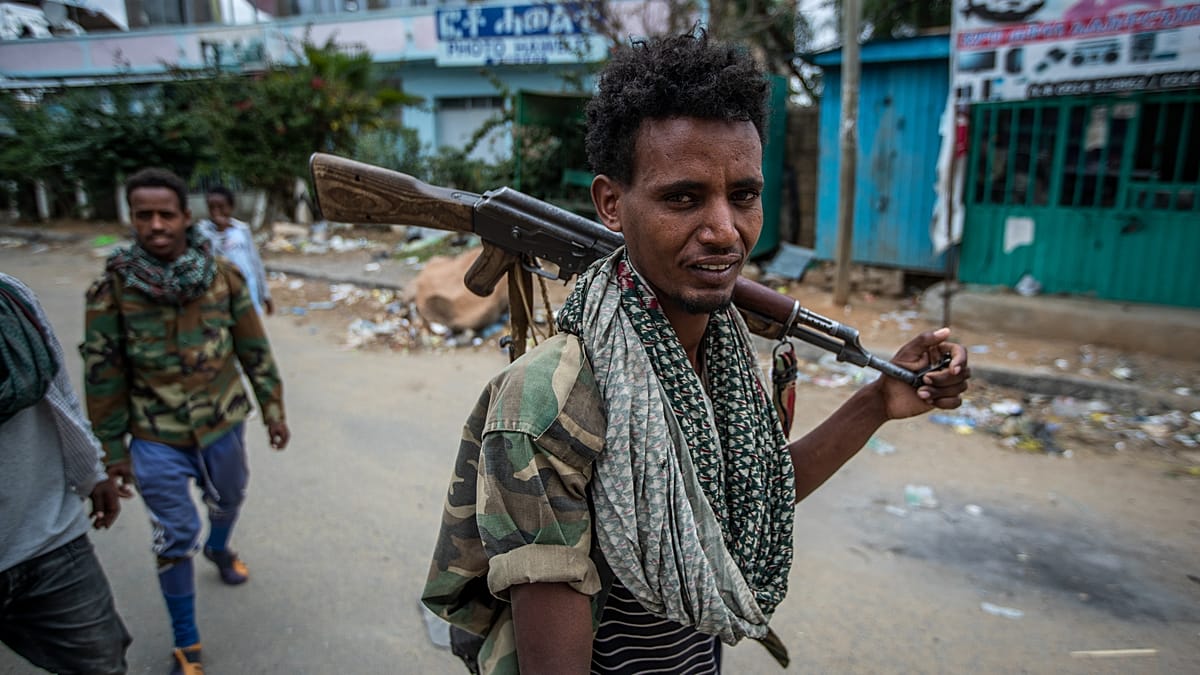
In a dramatic shift, Ethiopian factions that once fought each other in the brutal Tigray war have announced a unified military alliance aimed at removing Prime Minister Abiy Ahmed from power. The Tigray People's Liberation Front (TPLF), the Amhara nationalist Fano militias, and the Oromo Liberation Army (OLA) are among seven groups that have formed the Ethiopian Peoples' Forces Alliance for Survival, according to a statement on Sunday.
The alliance, which also includes four smaller groups from three other regional states, represents half of Ethiopia's twelve regional states. Its stated goal is to dismantle the current government and establish a transitional administration. TPLF Vice President Amanuel Assefa confirmed the coordination, saying, "We just formed an alliance, we are collaborating with several groups and our objectives are to remove the regime and facilitating a transitional government."
The announcement comes as the African Union reports that both the federal government and the TPLF have been massing troops along the border of the northern Tigray region, stoking fears of a return to a conflict that claimed up to 600,000 lives. The Pretoria Agreement of November 2022, which ended the two-year war, required the TPLF to demobilize and refrain from military mobilization. However, the TPLF has not only failed to demobilize but also unilaterally reinstated its pre-war regional council in May, effectively voiding the agreement.
An uneasy coalition
The alliance brings together groups with deep ideological differences and a history of conflict. During the Tigray war, Fano militias fought alongside federal forces against the TPLF. Moreover, territorial disputes remain unresolved, particularly over Western Tigray, an area administered by Amhara nationalists since the war's end. Amanuel Assefa acknowledged these tensions, stating, "We will sit at the table later to solve our problems peacefully."
Fano leader Zemene Kasse will chair the alliance, which has been in talks for over a year. The groups believe their combined strength can challenge the federal government, which possesses significant military resources, including drones. Kjetil Tronvoll, a professor of peace and conflict studies at Oslo New University College in Norway, expressed skepticism about their chances. "I am not sure they will be able to sustain such a war," he said. However, he noted that coordinated military action could pose a challenge: "If they coordinate as a military command, it may make a difference, it is a potential four to five fronts that the government will have to deal with."
Abiy Ahmed, who received the Nobel Peace Prize in 2019 partly for brokering peace with Eritrea, has faced mounting armed opposition since 2023 as the post-war settlement unraveled. The federal government has been battling the OLA in central Oromia since 2018, and Fano militias took up arms in April 2023 after federal authorities attempted to disarm them.
Violence in Gambella
Meanwhile, separate violence has erupted in Ethiopia's western Gambella region, near the South Sudanese border. Doctors Without Borders (MSF) reported that at least 12 people were killed and dozens injured in clashes in Itang Special Woreda on 18 September. MSF teams at Kule health center received 88 patients, including eight who were already dead and four who died upon arrival. MSF's operations manager in Ethiopia, Gul Badshah, called for restraint: "We call on all those involved to exercise restraint and protect civilians from further violence." The region hosts more than 400,000 refugees, mostly South Sudanese who have fled violence in their own country.
The formation of this alliance marks a significant escalation in Ethiopia's internal conflicts, with potential implications for the wider Horn of Africa. As the country's political landscape fragments, the international community watches closely, mindful of the devastating human cost of previous wars. The coming months will reveal whether this coalition can translate its ambitions into a coordinated military campaign or whether internal divisions will undermine its efforts.