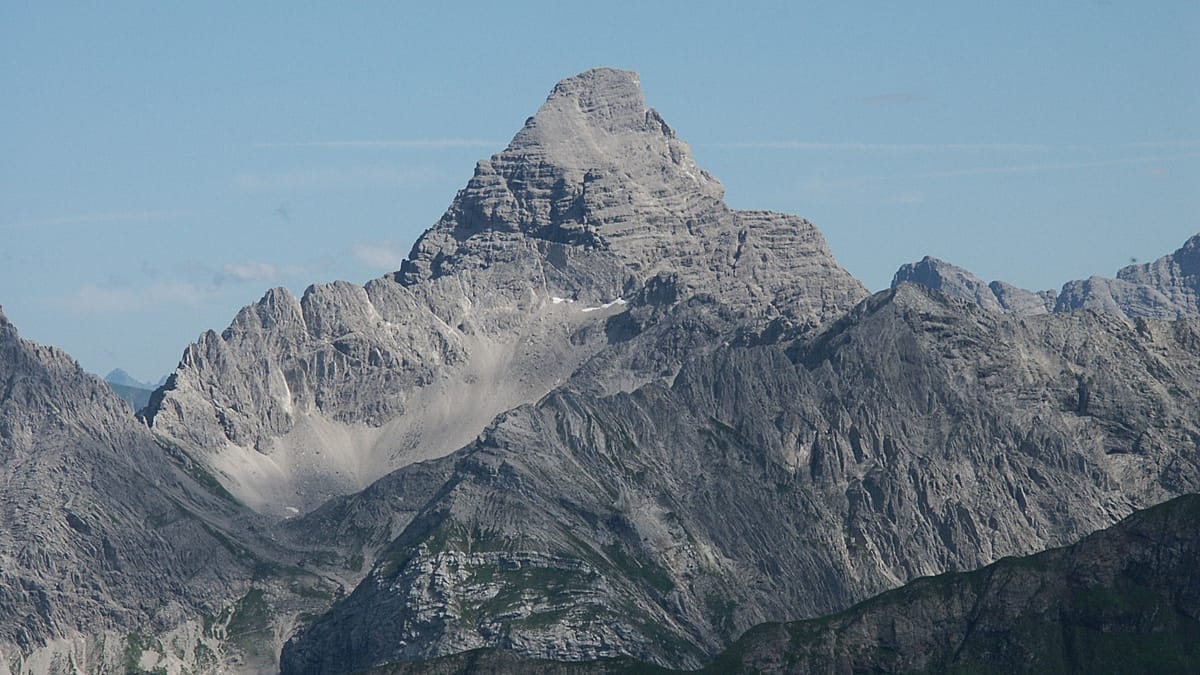
The Hochvogel, a 2,592-metre peak straddling the border between Germany and the Austrian state of Tyrol, is showing signs that a major collapse could be imminent. Researchers from the Technical University of Munich (TUM) have been monitoring the mountain for over a decade and now warn that between 250,000 and 400,000 cubic metres of rock could break away and tumble down its slopes.
In June, around 2,000 cubic metres of rock already detached from the mountain, a stark reminder of the forces at play. The summit itself is at risk, with a fissure that has existed since the 19th century widening dramatically. What was once a crack roughly shoulder-width is now several metres across, and the mountain's stability is increasingly uncertain.
Monitoring the mountain's warning signs
Scientists have been studying the Hochvogel for twelve years, initially through field trips and, since 2018, with a permanent network of sensors and measuring equipment. A drone equipped with a laser scanner has also been deployed to capture detailed topographical data. The instruments transmit data around the clock, allowing researchers to track movements to the millimetre.
In spring, measuring devices recorded movement rates of up to five millimetres per week. In geological terms, that is exceptionally fast; the Alps typically shift by an average of around 1.8 millimetres per year. The readings from the early-warning system have prompted the team to raise the alarm.
The mountain has been closed to climbers approaching from the Austrian side for some time, but the ascent from Germany remains open. At the beginning of October, a team led by geology professor Michael Krautblattler from TUM climbed the peak once again to inspect the terrain and the measuring instruments.
Krautblattler, who specialises in debris flows and rockslides, wants to "equip areas that are dangerous with intensive early-warning systems and thus be able to read properly the warning signs the mountain gives us," as he said in an interview with the German Alpine Club (DAV) in February.
Fissure 6: the critical weak point
There are now more than 30 sensors on the Hochvogel, measuring the entire summit with high precision. In 2024, TUM described the main fissure as up to six metres wide, around 35 metres long, and about 60 metres deep. A new crack on the south-west ridge, referred to as "Fissure 6," is now considered a key weak point, recording the highest rates of movement.
According to Krautblattler, similar early-warning systems are currently in use at only two other locations in the Alps: the Partnach Gorge and the Höllental Gorge. "There we are learning in great detail which signals the mountain gives off and how long in advance. Often, it is just days or hours. Systems like this will be vitally important in high mountain areas, because there things are going to change dramatically, beyond anything we know from experience," he told DAV.
The researchers receive data from the instruments systematically, several times an hour, in their offices. Krautblattler hopes the technology will help keep the Alps accessible while allowing authorities to close off danger areas before disaster strikes.
Climate factors at play
Scientists believe extreme weather could be partly behind the increasing movements on the mountain. On the Hochvogel, "we can see a clear influence from heavy precipitation events, in other words intense rainfall, thunderstorms and snowmelt," Johannes Leinauer from the TU Munich team told Deutschlandfunk.
The situation on the Hochvogel is a stark reminder of the fragility of alpine environments, especially as climate change alters precipitation patterns and accelerates glacial retreat. Similar monitoring efforts are being expanded across the Alps, as researchers seek to better understand and predict these natural hazards.
For now, the mountain remains under close observation. The early-warning system, which has been in place since 2018, is proving its value, but the ultimate test may come when the next major rockslide occurs. Until then, hikers and scientists alike are watching the Hochvogel with a mixture of awe and caution.



