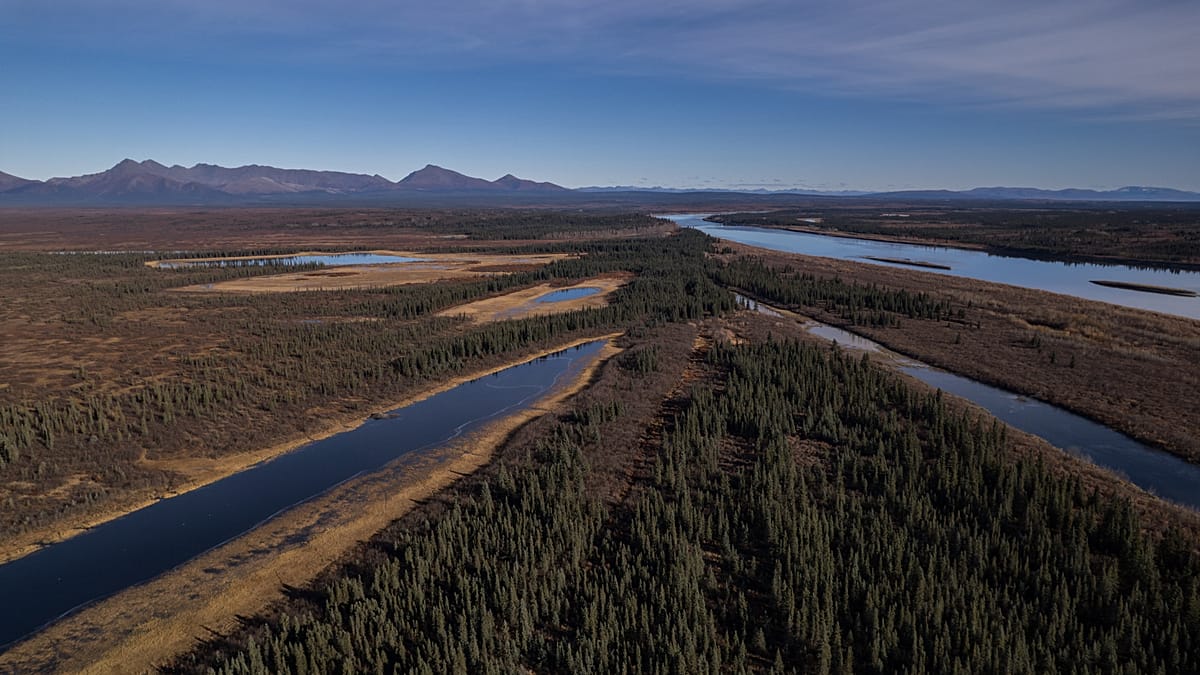
At first glance, the vast expanse of Alaska's North Slope tundra appears barren—a treeless plain stretching from the Brooks Range to the Arctic Ocean. But look closer, and you'll find a miniature ecosystem teeming with life: knee-high dwarf birch, vibrant rhododendrons, and a spongy carpet of mosses and liverworts. As Adam Bloom, a plant biology student at Florida Atlantic University, puts it, “the tundra's kind of like the jungle”—just one that tops out at about 25 centimetres.
For centuries, the Arctic's extreme cold kept these plants small, creating a sort of dollhouse of Earth's flora. That harsh environment has long offered researchers a unique laboratory to study what drives plant growth. Now, with the Arctic warming four times faster than the rest of the planet—especially in winter—this same landscape is becoming one of the world's most revealing windows into how climate change is reshaping plant life.
A greening Arctic
Over the past four decades, this part of Alaska has warmed by roughly 2.7 degrees Celsius, largely due to fossil fuel combustion. The result is a visible transformation: plants are growing taller and greener. “Plants that are already there are growing taller,” says Anne Bjorkman, a plant ecologist at the University of Gothenburg in Sweden, and they are likely to stretch even further in the coming years.
At the Toolik Field Station, 320 kilometres north of the Arctic Circle, researchers are investigating whether these plants adapt to the changing conditions through competition or cooperation. Studies indicate that the colder and more northerly the environment, the smaller the vegetation. The primary reason is that winter is brutal: anything protruding above the insulating snow is vulnerable to cold damage, wind, or being eaten by wildlife. Additionally, frozen permafrost restricts root growth, keeping plants low to the ground.
But as the cold weakens, taller species that previously couldn't survive are moving in. This process, known as shrubification, can accelerate warming. Sarah Elmendorf, a plant ecologist at the University of Colorado, explains that the darker, taller shrubs absorb more solar energy than the reflective white snow, trapping heat. “It's certainly a major fingerprint of change that we can see,” she says.
This darker tundra absorbing more radiation is “one of the main reasons for what we call arctic amplification, which causes climate change to accelerate,” notes Duncan Menge, an ecologist at Columbia University. The shrubs also trap more snow, which warms the ground and prompts microbes to release more methane—a potent greenhouse gas—during winter. While the added greenery may offset some carbon dioxide, the net effect is still a warming feedback loop.
Ripple effects on ecosystems
The expanding willow stands are also altering stream habitats, providing more shade and changing the ecology of fish, insects, and birds. Chris Neill and Linda Deegan of the Woodwell Climate Research Center are conducting a multiyear study to see if these ecosystems can adapt—or even genetically evolve—to cope with the stress of climate change. If so, it offers hope for the survival of some of the most fragile Arctic ecosystems, Deegan says.
For Jake Francis, a professor at Florida Atlantic University, the tiny changes in this “mini jungle” make a big difference. On his first Arctic expedition, he crouched to examine the miniature flora at his feet. “We have three or four different species of flowering plants growing. We have mosses. We have liverworts and it's the same thing. Layers growing on top of plants on top of plants on top of plants. But it's not yelling at us,” he says. “You have to get down there and stop and look. You could walk right past it and not even see it. And so this is what to me is cool.”
As the Arctic continues to warm, these subtle shifts in the tundra could have far-reaching consequences—not just for Alaska, but for the entire planet. The greening of the North Slope is a clear signal of how climate change is rewriting the rules of life in the far north, with implications that extend well beyond the region's borders.