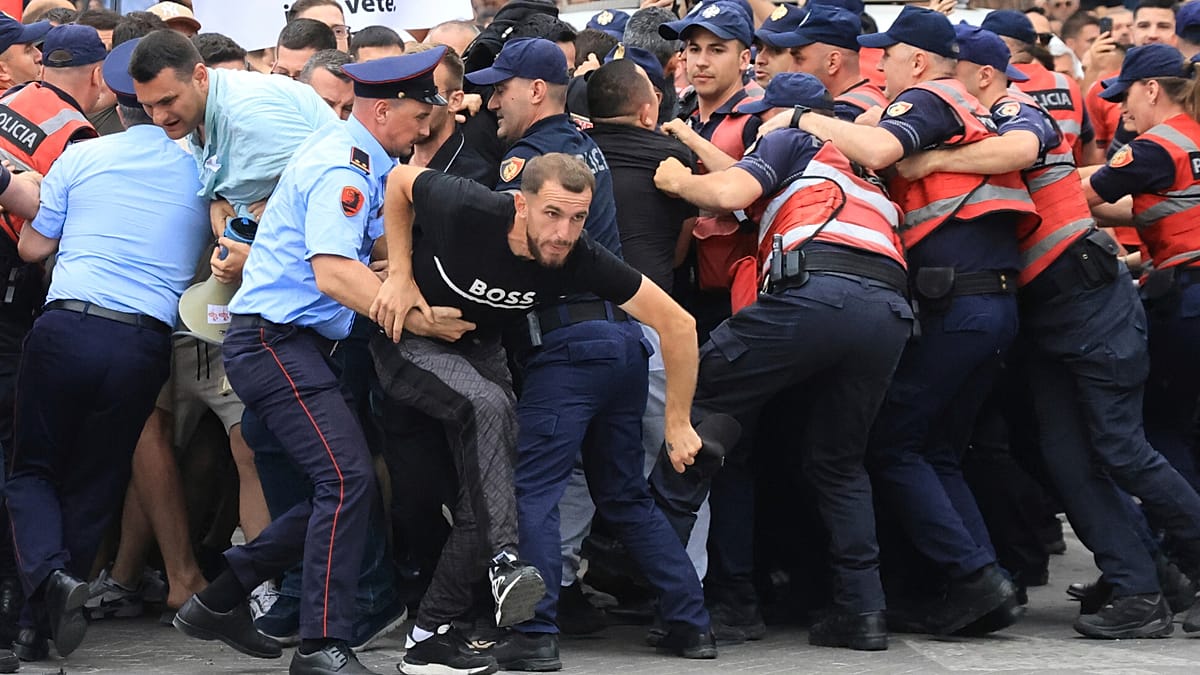
On 3 June, central Tirana saw its fourth consecutive day of protests as demonstrators clashed with police over a luxury resort project linked to the Trump family. The unrest, which has drawn international attention, underscores growing tensions in Albania over foreign-backed development and its implications for local communities and the environment.
The protests, which began earlier this week, have escalated into confrontations between demonstrators and law enforcement. Video footage from the scene shows protesters throwing objects and police responding with tear gas. The resort project, associated with former US President Donald Trump's business interests, has become a flashpoint for broader discontent over governance and transparency in the Balkan nation.
Background of the Dispute
The luxury resort, planned for a coastal area in southern Albania, has been controversial since its announcement. Critics argue that the project bypassed proper environmental assessments and public consultation, raising fears of unchecked development along the Adriatic coast. Supporters, including some government officials, tout it as a boost for tourism and economic growth in a country that has long struggled with high unemployment and emigration.
Albania, a candidate for European Union membership, has sought to attract foreign investment to modernize its infrastructure and create jobs. However, the Trump-linked resort has become a symbol of what opponents see as opaque deals that prioritize foreign interests over local needs. The protests have drawn a diverse coalition, including environmental activists, left-wing groups, and residents concerned about property rights.
This is not the first time such tensions have erupted. Earlier this year, similar protests targeted a resort linked to Jared Kushner, Trump's son-in-law, as reported in Albanian Protests Enter Third Day Over Kushner-Linked Coastal Resort. The current demonstrations suggest a pattern of resistance against high-profile foreign projects in Albania.
Broader European Context
The unrest in Tirana reflects a wider European debate about the balance between development and environmental protection. Across the continent, from the Bundestag in Berlin to the Élysée in Paris, policymakers grapple with how to regulate foreign investment while respecting local sovereignty. In the Balkans, where EU integration remains a key goal, such disputes test the region's commitment to democratic norms and rule of law.
Albania's government has defended the project, emphasizing its potential to create thousands of jobs and boost tourism revenue. Yet, the protests highlight a credibility gap, with many citizens feeling excluded from decisions that shape their future. The European Union, which has funded environmental projects in the region, may need to weigh in on the matter, as similar controversies have arisen in other candidate countries like Montenegro and Serbia.
Meanwhile, the Trump family's involvement adds a geopolitical dimension. The former US president's business ties have often sparked controversy, and this project is no exception. Critics question whether the Albanian government is granting favorable terms to politically connected investors, a concern that resonates in other parts of Europe where corruption remains a persistent issue.
What Happens Next
As the protests enter their fourth day, the Albanian government faces a critical test. Prime Minister Edi Rama's administration must navigate between maintaining public order and addressing legitimate grievances. The opposition has seized on the unrest to criticize the government's handling of foreign investments, potentially destabilizing the political landscape ahead of local elections.
For now, the streets of Tirana remain tense. The protests show no signs of abating, with organizers vowing to continue until the project is halted or significantly revised. The international community, including the EU and the US, is watching closely, as the outcome could set a precedent for how Albania—and the wider region—manages the tension between development and democracy.
In a related development, Albanian Protests Against Kushner-Linked Resort Enter Second Day earlier this year, indicating a growing trend of civic activism in the country. Whether this leads to policy changes or further polarization remains to be seen.



